
Search the Community
Showing results for tags 'academy'.
 The vision of the Academy of Police Sciences in Sharjah is to become an academically scientific center in the local and regional environment in the area of Police Sciences and a tributary of the approved human knowledge in scientific and police and security research. Developing the human element's capacity and skills and achieving educational and pedagogical outstanding quality to meet the security and police needs of the Emirate of Sharjah. Developing the human element's capacity and skills and achieving educational and pedagogical outstanding quality to meet the security and police needs of the Emirate of Sharjah, the UAE. The community, using the latest technology and scientific development, through courses and scientific training and advanced scientific research deals with security issues to serve the community, keep pace with local, regional and global variables, in collaboration with institutions of higher education and police academies inside and outside the country, and within the framework of Arab and Islamic values and traditions. Provide the officers with the necessary knowledge and the scientific and practical skills required in policing, security, and legal sciences. Developing the student skills necessary in linguistic communication and the use of information technology well. Prepare the student officer in a practical and field preparation, which qualifies him to perform his duties at the highest level. Meeting the community's needs by graduating officers who combine theoretical knowledge and practical application in the police, legal, security, and administrative work considers the human dimension. The student shall provide the officer with the skill of dealing with the public in legal and humanitarian ways, in all circumstances and conditions. Direct search service in the library catalogEstimating the students of the officers to join the postgraduate studies in various disciplines of Police Sciences
 The National Design Academy is proud to offer a broad range of design courses that have been specially created to lead students from beginner level right up to a professional master's degree. All of our diploma courses are validated by AIM Awards, while our degree courses are fully accredited by Staffordshire University, making them nationally and internationally recognized in most countries. We are proud to have over 25 years of experience offering the UK and overseas students a range of online interior design courses. The company may have evolved, developed, and improved over these past 25 years. However, the National Design Academy's core ethos has always remained the same to provide flexible and accessible design education to all students. Here at the National Design Academy, we are passionate about encouraging and supporting our students to further their careers by expanding their knowledge of interior design and other design-related areas. We deliver education and training for the design industry through studio or online distance learning courses and specialize in creating flexible, part-time programs to fit around everyday work or family commitments. This approach enables our students to successfully gain qualifications at Diploma, Bachelors Degree, or Masters Level, all of which are nationally and internationally recognized in most countries. The National Design Academy has students from over 60 countries studying for interior design related diplomas or degrees online via our Virtual Learning Studio website. Enrolling in an online distance learning course means that students can achieve a fully accredited British qualification from the comfort of their own home, without the need to comply with visa regulations. At the National Design Academy, the design is our passion; we strongly believe in interior design's value and beauty and aim to make this knowledge and education level accessible to all. The National Design Academy offers a unique route into design education while still allowing students a flexible and integrated approach to a future career in interior design. The flexibility and ease of studying the courses offered here at the National Design Academy mean that many students worldwide have enrolled in one of our courses. At present, we are proud to have students from over 60 different countries enjoying the challenges and depth of learning provided by a National Design Academy course. The National Design Academy is often celebrated for delivering high-quality, fully accredited courses accessible to all and offering the UK's only online Masters Degree in Interior Design and the UK's only online BA (Hons) Degree in Heritage Interior Design as well as Retail Design. Through our partnership with Staffordshire University, we train and develop interior design students to become experts in the field and help each student gain confidence when looking to progress onto individual projects or setting up new design businesses. Each year around 150 National Design Academy degree students are invited to an elaborate graduation ceremony at Trentham Gardens at Staffordshire University. This is always a wonderful day to attend, and many a proud face can be seen beaming from the audience.
 Rabdan Academy is an autonomous, coeducational foundation introduced in 2013 as a component of an Abu Dhabi Government initiative. The Academy is promoted by the UAE government and owned altogether by the Emirate of Abu Dhabi. Rabdan Academy was publically founded under Law No. 7 for 2013, issued by UAE President His Highness Sheik Khalifa Bin Zayed Al Nahyan in his ability as Ruler of Abu Dhabi. The Academy is a world-class, proficient training organization. Our central goal is to prepare and teach safety, security, resistance, and crisis readiness professionals over all segments to address the difficulties and dangers confronted worldwide by countries and societies today and in the future. We offer coordination and co-appointment over the training of the protection and security communities. The primary goal of the Academy is to go about as an essential source of future pioneers, an exceptional national center for leaders capability and advancement in the fields of safety, security, defense, emergency case readiness, and crisis management, given scientific ways to accomplish a bound together, incorporated and successful reaction in managing a wide range of foreseen dangers, threats, occurrences and emergencies in high efficiency, to follow up the advancement of sustainable training standards, and to improve concerned division capabilities. Vision To give a future class multi-disciplinary learning atmosphere of choice for the continuous improvement and incorporation of safety, security, defense, crisis readiness, and emergency management professionals. Mission To advance individuals and groups to a future-class standard that guarantees an exceedingly specific, multi-disciplinary, coherent, vigorous, and practical national capability for the global community's security, its people, and its advantage. Objectives The institute is to make a learning atmosphere capable of: Offering first-rate and standardized personal, organizational, and incorporated safety, security, safeguard, crisis readiness and emergency management teaching, training, and career guidance/preparedness relevant to the regional environment and necessities. Offering high-tech facilities and frameworks that offer a safe and secure atmosphere for protecting staff, facilities, hardware, and data. Being utterly consistent with every single significant Objective of the Plan Abu Dhabi 2030 and Economic Vision (AD2030), including Emiratisation, ecological, and business working contemplations. Obtaining national and global acknowledgment and accreditation for all significant teaching and training offered by the Academy Admissions Rabdan Academy takes in applications from students from all over the Emirates of UAE, and Rabdan students are selected and supported by stakeholder associations, for example, the UAE Armed Forces and the Ministry of Interior (MOI). Rabdan Faculty are exceedingly qualified educators from around the globe. The medium of the guideline at the Academy is English, except Associate in Crime Scene. The Academy Board of Trustees decides the size and character of the student body. It is eventually in charge of guaranteeing that all admission rules and strategies align with the Academy mission and objectives, are unmistakably characterized, apply to all students similarly, and are appropriately published. A sub-council of the Academy Education Board (the Admissions and Enrolment Committee) will survey and settle on choices on matters appointed to them, and generally make proposals to the Board of Trustees where needed on all matters connected with the admission and enrolment of students.
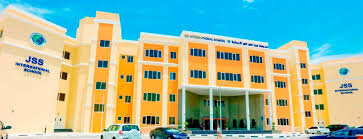 Set up in the year 1954, the Jagadguru Sri Shivarathreeswara Mahavidyapeetha has been portrayed by numerous prominent educationists as an establishment more noteworthy than a university because, under its aegis, a child can start its training in kindergarten and continue to procure a degree and also a doctorate in various fields of learning. Simultaneously, the Mahavidyapeetha has not failed to fortify the foundations of our old learning, knowledge, and culture and their application in everyday life. Sanskrit Pathashalas, Yoga Kendras, Spiritual Retreats, Gurukulas, Art and Cultural communities are doing this work. Today the Mahavidyapeetha has developed into a focal point of learning that aides and oversees more than 310 establishments spread throughout Karnataka, neighboring Tamil Nadu, and Uttar Pradesh. Consistently a great many hopefuls of education and learning join the overlay of the Mahavidyapeetha. JSS Mahavidyapeetha was the vision and forethought of his holiness, Jagadguru late Sri Dr. Shivarathri Rajendra Mahaswamiji, the 23rd pontiff of the 1000-year-old Suttur Mutt. Sri Shivarathri Deshikendra Mahaswamiji, the 24th pontiff, is guiding the accomplishment of a large group of instructive foundations and programs in engineering, medical, dental, pharmacy, naturopathy, nursing, law, administration, pure sciences, arts, business, vocational and spiritual training. JSS Education Foundation has been set up at Dubai Knowledge Village to furnish the community with the educational abilities required to contend in the developing work sector and address the requirements and difficulties from the local organizations and companies. JSS Education Foundation will offer an expansive variety of programs from its portfolio of academic training. It will utilize assets inside the regional demographics and the multinational professional workplace to offer its students training. The accentuation on the local delivery of globally acknowledged training substance affirmed our dedication to advancing and improving local training to the most critical workplaces on the planet. By underlining the qualities of technological advances in corporate training and learning and a definite focus on the corporate needs, we mean to offer a creative and collective learning atmosphere by giving a one of a kind learning background with an accentuation on dedicated knowledge growth. Set up in the year 1954, the Jagadguru Sri Shivarathreeswara Mahavidyapeetha has been portrayed by numerous prominent educationists as an establishment more noteworthy than a university because, under its aegis, a child can start its training in kindergarten and continue to procure a degree and also a doctorate in various fields of learning. Simultaneously, the Mahavidyapeetha has not failed to fortify the foundations of our old learning, knowledge, and culture and their application in everyday life. Sanskrit Pathashalas, Yoga Kendras, Spiritual Retreats, Gurukulas, Art and Cultural communities are doing this work. Today the Mahavidyapeetha has developed into a focal point of learning that aides and oversees more than 310 establishments spread all through Karnataka, neighboring Tamil Nadu, and Uttar Pradesh. Consistently a great many hopefuls of education and learning join the overlay of the Mahavidyapeetha. JSS Mahavidyapeetha was the vision and forethought of his holiness, Jagadguru late Sri Dr. Shivarathri Rajendra Mahaswamiji, the 23rd pontiff of the 1000-year-old Suttur Mutt. Sri Shivarathri Deshikendra Mahaswamiji, the 24th pontiff, is guiding the accomplishment of a large group of instructive foundations and programs in engineering, medical, dental, pharmacy, naturopathy, nursing, law, administration, pure sciences, arts, business, vocational and spiritual training. JSS Education Foundation has been set up at Dubai Knowledge Village to furnish the community with the educational abilities required to contend in the developing work sector and address the requirements and difficulties from the local organizations and companies. JSS Education Foundation will offer an expansive variety of programs from its academic training portfolio. It will utilize assets inside the regional demographics and the multinational professional workplace to offer its students training. The accentuation on the local delivery of globally acknowledged training substance affirmed our dedication to advancing and improving local training to the most critical workplaces on the planet. By underlining the qualities of technological advances in corporate training and learning and a definite focus on the corporate needs, we mean to offer a creative and collective learning atmosphere by giving a one of a kind learning background with an accentuation on dedicated knowledge growth.

Manipal Academy of Higher Education - MAHE, Dubai
EduCativ posted a university in United Arab Emirates
 Manipal Academy of Higher Education - MAHE, Dubai campus is a branch campus of Manipal Academy of Higher Education, India, the largest private University in the country, enrolling over 25,000 students across 23 disciplines. Manipal Academy of Higher Education established its presence in Dubai, UAE, in the year 2000. At present, Manipal Academy of Higher Education, Dubai, enrolls over 1,500 students from 26 nations worldwide and is an Indian multidisciplinary university in the region. MAHE Dubai moved into its iconic state-of-the-art campus in September 2011. Spread over 750,000 square feet of built-up area, the sprawling campus can accommodate over 4000 students. Apart from contemporary purpose-built classrooms, the new campus at Dubai International Academic City (DIAC) houses cutting-edge laboratories in engineering, biotechnology, and information technology and is also home to some of the region's best studios workshops for programs in media & communications & interior design. The campus also houses a sprawling library, cafeteria, extensive indoor and outdoor sporting facilities, including an athletics track, tennis courts, a gym and fitness center, and a recreation center for boys and girls. The entire campus is wi-fi enabled. The University's branch campus in Dubai builds on the same pedigree and quality that MAHE has reached these lofty heights in India. Beyond academics, students at MAHE Dubai get ample exposure to extra-curricular events, sports activities, and other cultural events. The University has a flourishing sports team that has won laurels at all leading university-level events in the region and is equally active in Dubai's cultural and literary activities. 9Ways how #MAHEDubai makes you #FUTURE READY: International Exposure Hangout with students from over 30 different countries Students' Clubs Be part of students' clubs dedicated to arts, dance, theatre, debate, and so on… Campus & Hostel Life Live a campus and hostel life that will remain etched on your personality as memories for life. Professional Societies Be part of professional societies and create a niche for yourself. Students' Events & Activities Not only take part but also organize a myriad of student events and activities to explore yourself. International Educational Tours Go for International Educational Visits and learn with students from all across the world. Career Development Center Enrol with the Career Development Centre and guide yourself to an enterprising future. Sports Push your limits among a few of the best student sportsmen of UAE. World Ranking Graduate from India's best private University (QS World Ranking) Academic Delivery Legacy, Accreditations, Recognitions Globally Recognised Faculty Tech-powered Library Futuristic LMS Application Procedure The application form can be obtained from the admissions office or downloaded from the Manipal Academy of Higher Education, Dubai website. The completed application form and necessary documents should be submitted to the Admissions Office with the application fee of AED 100/- and registration fee of AED 1,900/- for Undergraduate Programs and AED 1,500/- for Postgraduate & Certificate Programs. You may do so by filling the online application form through the link provided below, along with the required documents. Online application Necessary: Please quote your online application number in all correspondence. The applications received will be scrutinized and subject to fulfilling the admission requirements; students will be informed of their selection as per the admission schedule. Documents Required For Undergraduate Programs Attested copy of mark sheet/ grade sheet of 12th Std. examination/ equivalent - original & photocopy Certified copy of 10th Std. mark sheet - original & photocopy Transfer Certificate or School Leaving Certificate - original (will not be returned) Conduct Certificate issued by the school - original (will not be returned) Passport Copy - 1 set Ten passport size photographs NOTE: Original mark sheet will be returned immediately after verification. Documents Required For Postgraduate Programs Certified copy of Bachelor Degree and a copy of the mark sheet (along with the original) Passport copy 5 Passport size photographs NOTE: Original mark sheet will be returned immediately after verification. Hostel Facilities Manipal Academy of Higher Education, Dubai, provides separate residential facilities on campus for boys and girls. Hostel rooms are well-appointed and comfortable but are limited in number and therefore offered on a first-come, first-served basis and are subject to availability. There is round-the-clock security in both the Boys and Girls Hostel, and a full-time warden is appointed to manage student welfare. All students availing of residential facilities are provided a bed, mattress, study table, chair, and a cupboard for their clothes and personal belongings. Both Boys and Girls Hostels have independent standard rooms with television and laundry facilities. Each Hostel has a standard Dining facility. Wi-fi internet facilities are provided to all hostel residents, and this is included in the hostel fee. Hostel Fees is an all-inclusive component that includes boarding, lodging, internet, transport, and laundry facilities. The hostel fees for Academic Year 2018-19 single Occupancy- AED 35,500 per year Double Occupancy - AED 32,500 per year Triple Occupancy - AED 30,500 per year This covers the students' stay for ten months (2 semesters – 5 months each). Hostel facilities are not available during the summer holidays. Hostel fees have to be paid in one installment at the beginning of the year while registering for the program. A refundable caution deposit of AED 500 is also collected from the student and the hostel fees, which is refunded on vacating the Hostel and submitting a no-dues clearance certificate. The University reserves the right to deduct any amount due from the caution deposit towards damage of hostel property and facilities. On registering for university residential facilities, the students are given a Hostel Rules & Regulations Handbook, which they must carefully examine. Students are expected to abide by the rules stipulated in the handbook and are liable to be subject to disciplinary action if found in violation of the rules prescribed. All students availing of residential facilities are provided a bed, mattress, study table, chair, and a cupboard for their clothes and personal belongings. Both Boys and Girls Hostels have independent standard rooms with television and laundry facilities. Each Hostel has a standard Dining facility. Wi-fi internet facilities are provided to all hostel residents, and this is included in the hostel fee. Hostel students are also picked up and dropped off at the airport when they arrive in or depart from the UAE. Sports Facilities Manipal Academy of Higher Education, Dubai, prides itself in its ample sports facilities on offer. The University's sports team ranks amongst the best in the UAE, winning laurels in all major inter-university sports events. There are ample indoor and outdoor facilities available for students, including an indoor basketball court, badminton & volleyball courts. The University's outdoor sporting facilities include an athletics track, tennis courts, cricket nets, and a mini-football field. In addition to these facilities, there are separate recreation rooms for Boys & Girls, including snooker, foosball tables, and table tennis tables. The University also hosts a state-of-the-art Gymnasium hosting the best of equipment for training and performance enhancement. Student Dining Facilities Manipal Academy of Higher Education, Dubai, provides ample student dining facilities at its Food Court & Cafeteria. Students are given ample choice, including vegetarian and non-vegetarian meal options at highly subsidized rates. Menus change daily, giving the students ample variety and choice. Western and Indian dining options are available. A wide selection of healthy juices and snacking options are available to students at the Food Court. The Food Court also hosts a small convenience store with a selection of beverages, packaged food, and vending machines for coffee, tea, and other options. Central Library The Library's vision is to support the Manipal Dubai Campus in building an internationally top-ranked university by establishing a knowledge hub, enabling access to information resources of all kinds, and providing innovative, responsive, and effective services changing the needs of the academic community. The Library surrounded by lecture theatres and classrooms, is also equipped with all the necessary facilities, making it a pleasant environment to study in. It holds learning material predominantly related to Business & Management, Finance, Economics, Engineering, Computer Science & Information Technology, Biotechnology, Interior Design, Architecture, and its allied subjects. It aims to develop a comprehensive collection of information resources that are useful for academic and research purposes. The Library plays a proactive role in ensuring that the information resources are acquired and organized to meet its users' present and future needs. The Library has utilized Information Technology extensively to ensure that resources are accessible at all times. The library catalog is available online, and the resources' availability could be checked using the same. Users can also check their transactions with the Library. The Library holds a hybrid collection of printed and electronic resources, including books, journals, databases, audio-visuals, CDs/DVDs, e-books, e-journals, e-question papers, etc. Currently, the Library has over 16000 books, 100 periodicals, Online Databases, Access to about 19370 e-journals, and over 2000 audio-visual resource. Laboratories Manipal Academy of Higher Education, Dubai, has well-equipped laboratories to help graduate, undergraduate, and Ph.D. students pursue their studies and research. Biotechnology Lab Facilities The Department of Biotechnology at the Manipal Academy of Higher Education, Dubai Campus has approximately 1,200 square meters of laboratory space, well- equipped with state-of-the-art scientific instruments. We have separate laboratories for BSc Biotechnology, BSc Bioinformatics, MSc Medical Biotechnology, and MSc Human Genetics & Forensic and research. There are impressive research labs for Molecular Biology, Cytogenetics-Microscopy and Imaging, Cell and Tissue Engineering. The laboratory facilities are equipped with an autoclave, biosafety hood, CO2 incubator, compound microscope, conductivity meter, digital imaging system, ELISA reader, fluorescent microscope, freezers (minus 40 and 80), gel documentation system, gel electrophoresis, high-speed refrigerated centrifuge, ice maker, inverted microscope, laminar hood, light microscope, microbial incubator, micro-centrifuge, PCR (gradient), PH Meter, UV spectrophotometer, UV- transilluminator, water bath and shaker, and water distillation unit. Information Technology Labs The department has a well-equipped 'Programming Laboratory' which offers hands on training in C, C++, JAVA, Visual Basic, Visual C++, .NET, SQL, and other modern tools. The 'Networking Laboratory' offers experiments based on windows and Linux servers. The students get hands-on training in cabling, server installation, configuring switches, routers, and network management. The 'PC Troubleshooting and Maintenance Laboratory' is well equipped for training students in assembling different types of computers, installing operating systems, upgrading and troubleshooting hardware and software problems. The 'Multimedia Programming Laboratory' offers training in developing multimedia based applications using tools like Photoshop CS, Flash MX, Dreamweaver, Adobe Illustrator, Director, CorelDraw, and Sound Forge. Media & Communication Labs The Department of Media and Communication is equipped with the below-listed labs. News Lab: Computers with Internet access Equipped with Page Designing Programs Quark Express, Corel Suites, etc A wide array of magazines and newspapers resource material (national and international) Audio-Visual & Multi-Media Lab: Dedicated workstations for web design & web programming Plasma TV and BOSE surround speakers for a film screening Professional Suites of Adobe for Image Rendering & 3D Studio for Animation Post-Production Television Lab: Dedicated workstations for high definition & standard definition video non-linear editing Professional sound (Digital & Analogue) mixing & recording facility Titling & effects platforms Transfer & authoring facility Interior Design Labs Interior Design Studios Extensive studio and state-of-the-art computer laboratory facilities are provided to Interior Design Department students. These include studio, shop, and technical facilities for work in all media, from the traditional to the most experimental. Students benefit not only from the design studios but also from the collective research facilities of the department. The Design Studio can be converted into an exhibition area for the display of student and faculty work. Computer-Aided Design (CAD) Lab, The CAD Lab, includes sixty work stations integrated with AutoCAD, 3-D S Max, Photoshop & other graphics related software. Certified professionals train the students in developing their design and drafting skills in the bachelors and certificate programs. The students develop intricate CAD drawings to rendered presentations and walkthrough animations of their design projects. Product Design Lab The laboratory is integrated with state-of-the-art equipment required for the students specializing in Product Design as a part of their BA ID program. An array of equipment, including Lathe Machines, Saw Machines, Planner Machines, and specialized tools, helps students explore the courses, including Design Accessories, Product Graphics, Furniture Design, and Design Accessories. Pottery Studio The studio has a pottery wheel, an oven, and specialized tools that help the students explore pottery art and science. Fashion Design and Technology Labs The Fashion Design Department is equipped with modern equipment in its Illustration Lab, CAD LAB, Design Studio, Textile Studio, Pattern Design Lab, and Fashion Department Lab. Engineering Departments Labs The Department of Engineering is well-equipped with Physics, Chemistry, Computer Labs, and a workshop to blend vital subject components relevant in an engineering background. These skills are necessary to work in different areas of engineering. These laboratories help students relate to the concepts presented in classroom lectures and the behavior of real-world materials. Student Services & Counselling A full-time Student Services Officer is present on campus throughout the academic year to support students' academic and personal development. The Student Services Officer is qualified to provide counselling and guidance services. A Carcounselings & Guidance Counsellor is also present to handle students' career progression pathways. Students are welcome to approach the Student Services Officer by prior appointment and discuss any matter they seek guidance on, be it professional or personal. Complete confidentiality of such discussions is maintained, and the Student Services Officer ensures that they provide a calm and safe environment for the student to share their problems and concerns. Healthcare Services Round clock healthcare services are provided on campus and for the hostel residents. A fully equipped medical room is available on campus to deal with medical emergencies. Trained staff are available on campus at all times. Dubai International Academic City provides 24 Hour Ambulatory Service facilities. Hospitals are easily accessible within a 15-minute drive from campus. Students on the university visa will need to have mandatory health insurance, which covers them within the UAE and (in some cases) internationally as well.
 The Emirates Academy of Hospitality Management (EAHM) is one of the world's leading hotel schools and the first and only university in the Middle East specializing in hospitality management education. The Ministry of Education fully accredits EAHM programs of study in the United Arab Emirates, Institute of Hospitality in the United Kingdom, and THE-ICE (International Centre of Excellence in Tourism and Hospitality Education) in Australia. EAHM is also a Higher Education member of the Council of International Schools (CIS). EAHM students believe that crafting unique experiences for others is, in itself, a fulfilling life experience. The Academy looks for students that envision a career in a dynamic, international workspace. Every student in the Academy can expect to gain extensive theoretical and practical training relevant to today's industry trends and demands. EAHM faculty members have Master's or Doctoral Degrees combined with numerous years of industry experience and are recruited from more than ten countries worldwide. The Faculty team has adopted the latest education techniques as well as cutting-edge approaches to learning. The Academy is located in Dubai's heart, opposite the iconic Burj Al Arab, and is minutes from Madinat Jumeirah and Jumeirah Beach. Students can learn and live on the Academy's resort-style campus, including modern classrooms, library and study areas, three food and beverage outlets, a minimarket, and sports and accommodation facilities.
 NEST Academy of Management Education is a new-age Business school in Dubai. Licensed by KHDA (Knowledge & Human Development Authority – Dubai) and accredited by reputed U.K. awarding body to offers credit-bearing U.K. Qualifications at all levels in new-age careers Events Management, Sports Management, Hospitality Management, Business Management, Computing (I.T.) and Teaching. Nest Academy Group, across its seven campuses in 6 cities, has had a vintage of 18 years delivering programs in new-age careers and has shaped more than 11,000 students' careers. The courses are specially designed to build the skill sets needed to succeed in the Industry. With an emphasis on practical training and giving the best internship opportunities, our faculty guide students every step of the way. We specialize in teaching methodology that blends classroom teaching with practical training and internships for making our student's Employment ready. We offer specialized credit-bearing academic courses with the right blend of practical knowledge and experience, creating a genuinely futuristic curriculum to produce highly skilled individuals and a launchpad for entrepreneurs. Assessments are based on assignments, case studies, entrepreneurship projects, and collaborative presentations. Why NEST Academy? New-Age Business School in Dubai Graduate with U.K. Qualifications at a fraction of the cost. 99% Student Visa Success rate Proof of funds and Bank Statements not required Visa Sponsored by Nest Academy 50% COVID19 scholarships, bringing the tuition fees down to – USD 4500 for the full year Flexible Instalments Payment IELTS Exempted Part-time Work Permit, Earn While You Learn! Evening and Weekend Lectures for Working Students Guaranteed Paid Internships for Hospitality Management Students Dedicated Placement & Internship Department Global Credit transfers option to transfer to International Campuses of Partner Universities in 7 Countries in the last year Begin in Dubai, Graduate in the U.K. at half the cost (+PSW in the U.K.) New-Age Programmes offered Events Management – Start your career in one of the fastest-growing industries covering a spectrum of conferences, corporate events, trade fairs, expos, weddings, media and entertainment events, and much more. Sports Management – Learn the management, business, and cultural aspects of sports and pursue a career in sports marketing, facility and sports event management, leadership, financial management in sports, etc. Business Management – Master the elements of International Business Management and be well acquainted with international business, finance, sales and marketing, human resources, personnel management, operations, and retail management. Hospitality Management – The multi-billion-dollar hospitality industry has three primary areas: Accommodation, Food and Beverages, and Travel and Tourism. With 8.7% of worldwide Employment in Travel and Hospitality, the Industry is expected to grow by 4% per annum from 2013 to 2023. The world will have 337 million jobs in Hospitality by 2023, which leads to every one job in 10 Jobs on this Planet. Computing – It is incomprehensible to visualize a world without technology and cease from marveling at its influence over the human race; Computing and I.T. is the present and future of the world. The global digital transformation market size is expected to rise from US$ 1-200 Billion in 2017 to US$ 2000 Billion in 2020. Driven by digital technology adoption, the total addressable market for global technology and business services will likely expand to about USD 4000- Billion by 2025. Awards and Accolades Nest Academy's parent campuses have earned the following awards and accolades. NAEMD's courses ranked in the Times Top 75 B-schools ASIA EDUCATION SUMMIT awarded NASM as the "Best Academy with Innovative Course in Sports Management" in 2015 ASIA EDUCATION SUMMIT conferred upon NAEMD as the "BEST INSTITUTE FOR EVENT MANAGEMENT" IN 2015, 2016 & 2017 NAEMD ranked 1st in India as a private higher education institution for "VOCATIONAL EDUCATION" by Education World India 2019-20 LIMCA Book of Records has certified NAEMD as "ASIA'S FIRST & BEST INSTITUTE." World Education Summit conferred upon NASM as the "BEST INSTITUTE FOR SPORTS MANAGEMENT" in 2019 India Education Excellence Awards by Time Research conferred upon NAEMD as the "BEST INSTITUTE FOR EVENT MANAGEMENT" in 2013, 2014 & 2015. Education World India 2019-20 ranked NASM as 1st in India as a private higher education institution for "SPORTS & CO-CURRICULAR EDUCATION." NAEMD awarded for Excellence in Event Management Education by Mid-Day NASM is an associate at" KHELO INDIA" 2019 & 2020 NEST Academy recognized as" LEADING INSTITUTION IN INDUSTRY COLLABORATION" at UNICA 2019 Skill-based Employment oriented Courses. The courses are specially designed to build the skill sets needed to succeed in the Industry. With an emphasis on practical training and giving the best internship opportunities, our faculty guide students every step of the way. Assessments are based on assignments, case studies, entrepreneurship projects, and collaborative presentations. Please encourage Students to Integrate their Passion and Profession. At N|A|M|E Dubai, our objective is to generate skilled industry-ready professionals in new-age careers. We encourage students to make their passion into a profession by supporting them with Scholarships. Teaching Methods At N|A|M|E Dubai, we are committed to our students' holistic development to ensure superior outcomes and strong employability prospects. Teaching methodology comprises classroom sessions, masterclasses, case studies, practical training, group work, and discussions. The approach is to have the right balance of theory, practice, and experience." real-world relevance" is vital throughout the program. 1) Workshops – To keep our students updated with the current affairs in the Sports, Events, and Management Industries, we frequently organize uniquely designed workshops that focus on industry-oriented themes shortlisted by our team of experts. 2) Lectures – To positively impact our students' perspective, lectures are delivered by our experienced core team of faculty, along with visiting faculty from top Management Institutes and professionals from the Sports and Events Industries. 3) Assignments and Projects – Assignments and projects are a part of our curricula. These provide our students with ample opportunities to meet, interact, and build relations with popular and experienced individuals in their respective industries, under the able guidance of our dedicated faculty. 4) Simulated Sessions – We have developed an exceptional methodology that helps replicate the process of organizing and managing an event in real-time. Students are trained to formulate a model event and present it live in the classroom. This exercise allows them to walk through minute aspects of executing events. 5) Master Classes – N|A|M| E's Master Classes intend to keep students aware of the current world of sports, events, and management. Guest speakers from various industries share their knowledge and help students form ideas and insights about these industries. 6) Case Studies – Our curriculum includes the use of case studies in order to highlight various practical and situational issues. The brainstorming and discussions help streamline our students' thought processes and sharpen analytical abilities by exploring, identifying, and solving issues. Scholarships We believe in providing high-quality education at a very affordable tuition fee; we are committed to offering accessible higher education for talented students by keeping our tuition fee low and providing a generous scholarship package based on Merit and Need-based Scholarship.
 Zaporizhzhia State Engineering Academy was founded in 1959 by the Ministry of Higher and Secondary Education of the USSR as an evening branch of Dnipropetrovsk Metallurgical Institute since 1965, - the department of DMI ( Dnipropetrovsk Metallurgical Institute), and since 1976, - Zaporizhzhia Industrial Institute. By resolution of the Cabinet of Ministers of Ukraine №592 of 29.08.1994 Zaporizhzhia State Engineering Academy was established on the basis of Zaporizhzhia Industrial Institute. Soon the higher education institution will celebrate its 55th anniversary. By the standards of a human life, it is the age of maturity. In this case, this criterion is quite applicable to the Engineering Academy. During the years of its existence, thanks to the successful start, an educational institution has grown from a branch of the provincial institute to an Academy. Graduates of the Academy fully meet the staffing needs of industry in the region. An important step on the way to a real increase in the quality of training was the introduction in ZSEA a credit-modular system of educational process as a first step towards the full implementation of the program to join the European educational space on the concept of the Bologna process. Improving the quality of specialists training at the academy is identified as a priority task, which involves the introduction of innovative learning technologies, general computerization and information system development and engaging students in various forms of scientific research activity as well as receiving theoretical and practical knowledge A modern higher educational institution cannot be developed dynamically without a library that works on the basis of the latest information technologies. A library stock is replenished with textbooks of a new generation using multimedia technologies and electronic books. Information Computer Centre works as a structural subdivision of Zaporizhzhia State Engineering Academy. The main purpose of the ITC is organizing, management, coordination, monitoring and works implementation to ensure the smooth functioning and development of information and computer infrastructure of ZSEA. There are 30 computer classes involved in the educational process in the academy. There are more than 1,000 personal computers which are used in the educational process. For many years the academy is an active member of the Association Information Technologies development in Zaporizhzhia. On the basis of ZSEA Networking Academy Cisco, and Microsoft IT Academy has been working. The Linguistic Center was founded in Zaporozhzhia State Engineering Academy in 2000 to teach all students of the academy, primarily those who are involved in the international academic exchange programs, but also for all people interested in foreign languages, particularly English, German, French, Spanish. People of different ages and occupations: school children, students and postgraduates, pensioners and businessmen study at the center. Under current conditions higher education institutions are engaged not only in scientific and educational activity, but also use the principle of unity for the learning processes, scientific activity and education. In this context, an important place in the educational work belongs to the curatorship. Students of ZSEA participate actively in the life and activity of the academy through student self-governance: Student Senate of ZSEA, Student Council of ZSEA dormitories, primary trade union organization of students and doctoral students of ZSEA, Student Research Society Student and teaching staff achievements in sport are some of the most successful activities which have been developing in ZSEA since 60-70 years. Some students of ZSEA became Olympic champions and Olympic silver medalists. 91 Masters of Sport and 44 Masters of Sport of International Class in various sports have been trained In the Academy. The Academy provides any person interested in sport an opportunity to engage in basketball, athletics, handball and so on.The Academy has got two student dormitories for 1280 places with a total area of 14850 sq.m. All conditions for comfortable living, self-study and preparation for classes have been created in the dormitories. Household services are organized properly. The main goal of every institution of higher education is formation of intellectual resources of the state. Now Zaporizhzhia State Engineering Academy by its scientific research development and innovative teaching and learning technologies provides a significant contribution to Human Resourcing of policy implementation for socio-economic growth of Ukraine. Look forward to any task, meet any challenge - "through the thorns - to the stars" - the motto of the faculty and students of the Academy. With such weighty scientific, educational and historical heritage, the Academy is entering a new stage of its development, confirming its image of the leading engineering educational institution at this stage of history of Zaporizhzhia region.
 International students' training is one of the top priorities of the state policy for many countries, including Ukraine, transferring its cultural and national values through educational services for foreign citizens. HSEE of Ukraine "Ukrainian Medical Stomatological Academy" is one of the most active medical HEIs in this context. During its existence, the Academy has acquired lots of positive experience in internationalization of higher medical education, particularly in the organization of the educational process for the proper training of medical professionals for other countries. Since 2002 the Faculty council and methodical cycle committee for international students training has been operating in the Academy. Its main functions are developing the methodical foundations of foreign students training and its quality control in the departments. Starting from 2004, the training in specialities "Medicine" and "Dentistry" has been carried out in English. The Academy's Administration selects the most experienced educators from some professors who efficiently use the material and technical tools and apply innovative learning technologies to provide quality education to international students. The Academy's Administration selects the most experienced educators from several professors who efficiently use the material and technical tools and apply innovative learning technologies to provide quality education to international students. The Dean's office employees and the supervisors of the academic groups carry out various events, aiming to make international students comply with moral standards of behaviour in their new social and cultural environment and create friendly relations between different ethnic groups and promote a healthy lifestyle. International students actively take part in amateur performances, sports life and scientific work of the Academy. Students of the Faculty of Foreign Students Training often won prizes at student conferences with presentations in English and Russian. During its existence, the Faculty trained highly experienced medical professionals for more than 50 countries.
 Information society development trends represent new and severe requirements to organization and control of communication and informatization branch. The branch of communication and informatization in Ukraine is a leader among the branches being developed more dynamically. But the guarantee of the Ukraine entry into the global information infrastructure, the open exchange of data with other countries is possible only when a state will at its disposal have enough specialists who are capable of introducing and developing the contemporary info-communication and information technologies. The Academy has the old traditions, long-term experience and highly professional scientific and pedagogical potential, prepare such specialists, and competes with the labour market. The Academy carries out modernization of an education system in a context of the European requirements, more and more persistently works on the practical realization of Bologna declaration provisions. Now more then ever, it is clear, that education, particularly in the field of mathematics, natural sciences and techniques, is necessary for the formation of the qualified personnel possessing competitiveness in conditions of the digital economy. Therefore, the primary task of Academy is the achievement of high quality of education, providing the objective and transparent control of graduates' knowledge and competence. Our graduates have proved as highly skilled experts on responsible posts in a branch of communication and information. We are justifiably proud of it. Immediate tasks of Academy are defined by requirements of the European integration of the higher school (Bologna declaration) – the process connected with dramatic changes of world development, with the transition to the new high technologies using computer techniques and telecommunications which promote the creation of favourable conditions for inclusion in a world information society and expansion of access to world information systems and resources. Simultaneously, the proceeding process of modernization stipulates an introduction into an Academy education system of elements of the European educational system and the comprehensive analysis of its positive and negative tendencies that are found out at the objective and non-tendentious scientific analysis. The Odessa National Academy of Telecommunication named after A.S.Popov cannot be outside of globalization and information processes today. The Odessa National Academy of Telecommunication's strategic purpose named after A.S.Popov is its compliance with the world standards and its integration into world scientific-educational space. Qualitative level of fundamental and professional training of experts, objective parameters of scientific and pedagogical activity provided by the Odesa National Academy of Telecommunication named after A.S.Popov, will allow it to keep the high rating in new conditions not only in Ukraine but also abroad. One of the Academy's main directions is scientific work; it is an integral part of the training process and the scientific work of teachers, post-graduate students, and students. The Academy, educational process system's objective, is to prepare specialists, who demonstrate active social attitude, civic responsibility, develop national traditions creatively and achieve self-expression in a professional area. The subunit staff organizes lectures and discussions with the students, concerning legal culture formation, law and alcohol violations prevention and drug dependence. The educational function of such actions contributes to the growth of legal culture and healthy lifestyle maintenance. The cooperation with medical establishments and the project "Together to health" organizers are established to reach this objective. Higher education scientific and methodological commission (SMC) related to the Ministry of education and science of Ukraine in "Telecommunications" functions at the Academy. An Educational Process Vice-Rector heads the commission, Doctor of Engineering, ONAT Professor Zakharchenko M.V. The educational and qualifications requirements, educational and professional training programs, specialists training curricula in telecommunications, educational disciplines programs; the advanced educational technologies introduction development are the main functions of the commission. The Academy is the leading specialized higher educational institution in Ukraine of the IVth (the highest) accreditation level that prepares bachelors and masters in all spheres of ICT and Economics of Telecommunications. There exist the following institutions: Educational and Research Institute of Infocommunications and Software Engineering, Educational and Research Institute of Radio, Television and Information Security, Educational and Research Institute of Computer Technologies, Automation and Logistics, Educational and Research Institute of Information Society Issues, College of Telecommunications and Information Processing. Teaching process at ONAT PD is carried out under the curricula of preparatory departments and syllabi recommended by Scientifically Methodological Commission of MSE of Ukraine for preparing foreign citizens for entering the universities. Syllabi on each subject are updated every year and are confirmed by Scientifically Methodological Commission of ONAT. PD methodologists work out educational process schedules for each group; they are also continually monitoring the curricula and syllabi's implementation by the lecturers.
 Poltava State Agrarian Academy (PSAA) is a higher educational establishment of 4th level of accreditation, a heart of science, education and culture in the Poltava region with a long ancient history and dateless pedagogical traditions. Over a century our educational institution has been training highly-skilled professionals for all branches of agriculture and economy of our state, creative and intelligent people, scientists well-known in Ukraine and abroad who have made a significant contribution in development of agriculture, education and science as well as the formation of social and political ideas. Nowadays, PSAA is a multisectoral research and educational complex that includes all grade and postgraduatepostgraduatepostgraduate courses. These elements are components of the European educational system and amenably to the standards of the Bologna declaration. PSAA includes six institutes, seven departments, seven colleges and technical secondary schools, and pre-enter training centre. Our Academy is an advanced educational, research and educational, cultural and youth centre of Poltava region that corresponds to the current level of high education, actively react to requirements of the market economy, ensures the development of the national agrarian sector, culture, the formation of the elite of Ukrainian society. The students' licensed admission number is 1,855 persons on full-time and 1,875 persons on correspondence forms of studying. Training is performed at the expense of the state budget, privileged long-term credits, legal entities' money, physical persons by full-time and correspondence forms. During his or her studying each of the students can obtain the second higher education, work profession. The qualified professor and teacher personnel (328 persons) provided the study process, including 32 Doctors of Sciences, Professors, 223 Candidates of Sciences (PhD), 163Assistant-Professors 6 Academicians, 3 Corresponding members, and 10 Honored Workers of Agriculture and other branches work at the Academy. The students of the Academy can undergo acquaintance practical training and internship in such countries as Poland, Hungary, Germany, Switzerland, France, the Netherlands, Great Britain, Denmark, Norway, Finland, Sweden, Canada, the USA, and even Australia. The educational establishment has broad international relations with the universities, higher agricultural schools and farms of Germany, Austria, France, Great Britain, Denmark, and Sweden. The Preparatory Faculty for foreign citizens, created in 1980, functions at the Academy. The faculty provides pre-university training for the citizens from Asian, African, and Latin American countries to further study at higher educational establishments of Ukraine. Scientific work at the Academy is performed according to the Law of Ukraine "About higher education", "About scientific and technical activities", Regulations about the organization of scientific, scientific-technical activities in higher educational establishments of the III and IV levels of accrediting, the Concept of reforming and developing agricultural education and science for the period till 2015. The Academy scientists are constant participants and organizers of conferences in problem questions in the sphere of agriculture, economics, and management both in Ukraine and abroad. In 2015, 65 scientific and technical events of different levels were held based on the Academy, including 11 international, 20 All-Ukrainian. Training of scientific and pedagogical personnel is performed at postgraduatepostgraduatepostgraduate course in 13 specialities. In 2015 the available number of postgraduatepostgraduatepostgraduate students was 162 persons, 44 of them – on a commercial basis. During the year 70 persons became postgraduatespostgraduatespostgraduates, nine candidates (PhD) dissertations were proved, four academic statuses of Professor and 31 – of Assistant Professor were conferred. Thus, the scientific potential of the Academy is growing from year to year. Our students are actively involved in scientific work at the Academy. They take part in scientific conferences, Olympiads, exhibitions, and different competitions. For example, in 2015, the students had 876 articles and articles published in Ukraine 292 students participated in international and All-Ukrainian conferences. Five protection documents on the objects of intellectual property were received. Eleven students' scientific and practical conferences and seminars were held based on the Academy. The results of the students' research were published in collections of scientific papers. Excellent students, winners of All-Ukrainian Olympiads, scientific competitions, and festivals are the pride of the Academy. In 2015 every third student-participant of All-Ukrainian scientific competitions became the winner. Affiliates of the Academy and its numerous affiliates of departments (chairs) function at highly developed agricultural enterprises - private enterprise "Agro-Ecology" in Shyshaky district and agro-firm "Maiak" in Kotelva district. Our students have their practical training and production training work on these farms. To improve the knowledge of foreign languages "Language Center" functions at the Academy it is considered one of the best in Ukraine. There is an employment department for the students and graduates where they get complete information concerning employment opportunities. The Institute of Post-University Education provides retraining and improving the qualification of specialists according to basic directions. Poltava State Agrarian Academy, which will soon mark its centenary, performs a noble and critical mission of training highly qualified specialists and worthy citizens of our state, performs fruitful work for the development of agricultural science and creation of all the conditions for increasing the competitiveness and effectiveness of agrarian sector of the economy.
 One of the National University Odessa Maritime Academy's activities is the integration into international educational space. Foreigners have a complete secondary education. Without restrictions on racial characteristics, the colour of the skin, political, religious and other beliefs, sex, ethnic and social origin, financial status, residence, language and other features can be admitted for studying at the University. The University admits foreign citizens to the full-time form of education to obtain following education degrees: a bachelor's and Master's degrees provided that they undergo medical professional selection at "Odessa Maritime Academy" National University. Persons who have not undergone a medical examination or whose health state does not meet the medical requirements defined will not participate in the competition. The course of training for foreign citizens in the Academy performed on a contractual basis in Russian and under the chosen speciality curricula. University entrants who cannot speak Ukrainian or Russian are provided with a 10-month mandatory preparatory course of training for studying language and unique terminology and learning more about the history of Ukraine, the traditions of the University, and the consolidation of knowledge in general subjects. After graduation from the preparatory department of Odessa Maritime Academy, graduation exams shall be considered introductory ones for the admission to the first year. Graduates of preparatory departments of other universities of Ukraine and foreign citizens who can speak Ukrainian/Russian shall be interviewed in Ukrainian/Russian languages, mathematics and physics at the time of their admittance to the University. The terms of training course shall be as follows: for a bachelor's degree – 4 years, a master's degree – 1,5 years. The full term of study is 5,5 years. To obtain the Master's degree can be admitted the undergraduates who have already obtained the Bachelor's degree and who passed final examinations along with an examination in English required for obtaining the Master's degree. The graduates from other higher educational institutions should pass the significant and English entrance examinations to pursue studies for obtaining the Master's degree. To receive an entry visa to Ukraine (from foreign countries and Turkmenistan and Uzbekistan), you need to receive an invitation to study. For this purpose, you will need to submit to the Academy or its partner company the information as follows: surname and given name, the birthdate (i.e. the day, month and year of birth), series and national passport number, citizenship and the name of the country issuing the entry visa. The invitation to study will be issued to the university entrant personally or a partner company from the 1st of June of the current year. The passport, educational document, health certificate and birth certificate must be certified by a notary public and translated into Ukrainian by the legislation of the country of issue and legalized under the defined procedure by the Consulate of Ukraine located in the respective country. In all cases the University does not cover the costs arisen due to registration, issuance of visas, accommodation and meals, travelling of university entrances to the territory of Ukraine and abroad. The University has no obligations whatsoever with the arrival and stay of a family of students in Ukraine and does not provide them with housing. International students have the right to be provided with a place in the Academy's dormitory. They may participate in the social, sportive and cultural life of the Academy and do research work. Science and Research Library of National University "Odessa Maritime Academy" was founded in 1944. The total amount of items kept at the library is more than 547000, including more than 213000 items of educational materials. The book stock is being systematically completed with new editions. Complex automation of main library processes using the library software UNILIB has been implemented since 2007. A software complex called Rize Information Systems gives users access to International normative acts, including Conventions of IMO and other organizations. Free WI-FI access is available on the territory of the library. Scientific and technical collection «Ship power plants» issued based on the National University «Odessa Maritime Academy» since 1998 and addressed to the problems of ship's energetics, designing, modernization and ship power plants operation, an increase of effective methods and utilizing reliability of ships facilities. The journal is the leading periodical in indicated fields of science in Ukraine. It publishes the results of research applicants degrees doctor of science and PhD, marine engineers and researchers. Currently, the journal is a specialized publication, our articles recognized by MES of Ukraine to protect theses. Editorial board members are Doctors of Sciences, Professor, permanent members of the International Association of Maritime Universities (IAMU) and the Black Sea Association of Marine Institutes (BSAMI), members of the International Association of Marine Engineers IMarEST that promotes professional growth and scientific development of professionals in the field of marine technology.
 Ukrainian Engineering Pedagogics Academy is a modern specialized educational and scientific centre licensed and accredited by the Ministry of Education and Ukraine. The Academy is widely known outside Ukraine; it is the member of the International Organization of Engineering Pedagogics (IGIP). The history of the Academy began in 1958. It has an invariably high level of specialists training based on engineering knowledge, and in-depth psychological-pedagogical training receive engineering and pedagogical specialities. It provides the graduates of the Academy with the chance to carry out important social, professional, production and technological activity on ensuring a high level of training in the system of professional education: teachers, methodologists, masters of industrial training in professional vocational institutions (vocational schools, colleges, technical training colleges, lyceums and comprehensive schools) and highly-skilled engineers for the industrial enterprises. Today the Academy comprises more than 5 thousand students who study at five faculties of the Academy. Departments of the Academy provide students training on the humanities, fundamental, general engineering and particular disciplines. The Academy consists of Educational Scientific Professional Pedagogics Institute situated in Bahmut city. The educational system in the Academy carries out continuous multilevel training on educational and qualifying levels: Bachelor – Master. Students of full and part-time departments in the Academy can receive the second speciality and a working professional. The system of scientific-pedagogical personnel's training, which includes doctoral candidacy and postgraduate course operates effectively. In the Academy there are scientific students' organizations and circles of amateur performance which give the chance to realize hobbies and widen the scope of interests. Sport is an inseparable part of student's life. Students who arrived for studies from different regions of Ukraine and international students live in 3 hostels. In Ukrainian Engineering Pedagogics Academy there are all conditions for the development of scientific schools in the field of pedagogics and engineering psychology, there are also four specialized academic councils on the defence of Ph. Theses. The functioning Center of training of the international teachers-engineers, the scientific and methodical Center of engineering-pedagogical education. The Academy library has one of the largest in Kharkiv funds of educational, educational and methodical, scientific and fiction literature (more than 900 thousand copies). There are three reading rooms in the library, 2 of which are situated in students' hostels. For its existence, Ukrainian Engineering Pedagogics Academy prepared more than 70 thousand specialists working in Ukraine, CIS countries, and other foreign countries. Graduates of the Academy at different times held executive posts. There were two ministers, two deputy ministers, about 3000 directors, leading industrial and scientific institutions, heads of educational institutions, and public figures. In 2000 the licensed Center of Training of Foreign Citizens started its work. The Center includes a primary office which carries out foreign school leavers' training. During one academic year (2 semesters of training), students studying the Ukrainian (Russian) language, receive necessary knowledge of mathematics, physics, chemistry, biology and other fundamental sciences. The Academy maintains numerous international relations in the field of training of engineering-pedagogical personnel. The European Monitoring Committee of the International Organization of Engineering Pedagogics (IGIP) was created based on the Academy. It provides the Academy with the opportunity to prepare European teachers. Nowadays more than 80 scientists of leading engineering educational establishments of Ukraine already received a title «ING-PAED IGIP». Ukrainian Engineering Pedagogics Academy is one of the Regional Center of Modular Principle of Working Professions' Training on the International Labour Organization's system (Geneva). It would be best if you chose your future profession that will accompany you all your life. Having mastered it, you will have a broad activity field, a space for creativity and an opportunity for further self-perfection. It will allow you to be useful for society. The Ukrainian Engineering Pedagogics Academy is a higher educational establishment specializing in training teacher-engineers for vocational education: teachers, methodologists, instructors of industrial training of higher qualification for technical secondary school, colleges, vocational-technical schools. It is one of the most exciting and demanding professions that combine two professions – engineering and pedagogical, which gives two kinds of profound knowledge – technical and humanitarian which substantially enhances a social status and social protection – and this is of particular importance in market conditions relations. EPA TRAINS SPECIALISTS IN THE FIELDS OF power engineering, electrical and radio engineering, metalworking, metrology, welding, computer technology, transport operation, food technology, mining industry, chemical technology, clothes design, clothing manufacture, control systems, polygraphic industry, life safety and labour protection, computer systems and networks, electrical technologies.
 Students of the Odesa Academy of music pass their practical training and its graduates successfully work at the Odesa National State Opera and Ballet Theater, the Odesa National symphonic orchestra, the Odesa theatre of musical comedy, the V. Vasilko Odesa Academic Ukrainian Music and Drama Theater, in many concerts, scientific and educational institutions of Odesa, Ukraine, Autonomous Republic of Crimea, in Russia, France, Finland, Germany, Poland, Italy, Austria, Yugoslavian republics, the USA, Canada, Mexico, Latin America, China, Vietnam, and in many other countries of the world. The Odessa conservatoire (for the time being – the Odessa national A. V. Nezhdanova academy of music) was created on donations of V. A. Orlov, the chairman of Management of the Odessa branch of IRMS(the Imperial Russian Musical Society), and those of other members of this branch, as well as due to the decision of the Main Management of the Russian musical society based on the Odessa musical school (founded in 1897) on the 8-th of September 1913. On the Russian empire's territory, the Odessa conservatoire became the fourth higher educational musical institution – after St.-Petersburg, Moscow and Saratov conservatoires. The Odessa conservatoire's fast development was provided by the attraction of outstanding teachers-musicians from Italy, Poland, Czechia, Germany, Austria, St.-Petersburg, and Moscow. A Polish composer, a pianist, a conductor and a musicologist Witold Maliszewski (Witold Iosifovich Malishewski) – N. A. Rimsky-Korsakov's disciple – became the first rector of the Odessa conservatoire. Therefore the Odessa conservatoire turned into a higher educational musical institution of the European level from its very beginning. Among the scientific and pedagogical professional community of the Academy are worthy of being noted: Four academicians 41 professors 11 doctors of sciences 89 senior lecturers 76 candidates of science 9 National Artists of Ukraine 32 Honored Artists of Ukraine 17 Honored Workers of arts of Ukraine 6 Honoured Workers of the culture of Ukraine and 1 Honoured Worker of education of Ukraine The scale of W. Maliszewski's creative activities was tremendous. He entered into the Odessa conservatoire history as its talented principal and a musician and as a progressive public figure. E.g., in 1917, the first rector addressed the congress of directors and senior teachers of conservatories in Petrograd. "The southern musical bulletin," wrote: "Only the director of the Odessa conservatoire Professor W.Maliszewski who had girded up his loins for the congress offered six very considerable and important questions to its consideration: 1) separating of musical schools from conservatories 2) the relation of the state to IRMS 3) revision of rights as to diplomas and certificates 4) cancellation of the category of free listeners in conservatoires 5) revision of military privileges 6) on returning of the new Statute of the Conservatoire from the ministry and its consensual formalization". In the first year of the Odessa conservatoire's existence, 396 pupils from 603 persons who submitted their applications for entering this educational institution were enrolled. Along with that, 395 persons were transferred from the musical school. The most significant number of pupils was accepted in piano classes, a smaller quantity – in violin, vocal, wind instruments, necessary orchestral instruments and music theory classes. From the beginning of the existence of Conservatoire vocal and young opera classes make themselves known alongside numerous piano classes. J. Reider, D. Delfino-Menotti and Palibina were chief teachers in these classes during those years. In 1913 N. Baryshev, a performer of the opera theatre having stage director's abilities became the opera class's head. Using N. Baryshev's efforts, the opera class realized its best performances. The bright culmination of the opera class's work became "Concerts devoted to national epic" arranged by N. Baryshev at the city theatre in 1916 where students of the conservatory's final year were acting. N. A. Rimsky-Korsakov's operas "Kashchey the Immortal", "Vera Sheloga" and fragments from "The Tsar's Bride" accompanied by the conservatoire orchestra under W. I. Maliszewski's direction were executed. Thus, the first turn-out of vocalists confirmed that the Odessa conservatoire became really "a musical and singing conservatoire" – as musical figures of the city dreamed about it long before its opening. Notably, all these structural changes were perceived only as external factors. No reorganization could extinguish the spirit of creativity reigned in the Odessa conservatoire and educational institutions connected with it. The Odesa Academy of music renders methodical assistance and provides teaching personnel for Odesa, Kherson, Mykolaiv, Uman, Ternopil, Simferopol, Kirovograd, Kryvyi Rih; it works in close cooperation with the South Ukrainian national pedagogical university K. D. Ushinsky. Almost all Odesa branch members of the National Union of Ukraine are graduates from the Odesa conservatoire. Teachers of the South Ukrainian national pedagogical university K. D. Ushinsky, of the Odesa school of culture and arts K. F. Dankevich, of the Odesa special Prof. P. S. Stolyarsky music school, pass their training at the Odesa Academy of music.
 The National Metallurgical Academy of Ukraine (NMetAU) is one of the oldest higher education institutions for metallurgical engineering. Presently, the National Metallurgical Academy of Ukraine instructs around 15,000 students, 175 post-graduate students, and ten scientists, who research towards the second academic degree (studies after Candidate degree). Around 1,000 teachers and scientists work at NMetAU. The majority of whom possess post-graduate academic degrees (Candidate and Doctor Degrees), and 14% of the teaching staff have doctorates. A Member and a Corresponding Member of the National Academy of Science of Ukraine carries out lectures in NMetAU. Twenty-five teachers are Members of different regional Academies of Ukraine and work as their Corresponding Members. Sixteen teachers gained the status of Honoured Science Workers, Honoured Teachers and won the National Awards. National Metallurgical Academy of Ukraine pays significant efforts to bring the study programs, educational technologies, research, and scientific activities by the European principles and standards of education. NMU is an active participant in different European projects such as Erasmus+, TEMPUS, DAAD, Visby, etc. The National metallurgical AcademyAcademy of Ukraine (NMetAU) welcomes you to one of the oldest higher education institutions for metallurgical engineering. It was established in October 1899 as a department of Katerinoslavsky Higher Mining School. The infrastructure (auditoria, laboratories, media centers) and facilities (social service, cafeterias, accommodation service) have been set up to provide an agreeable study environment. Student participation in NMetAU has been a longstanding tradition. Metal collaborates with scientists and firms from the USA, German, Sweden, Finland, Italy, China, Russia, Moldova, and other countries. The AcademyAcademy stipulated the creation of a Consortium of 5 technical universities: German-Sweden-Finland-Poland-Ukraine. NMetAU provides students exchange programs with subjects relation universities all over the world. To open view across the borders is a priority of NMetAU policy since we joined the Bologna process, a sine qua non condition for up-to-date higher education training. International contacts and exchanges will prepare students to fulfill a professional career in the metallurgical sphere worldwide. For this reason, we hope that you will enjoy everything our institution has to offer you. It was established in October 1899 as a department of Katerinoslavsky Higher Mining School. In 1912, the department was transformed into a metallurgical faculty of Katerinoslavsky Mining Institute. In 1930, it acquired an independent institution of higher education and obtained the name of Dnipropetrovsk Metallurgical Institute. In 1993, the higher status of the State Metallurgical Academy of Ukraine was gained and fixed by the Resolution of the Cabinet of Ministers of Ukraine, and, in 1999, the status of the National Metallurgical Academy of Ukraine was adopted by the Ukaz (Decree) of the President of Ukraine. The establishment and development of NMetAU, with its scientific and teaching schools, is directly connected with the development of industry, science, and education in Ukraine. The world-famous Academicians and Corresponding Members of the National Academy of Science are associated with NMetAU; they are L.V. Pisarzhevsky, M.A. Pavlov, A.V. Kirsanov, O.P. Chekmar'ov, U.M. Taran-Zhovnir, M.I. Gasik, K.F. Starodubov, P.T. Yemelyanenko, K.P. Bunin, S.N. Kozhevnikov, V.I. Bol'shakov, V.I. Babtizansky, and others. The institution is engaged in developing the applied sciences of Ukraine, such as metals and alloys manufacturing, casting practice, metal forming, materials science, heating engineering, mechanics, chemistry, etc. Presently, the National Metallurgical Academy of Ukraine is a state institution of higher education with level IV accreditation and developed infrastructure. Metal carries out the teaching activity for all qualification degrees (junior specialist, bachelor, specialist, and master) in 16 branches and over 60 specialties, instruct university teachers and scientists for higher academic degrees (Ph.D. and higher) in 22 specialties, conducts preparatory training and gives a second degree in higher education. Presently, the National Metallurgical Academy of Ukraine is a state institution of higher education with level IV accreditation and developed infrastructure. Metal carries out the teaching activity for all qualification degrees (junior specialist, bachelor, specialist, and master) in 20 branches and over 60 specialties, instruct university teachers and scientists for higher academic degrees (Ph.D. and higher) in 24 specialties, conducts preparatory training and gives a second degree in higher education. The AcademyAcademy consists of 7 full-time faculties (Faculty of Metallurgy, Faculty of Electrometallurgy, Faculty of Mechanics and Machine-Building, Faculty of Material Science and Metal Forming, Faculty of Economics and Management, Faculty of Computer Systems, Power Engineering, and Automation, Faculty of Humanities), a part-time (evening studies) faculty and extramural (by correspondence and interview) faculty. Metal includes Nikopolsky faculty, Nikopolsky technical school, Vilnogirsky technical school, Novomoskovsky technical school, Krivorozhsky technical school of coke and chemistry, Krivorozhsky technical school, Scientific and experimental laboratories, and shops, Aspiranture (post-graduate department), Doctoranture (further studies after Ph.D.). Apart from the above mentioned, there is also the Institute of Integrated Education, Regional Education Center for Disadvantaged Students, State Institute of Personnel Training for Manufacturing Industry, a Library, Faculty of Professional Skills Improvement for Teachers and Specialists, Specialist Re-training Faculty, Faculty for Foreign Student Instruction, Pre-University Preliminary Faculty. Preliminary Courses for NMetAU applicants, Student Sanatorium, and the "Druzhba" Sports Camp are available at the AcademyAcademy. Five comfortable hostels provide accommodation for all students who came to study, both from other Ukrainian cities and from abroad. Presently, the National Metallurgical Academy of Ukraine instructs around 20000 students, 175 post-graduate students, and ten scientists who research the second academic degree of a Doctor (studies after Candidate degree). Around 1,000 teachers and scientists work at NMetAU. The majority of whom possess post-graduate academic degrees (Candidate and Doctor Degrees), and 14% of the teaching staff have doctorates. A Member and a Corresponding Member of the National Academy of Science of Ukraine carries out lectures in NMetAU. Thirty-three teachers are Members of different regional Academies of Ukraine and work as their Corresponding Members. Twenty teachers gained the status of Honoured Science Workers, Honoured Teachers and won the National Awards. Fourteen scientific schools in various fields are developed within the National Metallurgical Academy of Ukraine. The Dnipropetrovsk School of Theoretical and Applied Materials Science, Ukrainian Fundamental School of Electrometallurgical Engineers and Heat-Treaters are well-known in Ukraine and abroad scientific schools steel metallurgy and pig iron metallurgy, metallurgical heat engineering, heat-and-power engineering, metallurgical equipment, metal forming technologies, and others. Based on international contracts, programs, projects, and grants, NMetAU collaborates with scientists and firms from the USA, German, Sweden, Finland, Italy, China, Russia, Moldova, and other countries. The AcademyAcademy stipulated the creation of a Consortium of 5 technical universities: German-Sweden-Finland-Poland-Ukraine. The integrated teaching program for the Metallurgy branch was developed about it. The students and post-graduate students of NMetAU study at the advanced technical universities of Europe have their probationary period in higher education institutions, scientific and research institutes, and firms in the EC countries.
 The Mykola Lysenko Lviv National Music Academy is the successor of the rich artistic, educational, and scientific traditions of the Conservatory of Galician Music Society, the Mykola Lysenko Higher Musical Institut, The Karol Szymanowski Conservatory, and the Faculty of Musicology of Lviv University. The academy, which arose from renaming and combining these institutions, is the oldest higher musical school in Ukraine and one of the oldest among Eastern and Central Europe. The system of higher music education in Galicia, from its beginning until the mid-twentieth century, has always been incorporated in the evolution of higher music education in Europe. However, after 1939, for many decades, the Ukrainian system of higher musical education was completely separate from the natural processes of music education in Europe. Citizens of Canada, China, Croatia, Germany, Greece, Iran, Italy, Poland, Slovakia, and the USA studied at the Mykola Lysenko Lviv National Music Academy at different times and under various international agreements and programs. In 2000, the International cooperation unit was set up to work with international students., The unit's task was to ensure the proper organization of the reception, training, and visa support of foreign citizens. The Vice-rector heads the International cooperation unit for international relations – assoc. The Prof. Ostap Maychyk Learning process supervises Ms. Maria Savchuk Yuriy Hryhorash is responsible for documentation of passport and visa services and health insurance. The academy's medical point can serve international students (located at Zelena str., 96 at Student house and Municipally clinic No.1 at Rus'ka str., 20. Ukrainian insurance company "PROSTO strakhuvannya" ["JUST insurance"] is a leading partner of the Academy for Health insurance of foreigners. Foreign students receive a "Certificate of emergency medical aid to foreign citizens."The licensed amount of international students for every year is 50 people. Our goal for the next five years should be to fully overcome the long-term historical isolation through a qualitative change in the structure of education in the Mykola Lysenko Lviv National Music Academy via combining deep traditions with the best actual trends of music education in Europe. To achieve this goal, we should realize several objectives. Objectives of our academy are: Intensification and further development of cooperation between the Academy and partner institutions in Europe and elsewhere. Establishing new contacts with music academies and other musical institutions in Europe and elsewhere. Further development of the academy's curriculum under the new legislation on education and actual trends of European music education. Changing the programs of subjects based on known European music universities and partner institutions of the European Union and Norway and post-Soviet countries that integrate its education system into the European educational process. Broadening the use of new technologies in the educational process. Broadening alternative forms of education (workshops, master-classes, courses, etc.) with broad participation of foreign experts. Increasing the number of subjects from the field of jazz music and creating the jazz department to get specialization "jazz musician" for students. Development and broadening of the Experimental educational studio for electroacoustic music and audio recording. Broadening of the number of disciplines from the field of "Music production" and "Music computer technologies" in the curriculum with the ability to get specialization "sound engineer," "sound register," "electroacoustic composition," etc. for students. Development and broadening of the subjects from the field of interpretation of renaissance, baroque and early classical music with the perspective of the ability to specialize for students "specialist in the field of historical performance." Implementation and development of the programs of staff and students mobility. The academy allows students to live at Student House for 300 places. The Student House is located at Zelena str., 96. It is near the city center and the academy's main building (about 20 minutes walk). There are also few guest rooms, rehearsal rooms of the jazz department, and a small cafe at the Student House.
 By the 2 September 2010 Presidential Decree, No 893/2010, the Academy was reorganized into the National University "Odessa Academy of Law'. Since the first days of our University's life, we have attempted to create a democratic university, national in form, spirit, and essence. For this purpose, we continued improving the quality of education by applying modern technologies for the academic process organization using the joyful, innovative experience of leading foreign universities. We have also modernized the material base and logistics. We have worked indefatigably to enable our University to get world recognition and a high reputation becoming the leader of modern education in Ukraine. Presently, the University is a symbol of tradition, today's standard, and prospect for the future. A real temple of science has been created, which can boast of centuries-long educational and cultural traditions and contemporary scientific and educational inventions. The National University "Odesa Law Academy" mission is a creation in Ukraine of scientific and research, educational and technical opportunities, corresponded to European standards of High education. Currently, more than 15 thousands of our students study on the specialty: "Law," "Political Science," "Intellectual Property," "Consolidated Information," "State Service." In Odesa to the University, it belongs to a complex of 38 buildings. There are situated study campuses, gyms, library, conference-halls, museum of a rare book and museum of weapons, hostels and computer center. The University also has branches in Kyiv, Ivano-Frankovs, Mykolayiv, Kryvyi Rih, Nikopol, Cherkasy, Chernovzy, Tiraspol, Sophia. More than 350 Professors and lecturers occupy positions on 28 chairs of the University, and more than 200 are Doctors. At the University there is the South Regional Center of National Academy of Legal Sciences of Ukraine. Eight representatives of the University are included in the Center and have Academician and Corresponding Members of the National Academy of Legal Sciences of Ukraine. The University is a founder of TV "Academy," a newspaper "Slovo," an edition "Legal Literature." Every third tutorial and every third monograph in the legal sphere edited in Ukraine are scientific works of the University's collection. One of the main directions of the National University "Odesa Law Academy" is an international collaboration. International activity of the University is sent on rising of quality of Ukrainian education and its authority abroad. Since the foundation of 1997 as an independent educational institution on the base of Law Institute of Odesa State University, our institution has undergone a quick way from a regional educational institution to a leading center of science, education, and culture in the South of Ukraine. The National University "Odesa Law Academy" mission is a creation in Ukraine of scientific and research, educational and technical opportunities, corresponded to European standards of High education. Currently, more than 15 thousands of our students study on the specialty: "Law," "Political Science," "Intellectual Property," "Consolidated Information," "State Service." In Odesa to the University, it belongs to a complex of 38 buildings. There are situated study campuses, gyms, library, conference-halls, museum of a rare book and museum of weapons, hostels and computer center. The University also has branches in Kyiv, Ivano-Frankovs, Mykolayiv, Kryvyi Rih, Nikopol, Cherkasy, Chernovzy, Tiraspol, Sophia. More than 350 Professors and lecturers occupy positions on 28 chairs of the University, and more than 200 are Doctors. At the University there is the South Regional Center of National Academy of Legal Sciences of Ukraine. Eight representatives of the University are included in the Center and have Academician and Corresponding Members of the National Academy of Legal Sciences of Ukraine. The University is a founder of TV "Academy," a newspaper "Slovo," an edition "Legal Literature." Every third tutorial and every third monograph in the legal sphere edited in Ukraine are scientific works of the University's collection. One of the main directions of the National University "Odesa Law Academy" is an international collaboration. International activity of the University is sent on rising of quality of Ukrainian education and its authority abroad. National University "Odesa Law Academy" has been a member of the European Association of Universities. In 2006 the University, one of the first in Ukraine, signed Magna Charta Universities. Since 2008 the University has been a member of the European Association of Public Law. For the last years, it has been concluded more than 50 long-terms agreements about collaboration with leading universities of countries of Europe and the USA, influential international governmental and non-governmental organizations. National University has taken part repeatedly in the realization of scientific and research, technical and humanitarian projects of the European Union and UN. At the University, it is held conferences and symposiums, which influence legal science and practice in Ukraine and Europe. Every year at the University, foreign scientists and lawyers work reading their own designers' courses in English; currently, more than 350 international students from 26 countries study at the University. Reading of educational disciplines is in three languages; they are Ukrainian, Russian, and English. According to the Bachelor Program, one of the elements of students' preparation is reading lectures and practice in English. With the view of awareness' spreading to foreign society about the legal system of Ukraine, the University's collective prepared a popular science publication, "Introduction into Ukrainian Law," that has already been edited in Russian and Ukrainian languages. A logical result of the international scientific and educational activity of the collective of the University was a bright awareness of its authority abroad.
 Welcome to the National University of Ostroh Academy, the oldest and yet the youngest higher educational institution in Ukraine. Our University has a long and fascinating history. Everybody involved in the revival and establishment of the University is blessed. Everybody who visited Ostroh at least once returns here again. A wise man once said that 'one should follow the right way, but not the way everybody follows'. The National University of Ostroh Academy found its way since much has been achieved in eight years. The rapid development of Ostroh Academy is due to the primary idea of education. There are only 2 thousand students here, not 15 thousand, proves the institution's eliteness where the youth's outlook is formed. Undoubtedly, knowledge is the basis of education, but its true meaning is manifested in people's spirituality and generosity. The National University of Ostroh Academy is Ostroh Slavic, Greek and Latin Academy's successor, the first institution of higher education of the Eastern Slavs. It was founded in 1576 by Prince Vasyl-Kostiantyn of Ostroh. His niece, Princess Halshka of Ostroh, was the beneficiary of the Academy and spent a great deal of money on its development. Ostroh Academy was quite common by the standards of European education of the Middle Ages, though unusual by the Ukrainian ones as the so-called' Seven Liberal Arts' (grammar, rhetoric, dialectic, arithmetic, geometry, music and astronomy), and higher sciences: philosophy, theology and medicine had been taught there. The students of the Academy learnt five languages: Slavic, Polish, Hebrew, Latin and Greek. This establishment's originality also consisted in the fact that it was the first institution to unite two cultures, Byzantine and West European. Not surprisingly, the Renaissance of the Ukrainian nation was connected with Ostroh Academy. Ivan Fedorov's printing house with Cyrillic type was the most progressive Ukrainian publishing house of those times. It was established in Ostroh cultural centre simultaneously with the Academy. Greek and Slavic ABC-Book, the first Ukrainian school-book (1578) The New Testament (1580) Tymofii Mykhailovych's Sobranie Veshchey Nuzhneyshykh (Collection of Essential Things), the first directory of old printed texts in the history of Cyrillic polygraphy Andrii Rymsha's Chronology (1581), the first printed poetic masterpiece in Ukraine first complete The Slavic Ostroh Bible (1581), a masterpiece of old-Ukrainian polygraphy outstanding polemic works — A Key to the Heavenly Kingdom, The New Roman Calendar (1587) by Herasym Smotrytskyi, Apokrysys by Christopher Filaret, etc. were published here. An Ostroh Academy graduate, Meletius Smotrytskyi, wrote the first fundamental Slavic Grammar (1619), which M.Lomonosov called 'the gates to learning'. Petro Konashevych-Sahaidachnyi, the Hetman of Zaporizhian Host Iov Boretskyi, the first Rector of Kyiv Brotherhood School Yelesey Pletenetskyi, an archimandrite of Kyiv Lavra a writer Meletii Smotrytskyi, Zakharia Kopystensky, the author of famous Palinode a famous religious and cultural figure Isakia Boryskovych and others were among the graduates of the Academy. Ostroh Academy ceased to exist in 1636. Yet the results of its activity did not disappear without leaving any trace. This type of higher education institution was shifted to Kyiv from where it spread to Moldova and Moscow. The chronicles of the revived Ostroh Academy in Independent Ukraine started in 1994 with the Decree of the President of Ukraine. By succeeding decrees of the President of Ukraine, development of Ostroh Academy received a new impact for further growth. In October 2000, Ostroh Academy officially became the National University. Accordingly, to the Cabinet of Ministers of Ukraine's decision on July 29, 2009, № 798, the Academy received the status of autonomous research national institution of higher education. The National University of Ostroh Academy is Ostroh Slavic, Greek and Latin Academy's successor, the first higher educational establishment of the Eastern Slavs. Ostroh Academy abounds with the projects that welcome the students willing to actively participate, reveal their creative potential, and realize themselves.
 Lviv National Academy of Arts represents one of the most complex and exciting trends in Ukrainian higher education — professional training of creative personalities in fine art, decorative and applied art, design, restoration, culture studies, art studies, cultural and artistic management. The foreign applicants personally apply for entrance (available in Admission Office). Additionally, the applicants have to submit their studio works (drawing, painting, etc.). The respective photographs represent the works created in material (sculpture, ceramics, wood engraving...). The admission board has the right not to admit those applicants whose studio works testify to insufficient artistic competence. Foreign Applicants will be interviewed to demonstrate their knowledge of Ukrainian, history of arts, etc. Admission Office will assign the date of the Interview. The idea of Art Academy creation in Lviv originated over 100 years ago. Consequently, this modern educational institution is by right considered a successor of the best traditions and acquisitions of art education initiated in Lviv as far back as the middle of the 19th century. The Lviv National Academy of Arts is a higher educational institution of the fourth level of accreditation. It was officially opened in September 1946 as the State Institute of Applied and Decorative Art and in 1994 reorganized into the Lviv Academy of Arts. On 21st September 2004, «for its significant contribution to the development of the national education and science, state and international activity,» the Academy was granted a national educational institution's status by the presidential decree. In the structure of the Academy, there are four faculties, the Kosiv Institute of Applied and Decorative Art, the extension courses, the access course for entrants, the scientific and research department, the postgraduate and doctoral studies, the Specialized Academic Board dealing with the defense of Ph.D. and doctoral theses (art studies), the scientific library, the museum, the modern art gallery, the editorial and publishing section, artistic and production workshops. The modern development of the Academy is impossible without active cooperation with other educational institutions. Among them, there are famous European art academies and institutes in Poland, France, Germany, Hungary, Austria, Bulgaria, the Baltic States, and Russia, which is of great importance within European educational integration. The foundation of the Educational-Scientific and Creative Complex based on the Academy became an effective means of the state programs realization. The Complex consists of 22 higher educational institutions located in 7 regions of Ukraine and abroad, which train specialists in art.
 State Establishment "Dnipropetrovsk Medical Academy of Health Ministry of Ukraine" (SE "DMA") is a center of education, science, and culture in the highly-developed industrial Dnipropetrovsk region. Nowadays, SE "DMA" is one of Ukraine's prominent higher educational institutions with unique integrated continuous training of specialists at three levels: premedical, undergraduate, and post-graduate studies. The academic staff considers the constant improvement of educational quality to be the primary task corresponding to present requirements. More than 600 teachers (among them 100 doctors and 350 candidates of sciences, one academician and three corresponding members of National Academy of Medical Sciences of Ukraine, one corresponding member of National Academy of Sciences of Ukraine) help to master challenging, responsible but infinitely grateful specialty at seven faculties of the medical Academy (three faculties of general medicine, dentistry, two international and post-graduate studies faculties). Our Academy is a higher educational institution of the 4th accreditation level with the continuous integrated training of specialists premedical, undergraduate, and post-graduate. The premedical level includes a preparatory course, which is the language training and studying general education disciplines. Undergraduate studies include training in general medicine, pediatrics, stomatology, clinical pharmacy, and pharmacy. Post-graduate studies include an internship, master's degree courses, Ph.D. courses, clinical fellowship, and specialization. The premedical course for foreign citizens was founded in 1990. More than 1000 listeners successfully graduated from the premedical course. Among them are 44 countries: China, Congo, Jordan, Egypt, India, Kuwait, Lebanon, Morocco, Palestine, Saudi Arabia, Sudan, Turkey, Tunisia, etc. The premedical course's primary goal is the language training and studying of general education disciplines that will allow students to continue successfully study in the Academy and become highly qualified specialists who will be able to work on the chosen specialty in the different countries of the world. Premedical course listeners participate in all academy activities, national and religious festivals, evenings of international friendship, became prize-winners and winners of the annual "Student's Spring" festival, participate at the international student's conferences in all higher education institutions of Dnipro city, their works appear in the academy newspaper "Pulse." The highly professional teachers provide high-quality education in chemistry, physics, biology, the Ukrainian, and Russian languages. The departments working with premedical course listeners actively develop their teaching techniques, the material, and technical resources, computer classes work with the new training programs. The Academy staff considers problems and gives help in the long process of foreign citizens' adaptation to a way of life in Ukraine, national traditions, Slavic culture, and mentality. DMA has a partnership with higher education institutions of Germany, France, the USA, Canada, Russia, the People's Republic of China, some organizations in Sweden, the Netherlands, Great Britain, etc. DMA is a member of the International Medical Education member who actively cooperates with the World Health Organization and other establishments. The Academy has all conditions for students' all-round development. If you are interested in scientific activity, you will be gladly accepted in students' scientific societies. Being one of Ukraine's oldest educational institutions, Academy was based on the 15th of September 1916 as the Katerynoslav higher female medical courses. For the years of its existence, SE "DMA" has prepared 50 thousand doctors, pharmacists, and nurses. The main objective of Dnipropetrovsk Medical Academy is not only to prepare qualified professionals but also to bring healthy, physically developed, mentally stable, strong spirits, and well-built doctors. Sport and social work is an excellent part of it. The Academy has done a lot to expand and improve sports facilities for students, staff and faculty members, and residents. The sport - base of DMA includes a modern sports complex, which consists of four halls. There are classes of physical education, fitness groups, and sports clubs. In 1972, a 25-meter open-air swimming pool was built, and a little bit later there were built a tennis court and an open-air playground for athletics, general physical fitness, volleyball, football, and badminton. Each summer, health and sports camp "Health" ("Zdorovia"), which is situated near the Samara River, works in Orlovshchyna (Novomoskovsk district). It consists of 210 places. Every year about 450 students, staff, faculty, and family members improve their health there. The physical rehabilitation, sports medicine, and ideology department present 12 different sport sections such as athletics, volleyball, basketball, football, badminton, table tennis, dancing, weight lifting, wrestling (sambo). There are over 300 students engaged. More than 1,400 students and staff take part in numerous sports events (about 30 events per year), which are held in DMA. After Galina Romanova, student sports competitions, freshmen cups, student dormitory tournaments, and employee competitions after Professor Popkov and other games have become traditional. Sports and music festival "Medical Students for a healthy lifestyle" ("Studenty-medicine za Dorothy deposit zhittia") is held on World Health Day. Research activity is an indispensable part of the training process and has been directed at developing fundamental and applied studies in medical science and practice overall years of its existence, science training, and educational personnel. Professor V.I. Mamchur heads this focus area of scientific investigations. Dnipropetrovsk's scientific medical school is famous for its scientist-theoreticians and clinicians who have developed an efficient system of medical education, introduced into clinical practice potent forms of medical care, rendered to the population, high ethical principles.
 Quality of higher education, higher technical education defines the level of country development and welfare of its citizens. That is why several reforms have been implemented in Ukraine for the last time; their primary purpose is to improve the quality of higher education up to the world's requirements. The Odessa National Academy of Food Technologies is on a new stage of development. A stepwise principle of higher education has been completely implemented at the Academy, from a junior specialist to a bachelor, master, Candidate and Doctor of Sciences. Today 11 faculties comprised of four educational institutes, the faculty of post-graduate education, the research institute, the college and three technical secondary schools represent a powerful scientific-educational centre in the south of our country that unites approximately 15,000 students, 2,400 teachers and employees, with about 100 professors and 400 associate professors, candidates of sciences included. In the jubilee 2012 year, we have established four institutes that united century traditions and current innovations. Their primary purpose of functioning is the large-scale implementation of the best European universities' education model from knowledge acquirement to their use based scientifically. By unanimous solution of the Academic Board members, all the four institutes got names after the leading industry figures and scientists who directly related to our Academy's destiny. We like and respect our history. By uniting successes and achievements of the past and present, we look into the future with confidence and put our hopes on our ability to work, our strength and the strength of Good and Fairness! Achievements of our graduates, teachers and employees, scientific and sports victories of our students, their leadership in self-government and amateur art activities became a confirmation of the best century traditions of engineer education and high effectiveness of the model of training leaders of governmental service, education, science, industry and business that we have elaborated. The high status, fast professional and promotion track of graduates of the Odesa National Academy of Food Technologies confirm a high quality of higher education provided by one of the oldest higher educational institutions of Ukraine. When inviting our graduates for work, managers of different levels note a high level of their occupational training and such significant personal qualities as adaptiveness, sociability, a sense of humour, ability to arrange a favourable psychological climate in the team of subordinates and colleagues. And this is, without doubt, great merit not only of the Academy's teachers but also that of a beautiful city of Odessa. While studying at our Academy, the students can improve their culture and erudition at the public institute of culture. Curators help to get acquainted with the culture heredity of Odessa. Visiting museums, exhibitions, theatre performances by our students became usual for the majority of students. The interest in amateur art activities of our students went beyond the Academy. Participation in student self-government allows students to acquire skills in staff management. Under the guidance of experienced tutors, the Academy study business relations students, which rather often grow to a strong partnership and form industrial, scientific and business elite of the country. The friendly team of professors, associate professors, lecturers, scientific workers, and students implement confidence in higher education into the food and grain-processing industry and achieve recognition by the world's professionals. In 2004 the Academy entered the Association of European universities and in 2005 – the European Federation of Food Science and Technologies. At present, the Academy is a member of 9 international organizations. The full scientific and staff potential, century traditions of the Odessa National Academy of Food Technologies is a reliable guarantee of its further successful development.
 National University of "Kyiv-Mohyla Academy" (NaUKMA) is a classic university that creates preserves and spreads knowledge in the natural, social, humanitarian and technical sciences. Kyiv-Mohyla Academy represents a community that forms nationally-conscious, honest, caring, creative personalities, who can think independently and act responsibly by the universal principles of Good and Justice to develop an open and democratic society. NaUKMA is the leader in innovation that actively influences the future of Ukraine and its society. The Academy organically combines scientific activity, educational process, and practical skills of the highest quality. Kyiv-Mohyla Academy is a prestigious, internationally-recognized by the world academic community research university. Kyiv-Mohyla Academy - is a community of scholars, teachers, students, staff, alumni and friends of the University, people of different cultures and backgrounds who respect, preserve and develop cultural and spiritual traditions of the Academy. We strive to make every Mohylyanka student a free, well-educated, responsible and creative personality. We consider tolerance an essential trait of a modern man, who, following his principles, recognizes others' right to be different. Following humanism principles, Kyiv-Mohyla Academy protects man and humanity, defending human dignity, rights, and freedoms. Our University's distinctive feature is an amicable atmosphere between our teachers, students and staff. The Academy nurtures a specific development environment that encourages creating, searching, and implementing innovative ideas and solutions to perform the tasks using unconventional methods. Liberal Arts Education is the basic principle of the learning process at Kyiv-Mohyla Academy, which provides our students with a set of knowledge and a set of competencies that allow them to be flexible, creative, and adaptable to a changing and globalized labour market. Kyiv-Mohyla Academy is a leader in innovation that actively influences the future of Ukraine and its society. The Academy encourages personal leadership, responsibility and commitment. Mohylaynka eagerly takes the initiative and responsibility for the development of Ukrainian education, science and other spheres in which it is involved. We establish and maintain the highest standards in research, teaching and learning activities and distinguish Kyiv-Mohyla community members for their achievements and commitment to our values. At Kyiv-Mohyla Academy, there is no tolerance for plagiarism and any manifestation of corruption. Our student is taught using the official state language, Ukrainian, and the language of international communication, English, and other foreign languages. Kyiv-Mohyla Academy works for the development of Ukraine. We are patriots of Ukraine and communicate using the Ukrainian language. However, respect for other cultures, traditions and languages is an integral part of our consciousness. Democracy, openness, transparency, decentralization, inclusivity, fighting authoritarianism, the right to criticize and attention to criticism are fundamental principles of Kyiv-Mohyla Academy. We cherish academic freedom, critical thinking and independence. Kyiv-Mohyla community is a centre of independent intellectual thought and an active, passionate civil society in Ukraine. The Academy asserts its right to its own opinion, the right to speak critically about the authorities and the processes in Ukrainian society. Kyiv-Mohyla Academy offers and initiates changes aimed at the development of the state.
 In March 2014, Prof. Rico Gubler, saxophonist, composer, and jurist, assumed the University of Music Lübeck. Having studied saxophone with Iwan Roth in Basle, with Marcus Weiss in Zurich, and with Jean-Michel Goury in Paris, Rico Gubler started to specialize in contemporary music, free improvisation, and in the live performance of electronic music. In 1997 and 1998, he was awarded the Migros Cooperative Association (Migros Genossenschaftsbund) and the Ernst Göhner Foundation. Afterward, he studied composition with Balz Trümpy in Basle and Salvatore Sciarrino in Florence. In 1998 he won the Prize of the Club de mécénat Suisse en France. He was supported by grants from the Künstlerhof Schreyan in Lower Saxony (2001), the Landis & Gyr Foundation, from the Royal Academy in London (2001/02), and Dr. Robert and Lina Thyll-Dürr Foundation (2004). In 2004 he was awarded a working year from Zurich's city for his work as a composer in 2005 for his work as a performer. In addition to performances as a soloist at the Donaueschinger Musiktage, the Steirischer Herbst, Wien Modern, the Salzburger Festspiele, the MaerzMusik Berlin, and the Biennale München, Rico Gubler has played in various chamber music formations. He has developed artistic contacts with the Klangforum Wien, the Ensemble Aventure, the Ensemble Phoenix Basel, the SWR Orchestra Baden-Baden, the Tonhalle Orchester Zurich, the Kammerorchester München, the Orchestre de Chambre de Neuchâtel, and the Philharmonische Werkstatt Schweiz. Next to his creative works, Rico Gubler studied Law in Zurich and graduated with Lizenziat II. From 2004 to 2014, he taught saxophone and chamber music at the Lugano Music Conservatoire. From 2010 to 2014, he was director of a study program and part of the leading team at the University of Music in Basle. Martin Hundelt is responsible for the Bachelor of Arts and Master of Arts programs. He was a professor of voice at the University of Arts in Berlin from 1993 to 2012. In 2001 he started lecturing at the MHL. He studied voice at the MHL in the class of Prof. Ute Niss. As a concert singer, he performs internationally on various stages and festivals. Moreover, as an opera singer, he was engaged in productions by the Vienna Chamber Opera and the Hans-Otto Theatre in Potsdam. Radio and television recordings by NDR, HR, BR, SWR, and Danish and Czech radio channels document his work. The University Library of MHL is the information center and the University's primary area of learning. As an academic library specialized in music, it supports both students and instructors in their studies, teaching, research, and artistic skills by procuring and supplying specialist information in print or electronic form. It makes available a comprehensive stock of media, which is aligned to the needs of the University. It also facilitates access to information available worldwide. The acquisition of competence in media and research skills is promoted through introductory talks and training sessions. The MHL Library offers an attractive and up-to-date supply of technical equipment and expertise. The extensive body of complete academic scores and all other library collections are systematically displayed openly for public access and borrowing. Reference books, complete scores, audio, and audio-visual media can be used exclusively in the library. 100 years MHL. In 2011, the University of Music Lübeck celebrated its anniversary with more than 50 special events and projects. From a private initiative, professional music education was born in Lübeck back in 1911. Founded according to the first German Conservatory model of Felix Mendelssohn Bartholdy in Leipzig, the piano teacher Louise Kaibel opened the Lübecker Konservatorium der Musik in »Schüsselbuden No. 2«. Throughout history, the institution changed it is rank and status several times. Until the State of Schleswig-Holstein's only training center for music professionals granted the school-university status in 1973. Outstanding artists, such as the composer Hugo Distler, have worked in the predecessor institutions' management and training. They laid the foundation for developing MHL, which is an internationally acclaimed center of education. Communication is essential for MHL. Inwardly, it supports the triad of artistic creativity and productivity, scientific knowledge, and pedagogical teaching. Outwardly it conveys an image between MHL and outsiders and prospective students, visitors, guests, and representatives of culture, society, politics, and the media. The areas Artistic Administration (KBB), Marketing and Press office are responsible for coordinating and implementing external and internal communication of MHL. Contact persons can be found at the Haus der Kommunikation at Großen Petersgrube 27. The subject area Marketing's primary task is the best presentation and positioning of the MHL in the public eye. After presenting MHL events, ideas, and products, questions concerning target groups are essential, just as is their pricing. Corresponding analyzes, target definitions, and planning strategies are also part of this and operational implementation and monitoring. Marketing is responsible for external communication, both editorially and for the production and distribution of all print products such as evening and monthly programs, posters, postcards, ads, and image products. The final editing of the MHL website is also an integral part of Marketing's activities.
 We teach communication as an ongoing challenge of combining today and tomorrow. Visionary projects enable future-focused thinking, action, and design. We observe the changes in perceptions and the acceleration of communication processes against a background of socio-economic and technological opportunities. We'reWe is designing the media use of tomorrow, today. More input, more practice, more opportunities, more hours, more breadth and subjects, more skills. We teach using professional technology and software at current agency standards. We teach lighting techniques, photography, film and AV media, video, and cutting techniques in recording studios. In our model-making studio, we develop form studies digitally and as real proportion studies for packaging and space design. We combine strategic knowledge of marketing communication with design-based communication design opportunities using all communicative channels and disciplines. We hone students' perceptions of social, economic, and cultural contexts and go far beyond the traditional syllabus. We discover, respect, and encourage the potential of each student. We impart specialist, social, and creative skills through ongoing feedback processes and individual support. One of our main aims is to support critical self-reflection. The course is aimed at the current demands of professional practice in assignment-related communication. The basis for this is a scientifically-orientated qualification. We look at the continually growing demands on graduates in the professional world. We promote creativity and the drive to experiment to keep up with the rapid shift in communication conditions. Our teachers are highly trained professors and lecturers from agencies, publishing houses, science, research, and creative industries, working in close collaboration. Practice and projects are combined in teaching. This concept of study reflects our understanding of teaching. The academic board at the design Akademie berlin announced, during its session on 24 July 2013, the following rules for "ensuring food scientific practice" following the recommendations of the German Research Foundation (DFG). In Berlin alone, around 2,500 companies are up for succession every year. The joint research project "Innovative learning and communication concepts for company succession" (LUKU) from the Institute for Entrepreneurship, Mid-tier and Family companies (EMF), the Berlin University of Economics and Law (HWR), and the Marketing Communication department at the design Akademie berlin intends to increase awareness of the topic of company succession among the public and with companies affected. This project, led by Prof. Dr. Birgit Felden, is funded by the European Social Fund (ESF) and the Berlin Senate Administration for Economy, Technology, and Research (SenWTF). Within the framework of this project, researchers from the EMF Institute at the Berlin University for Economy and Law (HWR) and students from the design Akademie berlin and SRH University for Communication and Design will provide collaboration to design and develop innovative and challenging media on the topic of company succession and will publish this via several channels. The term "media" is a broad concept here (wikis, web presences, films, short spots, print motifs, campaign strategies, claims, and many more) and should enrich the topic of company succession, which has often been communicated less innovatively, using creative design employing all currently available techniques. Many Berlin partners have been involved in this project. These include the Berlin Initiative for Company Succession (comprising the Berlin chambers HWK and IHK, the Berliner Bank, Berliner Sparkasse, and Berliner Volksbank) and several regional KMUs from different industries. The Master'sMaster course opens up new prospects for graduates and professionals from all marketing communication and communication management industries. Graduates work as product or brand managers, marketing leaders, consultants, conceptions, or planners. The Master'sMaster's program prepares designers for developing strategic approaches for finding solutions to complex problems. You will take on leading roles in strategy, design, and brands of the creative and innovation industries on the job market. The Master Program Strategic Design is located at the interface between innovation management, brand strategy, and creative processes management. In the course of study, strategic thinking skills are trained around branding, innovation, and design processes. Designers are thus enabled to use design not as a mere decoration or for surfaces but as a strategic resource for processes and companies. Students are trained in methods and theories of corporate and brand management, design thinking, social design, transformation design, system thinking, critical thinking, and strategic participation. They learn user-centered research, focused synthesis, and systematic development of ideas. They dealt with creativity techniques, business models, sustainability, as well as intercultural communication. Soft skills such as presentation strength and your leadership style are specifically promoted through specially designed teaching units. The imparting of scientific work methods creates the prerequisite for the preparation of a Master'sMaster's Thesis in the fourth semester of study. The lecturers of the design Akademie berlin provide scientific-theoretical input, supplemented by practical project work and workshops. By sharing and collaborating with students from other disciplines and cultures, you will acquire the ability to move into interdisciplinary design and design teams. Innovation is the common thread that runs through ways of thinking, working methods, and topics. In the study, it is about understanding technological and social innovations and being able to think about them holistically and strategically shape them for the future. One strength of the program is its practical relevance. In the Master program Strategic Design, all teachers are experts in their subject area and teach in companies or agencies. They effectively apply what they have learned in project-oriented studies, often even directly developing new business fields of existing companies and institutions. Visits to Berlin-based companies and institutions that implement branding, strategic design, and social innovations in their business processes are also integral parts of the curriculum. With this practical relevance, you can already get valuable impressions during your studies, make contacts, and get an excellent connection to the professional world of strategic design.
 In 1764 the General Academy of Painting, Sculpture, Copperplate Engraving and Architecture was founded by the Elector, Friedrich Christian. This was the successor institution to the first Drawing and Painting School, which had been established in 1680. Numerous well-known artists taught here, including Canaletto, Giovanni Casanova, Caspar David Friedrich, and Gottfried Semper, ensuring that the Academy enjoyed international recognition. The teaching of Oskar Kokoschka and Otto Dix established a long-lasting painting tradition in Dresden. In 1950 the Dresden Academy of Fine Arts was merged with the State Academy of Applied Arts, the successor of the Royal Saxon School of Applied Arts, founded in 1875/76. Each year, nearly 600 students attend the Dresden Academy of Fine Arts to study Fine Art, Art Technology and Conservation Science, Restoration of Art and Cultural Assets, Stage Setting and Costume Design, Theatre Setting and Costume Design or KunstTherapie (a postgraduate course in art therapy). Courses take place in spacious studios, workshops, and seminar rooms at three locations. The Academy’s buildings on the Brühlsche Terrasse, Güntzstraße, and Pfotenhauerstraße have been comprehensively refurbished and now provide facilities which create an excellent study environment. These facilities include the Laboratory Theatre (a modern, practice-oriented stage test room) and the Octagon, a remarkable exhibition space used to study and present contemporary art. Founded in 1764 as a “Principal Academy of the Arts,” the Dresden Academy of Fine Arts is one of Europe’s oldest art academies. The archive department manages the Academy’s art collection and written records. Part of the art collection dates back to the 18th century. It contains former sets of teaching material, graphic aids, and the significant Anatomy Collection, which has been preserved almost entirely. The other section of the Academy’s art collection consists of a substantial volume of student-created art and photographic material dating from 1947 and 1989. The archive department also holds written records on the history of the Academy and a small number of files from the former Academy of Applied Art archives. Run as a reference library; this facility makes around 55,000 individual items and a total of 112 journal titles available to both Academy affiliates and interested outside visitors. Library users benefit from a regularly updated, well-structured media inventory focussing on the fields of art history, media art, painting/graphic art/sculpture, architecture, conservation, philosophy, costume design, and stage setting. Currently, under development, the media center provides technical equipment required for the use of new media. It keeps its own media collection, which essentially consists of artist résumés, art documentation, recordings of performances put on by performing arts classes, and documentation of in-house projects, conferences, and courses. When the Academy has first founded, the students used the Royal Library. It was only at the beginning of the nineteenth century that an independent Academy Library was established. In 1894, when the Academy moved into the new building on Brühlsche Terrasse, the Library comprised 4,400 volumes. On 13 February 1945, the Library was gutted by fire, and the whole of the modern book collection was lost. The historical collection had been removed and stored elsewhere and so survived intact. However, very little of the collection ever returned to the Academy, being transferred instead to the Central Arts Library of the State Art Collections in Dresden. In 1990, thanks to special funding, the relatively low stock was rapidly expanded. The Library was modernized to bring it in line with contemporary library standards by implementing a new cataloging system and computerization. Over almost 250 years, the Dresden Academy of Art has acquired an abundance of teaching materials, including the painting, graphic, costume, plaster cast, porcelain, and anatomy collection. As is often the case in similar old-established academies, many of these objects have acquired exceptional historical and museum value over the years. However, due to losses sustained during the war and other irreversible removals, the items that make up the individual collections have been significantly diminished or even completely lost. The majority of the so-called “Reception Pieces,” works of art (mostly paintings) donated to the Academy by each professor when they took up their posts and annually after that, have been given to the Dresden galleries. Of the remarkable Plaster Cast Collection, only a few large sculptures, busts, reliefs, and fragments remain. The Academy also retains very little of the Costume Collection, which once comprised over a thousand items. The Academy‘s Graphics Collection also lost several valuable pieces during the war and in the post-war period, some of them being transferred to other collections after the war. Apart from the remains of the historical collections, there are now more than 1,500 works from 1945 and 1989. Most of these are a final year and end-of-year pieces. Also, there is a fine graphics collection from the same period, which comprises around 6,000 items. Among the most valuable objects in the Archives are the 232 folios from the estate of the Academy professor, Gottfried Semper. In 1999 the architectural drawings were returned to the Academy. The collection initially numbered 1,201 folios but was severely devastated due to losses sustained during the war. In addition to these, the Archives also houses valuable architectural drawings by Constantin Lipsius.


