
Search the Community
Showing results for tags 'japan'.
 Egypt-Japan University of Science and Technology (E-JUST) is a research university with the ambition to cultivate an academic environment and become a benchmark for the Egyptian and African countries in education. It was first established as a bilateral agreement project between the Egyptian and Japanese governments in May 2009, and later in 2010, it was ready to accept its first batch of students and make the dream a reality. Both governments have a healthy relationship where they both divide the cooperation cohesively to ensure positive results. The Japan International Cooperation Agency (JICA) fully supports EJUST by sending their administrative and academic experts for assisting and guiding in the technical and management system of the university, as well as sending academic experts from the Japanese Supporting University Consortium (JSUC) to support in teaching, conduct join research and co-supervising the graduate students. In addition to providing high-level technology of machines, equipment, and tools for research purposes. The Egyptian government runs the university financially and is administered by Egyptian members for both the academic and administrative staff. All decisions that govern the university are made through its Board of Trustees (BOT) members, composed of 15 prominent figures from Egypt and Japan. They represent stakeholders from the government, academic, and industrial field from both countries. Vision: Status of national and international recognition. A first-class international academic institution is known worldwide for its educational system's high standards, the high standard of its graduates, and its research centers' achievements. A world-class center of excellence for higher education and research with regional and global reach. One of the top 500 international universities within ten years. A success story and living proof of the Egyptian and Japanese cooperation promote human development in the region and the world. Our Mission is to become a role model for graduate education and research institutions in Egypt by fostering the Japanese educational standards, policies, and systems. In this regard, EJUST will foster links of collaboration between the Egyptian and Japanese academic institutions. To promote and support establishing healthy business, technical and commercial ties between Japanese industries and organizations and their counterparts in countries and regions served by EJUST. Objectives: To implement a state of the art educational system based on the Japanese academic concepts and founded on laboratory-based, project-based, and problem-based learning system. To introduce modern and advanced interdisciplinary academic programs. To establish Centers of Excellence for basic and applied research related to communities, industries, and the environment. To promote multidisciplinary teamwork skills. To build partnerships with critical Japanese academic and research institutions and industrial companies for conducting applied research that would expose the students and faculty members to the real-life research activities and get them acquainted with the Japanese systems' know-how and advanced technologies. To build robust interaction mechanisms with the local and regional industries.
 The Japan Institute of the Moving Image develops individuals capable of taking action and communication and contributing to a wide range of fields by producing videos and motion pictures. We help promote community activities through movies and encourage cultural exchange by connecting with the rest of Asia and the world as a research institution. Students receive detailed guidance in small classes designed to place students in an active stance towards their learning. Students do not learn only at their desks but by finding their study subjects through filmmaking and fieldwork in groups. They will discover problems for themselves and approach them from various angles through on-going peer discussion. It is a trial and error process through which students learn to express their opinions, listen to others, and share ideas with others. These activities require a high level of autonomy and social awareness, and through which filmmaking skills can be nurtured. During filmmaking workshops and practice, students are freed from other classes to focus exclusively on these tasks. For example, in the second semester of the first year, the timetable consists of only one subject, Introduction to Filmmaking, for ten weeks, from Monday to Thursday. During this period, students can tackle filmmaking in-depth and foster comradeship with other group members. Students can fully absorb the knowledge and techniques necessary through involvement in this intense experience of group activity. We aim to produce graduates who are equipped with both practical and theoretical knowledge in film studies. Therefore, the teaching staff varies from professional filmmakers to critics and researchers; the number of “creative” teaching staff is matched by the number of “theoretical” teaching staff. All of our creative staff are presently active in film production, and consequently, they can offer up-to-date information about the current state of the film industry. To understand film from different viewpoints, we offer several lectures in collaboration or omnibus formats. In these classes, experts in different fields are present in the same classroom to demonstrate different approaches, or at other times they give consecutive lectures on the same topic. By having professional filmmakers and critics teach the same subject, students can be immersed in stimulating discussions and learn to acquire their points of view.
 We support every student in establishing their identity as women in today's world. Since its establishment in 1901, Japan Women's University has been at the vanguard of women's education in Japan, based on the ideal of our founder, Jinzo Naruse, that women should be 'educated first and foremost as human beings' (Women's Education). When inequality between men and women was still taken for granted in both Japan and Western countries, Naruse promoted the education of women as equals to men. He wished to free women from outdated modes of thinking towards a new awareness and pride in themselves as women and citizens of the world. From the early days of social inequality, we have produced pioneers in various disciplines, offering comprehensive education in the university's four main Faculties of Home Economics, Humanities, Integrated Arts and Social Sciences, and Science. We were also one of the first universities to establish a graduate school, whose alumnae have been active in many fields. Students acquire the founder's three principles of 'true conviction,' 'creativity' and 'cooperation and service,' which support them in their lives after graduation, whether in society or the home. We will continue to value the traditional aims of the university: To give broad knowledge, instruct and study specialized liberal arts in-depth, cultivate the ability to apply knowledge, and work on perfection of personality to foster the members of a peaceful state and society and improve the educational research level to this end. (Articles 1 and 2 of the university's regulations). We are also striving to provide educational, research, and other social opportunities that will produce women capable of leadership and innovation in the global and local communities based on the contemporary values of respect for life and respect for others. These beliefs are maintained at every level of the university, from kindergarten through to graduate school. They include the correspondence courses, which have been running now for more than fifty years, and the lifelong learning center, which offers courses for the local community and the general public and a variety of liaisons with domestic and overseas educational institutions. As time changes, so too do the purpose of women's education. In the current climate of conflict and competition, the need to harness women's potential is more significant than ever before. Thus, our university's mission is to foster highly specialized abilities useful for resolving the various challenges faced by contemporary society, the capacity to apply and express those abilities, and an awareness of the changing needs and diverse values of the times. Our mission is rooted in the comprehensive education provided under our founder's three principles. The social advancement of women and the challenge of balancing a career and home life are still problematic in Japan. However, the internal and external networks of Japan Women's University serve as major supports in overcoming such obstacles, containing as they do numerous examples of successful alumnae. We have a significant role to play in working towards the fulfillment of true gender equality.
 "Women's sports should be elegant and feminine, producing healthy mothers," said Tokyo Nikaido, the founder of the Nikaido Taisojuku (Nikaido Gymnastic Private School), which was the forerunner of the Japan Women's College of Physical Education. Nikaido went to the UK, a country of advanced sports, and studied for two years at King's Field College. During her stay in the UK, she found her mission in life to be a sports educator. After returning to Japan, Nikaido founded Nikaido Taisojuku believing in, "Women's sports by women." Adopting the philosophies of the schools at which she had studied in the UK, she formed her educational philosophy: "To achieve the ideal of women's sports which combine both strength and elegance, the school needs to take a holistic approach to education and a broad perspective of people's lives, including food, clothing, and shelter, to raise an elite." Nikaido's philosophy was for producing outstanding teachers of physical education, and the philosophy has been passed on to today's students. Nikaido Taisojuku produced 500 up-and-coming teachers of physical education within four years of its foundation. The superb sprinter Kinue Hitomi, Japan's first female Olympic medalist in the Taisho Era, was one of the graduates. These proud traditions have nurtured Japan Women's College of Physical Education. The Career Center of the college provides unique, influential career and job support programs. The graduates are active in a wide range of industries. Around half of them find positions in the private sector, many take up professions, becoming teachers or instructors of lifelong sports. In contrast, others pursue careers in various fields, such as public services, medical services, welfare services, and business. The objectives of the Graduate School are to research and teach scientific theories and their applications to sports and sports-related fields, develop leaders and researchers with a high degree of professionalism, and contribute to the improvement and advancement in sports science.
 This school's mission is to train persons who "serve God and the world in the spirit of Christ" through "instruction which values each individual." Christianity, the founding spirit that is JLC's legacy, does not only appear in lectures but is part of all campus life. Much can be learned and gained from the daily interactions with faculty, staff, and other students. Japan Lutheran College has a Campus Christian Center, where the Chaplain (pastor) provides leadership for all the worship-related activities and programs on campus. The Chaplain is served by a Chaplain's Assistant and other helpers and student volunteers who make up the Worship Committee. There are chapel services every class day. While worship is not compulsory, it does provide a place where faculty and students can come together as one, heard the Word of God, and join in prayer. Through the messages presented here, there are opportunities to see another side of those people we interact with daily. The basis of our "Lutheraness"--as it were-of praising God and fostering a love for our fellow humans is found in this Christian instruction. We hope that the years of study at JLC will result in knowledge and skills and be a time that profoundly affects each of us as individuals. Through its instruction of "valuing every person," Japan Lutheran College develops the human resources that "value every person," and so realizes the desire of students to "serve by helping someone." The implementation in 2014 of a 5-course organization in Social Work, Community Development, Child and Family Studies, Clinical Psychology, and Christian Studies clarifies the support for career formation, with academic models for registering and earning professional qualifications. From the moment students enter, Japan Lutheran College carries out interviews and guidance for future employment or further academic study. Many students sitting for an entrance exam have only a vague idea of their future careers. At Japan Lutheran College, students select their specific course of study after progressing to their second year. Following their college entrance, they have an orientation for each course, which clarifies for them which is most suitable, answers to their dreams for the future, and gives a concrete plan for pursuing academic goals. They then choose their course. Students can study in fields besides their course, thus enhancing their learning and acquiring certification. Japan Lutheran College offers an interdisciplinary curriculum for study as the Faculty of Integrated Human Studies, Program in Social Work and Clinical Psychology comprises three fields of studies: Social Work, Clinical Psychology, and Christian Studies. Thus, both psychology and social work studies are based on the Christian perspective of humanity. Students entering the college are trained to be professionals with integrated, holistic approaches for providing care. The goals of the Center's Program are to contribute to the gospel's proclamation through research, instruction, and practical fieldwork that will serve the church and society. All these activities are based on the Christian faith, respecting all people's spiritual needs from a wholistic stance and centered on support for humans to find healing and personal development. The Dale Pastoral Center seeks to contribute to society as a whole by understanding the Christian faith and all humanity, extending its services to the Lutheran Church and all churches in ecumenical fellowship. The resources of the Center are available not only for church workers but for all members. The program emphasizes cooperation among all to carry out its activities through inclusiveness and dialog.
 JAIST was founded in October 1990 as the first independent national graduate school to carry out graduate education based on research at the highest level in advanced science and technology. JAIST aims at establishing an ideal model of graduate education for Japan. JAIST was incorporated as a National University Corporation in April 2004. JAIST endeavors to foster leaders capable of contributing to the making of a future world by creating science and technology through its most advanced education and research in an ideal academic environment.JAIST develops leaders in society or industry who hold credible expertise in frontier science and technology, broad perspectives, a high level of autonomy, and communication ability through its systematic advanced graduate education. JAIST fosters active global human resources by promoting faculty and student exchanges with leading institutes overseas and globalizing its education and research. In our admission decisions, we place the most significant weight on the student's motivation, as demonstrated in the personal interview. JAIST admits highly motivated students, including advanced undergraduate students (who have completed at least three years of undergraduate study), professionals, and international students, regardless of undergraduate specialization. JAIST educates students through a carefully and systematically designed coursework-oriented curriculum, which gives students a solid foundation for their advanced research. This is different from the traditional Japanese style of graduate education, where students are trained mainly in their narrow research domains. We train our students in a specialized field combined with interdisciplinary knowledge of related disciplines. Through our educational program, students gain a thorough understanding of fundamentals and develop problem-solving skills. Our faculty members are world-class researchers. We recruit professionals with outstanding achievements at the leading edge of science and technology. They come from all over the world, from other universities, and top industrial research and development institutions. JAIST works closely with the regional community and industries worldwide by promoting collaborative research and accepting commissioned research. We use various cooperation modes, including visiting faculty chairs, endowed chairs, and laboratories operated jointly with other institutions. JAIST has carried out world-class research activities, taking advantage of our top-class faculty members and research facilities and equipment such as cutting edge IT technologies. Those activities have concretely resulted in various positive outcomes, including adopting and executing advanced research projects with competitive funds and grants from the government and other organizations. JAIST has always been among the top universities in Japan regarding the number and amount of funds of cooperative and contracted research per faculty member. To further develop its excellence, JAIST has built top-level research centers called Excellent Cores to carry out effective and intensive investment in research. Holding about 40 percent of students from different corners of the world activates interactions among students to acquire globalized senses and language proficiency. Students can enjoy and learn from diversity on campus as effectively as in the case of studying abroad. This feature is a JAIST advantage. Intellectual toughness, in short, is a power of challenge to seek much broader experience and knowledge. It also requires an ability to cope with any unknown situation and communicate with others regardless of any difference in cultural backgrounds. Intellectual toughness necessitates strong willpower not to give up in difficult situations too. Being a graduate institute without the undergraduate program, all the JAIST students are from other universities, like Japanese students from all over Japan from Hokkaido to Okinawa and international students from 32 countries. This diversity provides an ideal environment for our students to develop their intellectual toughness. The United Kingdom is one of the most prosperous countries in industry collaboration, and Oxford and Cambridge are the leading universities in its collaboration. These universities are ranked in the first and second rankings while heavily committing to promoting industrial collaboration. JAIST directs its efforts in activating industrial collaboration by adopting needs-oriented research. We also invite researchers from industries to our master students' mid-term presentations and gain industrial perspectives to enhance student learning. We also organize an annual event called "Matching Hub" to provide an opportunity for both companies and universities to match their needs and seeds for new products and projects.
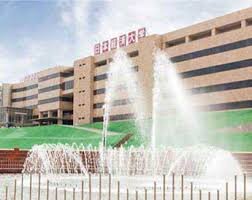 The Japan University of Economics was established as a college specializing in Economics in 1968 and now specialized in Economics, Business, and Management. JUE currently has become a leading institution in accepting international students in Japan. Based upon our founding principles, we accept students from all walks of life who have minds rich in the spirit of inquiry into the field of economics and the spirit to take on challenges. Put another way, the fundamental educational principle of the Japan University of Economics is the cultivation of creative economists through the individual's development, based upon the recognition that the awakening of innate individual talents is the start point for manifesting creativity. Since its inception in three departments, Economics, Management, and Trade (currently renamed Commerce), our university has endeavored to train people who will contribute to society's development. In March 2007, we established a Department of Management Law. In 2014, the establishment of a Department of Health and Sports Management brought the number of departments to five with nineteen courses, all dedicated to providing the skills and abilities suited to the needs of globalized societies in the information age. In recent years we have, at the same time as welcoming overseas students, engaging experts from the world of business and industry, strengthening language programs to meet the demands of companies in the global marketplace, and putting efforts into a full program of IT education, also aimed to contribute to regional society through the provision of opportunities for continuing adult education. Individuality means the inborn characteristics specific to each person. Concerning education at the university level, this refers not to specific character traits but rather to specialist expertise attained by high-level education and training. At the Tsuzuki Education's Japan University of Economics, students choose, within the broader field of economics, courses that they are interested in or have a particular aptitude for, and focus on acquiring an individual specialism, thereby establishing a niche for themselves that others cannot imitate or follow. We place the most outstanding value upon the pursuit of professional specialism as a facet of individual identity. The decision as a university to eschew becoming a generalist university with multiple faculties and to remain devoted to and specialist in the study of economics and related fields is an expression of our belief in the individual specialism. Originality as unique creativity is something individuality alone brings. Our university promotes life by developing individuality, from specialization at university to a specialized professional position, and ultimately to one's true vocation and complete self-realization. The Japan University of Economics is one of the largest education providers to overseas students in Japan, with over 20 nationalities on campus. Moreover, many graduates can work in foreign and Japanese companies and have started their own business worldwide. JUE is ideal not only for those students who are considering going on to full undergraduate or graduate study in Japan but for anyone who wishes to improve their Japanese while enjoying all that university life has to offer. We hope with all our hearts that, by broadening horizons and imparting specialist knowledge for the development of each individual's respective talents, each of the young people who study with us can go forth into the world as truly global citizens. "We want to develop the individual-as-specialist, give them confidence, and send them forth into the world" is the salutation from our founders to the globalized world of the 21st century.
 International University of Japan (IUJ) was founded in 1982, with the extensive support of Japan's industrial, educational and local communities, to train professionals who can actively contribute to the international society with a high interdisciplinary and specialized knowledge level. As the nature of IUJ is very different from other Japanese graduate schools that mainly nurture scholars for academia, before stipulating its founding principles, IUJ was extensively discussed at the IUJ Advisory Committee, comprising eminent persons from industry and educational society, and at the Drafting Committee. The following are the Founding Principles of IUJ that have been made effective with the Board of Trustees Meeting's approval. The International University of Japan is a private postgraduate institution founded with the extensive support of Japan's industrial, financial and educational circles and administrative in the area where it was established. Its administrative policy, based on a spirit of progressive internationalism, is open and autonomous. The graduate School of the International University of Japan is a new professional school whose primary purpose is to educate capable young men and women and develop a high level of interdisciplinary and specialized knowledge that they can put to practical use in the international arena. Reflecting the above aims, teaching and research in the graduate School are, as a matter of Principle, interdisciplinary and are characterized by the comprehensive integration of area studies with the study of international relations and international management. To develop a high level of specialized knowledge in its students, the Graduate School aims to foster originality in teaching methods and the organization of its curriculum and respond to social needs through extensive research activities. Instruction in the Graduate School will, as a general rule, be conducted in English to educate talented men and women whose skills will be applicable throughout international society. The School opens its doors widely and welcomes persons with a wide variety of backgrounds and specialties, both from Japan and abroad, hoping that their practical knowledge will be further broadened and reinforced through friendship and interaction with other students. To effectively implement the above-stated aims, students will, as a rule, reside in dormitories. By living together, young people of different nationalities and with different backgrounds can be stimulated by each other's world views and awareness of critical issues and learn to work together. It is hoped that university graduates will promote a high level of mutual understanding and international friendship based on personal relationships and trust developed during their student days. The Graduate School has searched widely for distinguished scholars from Japan and abroad, who are experts in their fields, to create a truly international faculty, which will have a strong formative influence on the students by maintaining close contact with them not only in the classroom but outside of it in the opportunities offered for interaction with the local community so that the students' learning experiences can be both varied and meaningful. The objectives of IUJ are to: Teach and research academic theory and applications necessary for practical solutions for international society and international businesses. Foster global leaders who have a high level of professional knowledge and skills with a deep understanding of and respect for different cultures, thereby contributing to international society's development.
- The contemporary world requires our students to have a broader range of sophistication and skills than it has ever required. In a world that is continuously becoming even more interconnected and globalized, new skills are required to be a successful global citizen. These skills include communication, collaboration, critical thinking, risk-taking, intercultural awareness, international-mindedness, and life-long learning. We hope you will get a sense of how HJIS is a great place to learn and develop these essential skills. Horizon is a remarkable learning environment in which individuals from over 33 nationalities teach, learn, and grow every day. Our students are given unique opportunities to explore and help them prosper as they grow. Our school provides an education that combines high academic standards with a genuinely international personal perspective and good character. We have a carefully blended curriculum of the IB Diploma Programme, Cambridge Curricula, adapted UK frameworks, and the Japanese Curriculum. The Curricula provide a rigorous, comprehensive educational program preparing our students for the next phase of their education and equipping them with the required skills and qualifications to be fruitful members of their communities. This challenging education occurs in an ideal learning environment at both our Yokohama and the Sendai Campuses. On these campuses, the students can focus on their academics and develop strategies for making a real difference in the lives of their own and their communities. As an authorized IB World School, Horizon students in PreSchool level through Upper School follow the internationally recognized standards and practices governed by the International Baccalaureate Organization®(IB) in Geneva, Switzerland. Founded in 1966, the IB assures authorized World Schools meet international benchmarks for quality education. IB educators are specially trained to develop the student's natural curiosity. On 1 February 2016, 5,578 IB programs were being offered worldwide, across 4,335 schools in 136 countries and 76 languages. The IB organization uses the talents of educators worldwide to update Curriculum, train educators continuously, and evaluate programs. The IB pedagogy inspires exemplary teaching and learning. The ability to think critically, work collaboratively, communicate effectively, and solve complex problems distinguishes graduates of IB World Schools. The International Baccalaureate® (IB) is more than its educational programs and certificates. IB's reputation for quality comes from the organization's ability to work with partners and involve all stakeholders, particularly students, parents, and educators. Through these partnerships, the IB promotes intercultural understanding and respect, not as an alternative to a sense of cultural and national identity, but as an essential part of life. The IB Learner Profile demonstrates the personal and educational attributes students, educators, and IB communities intentionally develop. They represent our School Mission Statement and the International Baccalaureate Organization®Mission Statement in action. In addition to the classrooms, our modern facilities include a Lunch Room, a Multi-Purpose Room for drama some other activities and presentations, a Music Room, a Computer Lab, a Science Lab, an Art Room, two Japanese Rooms, a Math Room, a Resource Room, an EALRoom, a Library, and a Gymnasium. The HJIS grounds include a mini basketball pitch, a mini football field, and playing fields. We are aware that every child has different needs, and we try our best to accommodate those. The support programs include individual attention and group activities to promote academic achievement, facilitate post-secondary planning, and foster personal growth and interpersonal relationships. The EAL program's objective is to enable the inclusion of the EAL students in the mainstream class. We are proud of the quality of EAL support we provide to our students. Although students are required to have a certain level of English proficiency according to the year level, they are applying to enter. We work with our EAL team in cooperation with the homeroom teachers to enable the EAL students' transition into the mainstream class. Extracurricular activities are regarded as ongoing activities that aim at providing opportunities to improve on the areas of the students' interests. Therefore, while these opportunities address a range of interest to the students, the number of activities is kept to a minimum so the school can provide more specialized education. Horizon Japan International School, Summer School program, is designed to provide children with opportunities to enrich their language skills and socialize with new friends through various enjoyable activities. Students will focus on a variety of activities such as language art games, art, drama, outdoor activities, group games, and projects in the program's relaxed academic environment. The program is divided into four week-long sessions! View full school
- Indian International School was established in the year 1984. It is an English medium Co-educational Independent school affiliated to CBSE with affiliation number 7530001 and has a General affiliation which is valid up to 31/3/2021. It is located in the Japan district of Foreign Schools and is currently being managed by the India International School In Japan Committee, Foreign Schools. It is presently under the principal -administration of Arul Jothi. There are a total of 37 rooms, 1 Labs, and 2 Library present in the school. You can find other information about the school in the tables below. NATURE OF THE SCHOOL Category of School Co-educational Medium of Instruction English Types of School Independent Labs and Rooms Details Total Rooms Total Lab Total Libraries Small Room Medium Room Large Room School Area (in Sq m.) Play Area (in Sq m.) 37 1 2 12 20 5 8498 4327 View full school
 On August 1, 2017, the International School of Asia, Karuizawa (ISAK) officially became UWC ISAK Japan, joining 16 other schools in a shared mission to make education a force to unite people, nations, and cultures for peace and a sustainable world. Along with our new shared mission, we continue to empower our students to be mindful, to take action in the face of discomfort, and to use diversity as a strength. This practice enables our students to develop their own residential management rules, form their clubs and activities, and create a campus environment that respects every member of our community. We believe not only in the power of education but also in the power of young people to become catalysts for positive change. We aim to create an environment where students learn to understand and appreciate different perspectives, challenge themselves academically and emotionally, and develop their innate potential as change-makers who can identify what is most important and needed, take action in the face of discomfort, use diversity as a strength, and support others in this practice. Our school motto reflects our hopes for and dedication to all UWC ISAK Japan students as they journey through one of the most important and exciting times of their lives. At UWC ISAK Japan, Grade 10 (Pre-IB) students acquire fundamental leadership skills through a year-long program that includes Mindful Self-Discipline and Design Innovation. Through the combination of these courses, students learn how to consider different perspectives and respond thoughtfully in challenging situations, how to see problems as opportunities, and how to create and tell their stories in a way that builds consensus. In the spring, Grade 10 students use the skills they have learned to investigate their interests as they begin to develop potential CAS projects for Grade 11. We understand that choosing a college or university is an individual process, unique to each student. Our two full-time university advisors support UWC ISAK Japan’s fundamental mission to help students develop into transformational leaders by thoughtfully exploring all post-secondary options with an open mind. We make an effort to expose students to many different types of universities so they can make informed choices about what schools will be the best fit — academically, geographically, personally, and financially. The advisors use a wide range of resources to support students and parents before, during, and after the application process. From college fairs to parent information sessions, we strive to provide the tools and information needed to help our students and families make the best decisions about where to apply. The rigorous IB curriculum and UWC ISAK Japan’s innovative leadership program make our students highly sought after by universities around the world. Graduates of UWC Japan have matriculated to college and universities in thirteen countries. Schools in the United States include Brown University, University of California Berkley, Smith College, Carnegie Mellon, Tufts University, and Carleton College. In Japan, students have been accepted to Osaka University, Waseda University, Keio University, and ICU. Elsewhere, students have been accepted to the London School of Economics, University of Amsterdam, Savannah College of Arts and Design (Hong Kong), and the University of British Columbia, among others. At UWC ISAK Japan, you will share a two-person or four-person bedroom in a house for 12 to 18 students. Each house includes a spacious living room/lounge area, as well as a small kitchenette and free laundry facilities. In nearly all cases, we will assign you, roommates, from different countries and backgrounds, giving you the chance to learn about other cultures and perspectives daily. Additionally, you and your housemates are in charge of developing and implementing your systems for house management, providing you with an opportunity to develop your leadership, problem-solving, and conflict-resolution skills. In addition to the Residential Advisors (RAs) — students elected by their peers to keep the house operating smoothly and resolve minor issues — your house will be overseen by a House Mentor, a faculty member whose role is to support you in your residential setting. Our focus is on access for everyone, with an emphasis on body positivity and health, conservation, sustainability, real-time teamwork, and leadership. A wide range of activities is scheduled each year, including hiking, snowshoeing, cycling, climbing, skiing, canyoning, and overnight camps. There is also flexibility for students to propose their journeys and missions within and outside of these areas. Traveling by train is the easiest way to get to UWC ISAK Japan from Tokyo’s Narita Airport. From the airport, take the Narita Express train to Tokyo Station. Then connect to the Hokuriku Shinkansen (bullet train) line for a 70-minute ride to Karuizawa. From Karuizawa, take a taxi to campus (approx. 4,000 yen), or take the local Shinano Line train two stops to Shinano-Oiwake. Our campus is a short ten-minute taxi ride from Shinano-Oiwake!
 In 1999, NWIS was established as a supplementary school for Japanese children attending an international school, and at the same time, a summer school, etc. was held. In 2003, I had NWIS Preschool in Sengawa, Tokyo, 2003 because I thought that I wanted to experience the difference in early childhood education between Japan and North America in kindergarten practice at the time of my study abroad in the US and to experience excellent North American programs for children living in Japan Opening school. I have devoted a quarter-century too early childhood education. At New World International School, we believe that children can learn when they are loved and encouraged in a safe, warm and fun environment. Teachers treat each child as an individual with his or her personality and development style. Using a variety of teaching methods Children who respectfully respect themselves and have good self-esteem will enjoy learning, be proud of themselves, and will learn to respect others. The physical, intellectual, social, and emotional development of a child is the same as the students the opportunity to play. Our program to this natural approach to learning and builds upon it. Through touching Through play, they learn how to solve problems and work cooperatively with others. Play (with purpose) will be the central element of the NWIS curriculum. Instead, Dr. Gardner proposes eight different bits of intelligence (Institute of intelligence, professor of education at Harvard University. The based suggestion that the traditional notion of intelligence, based on IQ testing, is far too limited. to account for a broader range of human potential in children and adults. The program for our 3 to 4-year-old classes is based on a specialized thematic curriculum featuring their letters, shapes, colors, and numbers. We aim to have our K3 say their alphabet, identity upper and lower case letters, and know their sounds Our Handwriting Without Tears® program assists in the development of their writing and fine motor skills. Our K3 can count, write their numbers, and understand the Our curriculum considers the different development levels and needs of each child. We realize how important it is for children to learn through play, We have developed an original approach to language acquisition that helps our students to become bitrate. Our goal is to make each day a successful and positive experience for each child. It is a class for children of young children. This class will be the year of the full-scale start of the theme learning curriculum. Using MI theory, we will learn the theme of each month through music, art, cooking, science, hand and whole-body movement, language, mathematics, and so on. By giving a rich educational environment at this time of wanting to see, want to know, touch, want to touch, full of curiosity, we will connect that interest to intellectual curiosity, inquiry mind. In addition to phonics and reading, we will introduce a US writing program to cultivate pre-writing skills. We will acquire not only figures but also experiences of mathematics of numbers and their concepts, figures, patterns, graphs, and other mathematics. Even in language, we will learn naturally by English as a word of living, at the time of absorption without resistance. Every day in the English environment, Kindergarten's older brothers, sisters are stimulated, words and play spread a lot. Every day children grow up with small success experiences and prepare for advancement. Our goal is to provide a curriculum that will give a child a strong foundation intellectually, physically, and socially. We have developed a year-long program where each monthly theme is linked to the next to allow our students to build upon The curriculum is adapted to progress the developmental needs, each of the children at the particular stage. their program also incorporates math and science, language art, gross motor skills, and learning centers. that the children are free to choose from, This gives each child the independence to decide a part of their own learning experience a day. The program is offered in a very hands-on method K 4 learn phonics, sight words, family words, and simple We also cover logic/math smart, numerals, odd and even numbers, measurements, patterns, addition, and subtraction. NWIS activities and choices stimulate a child's sense of curiosity. We strive for a well-measured balance of play, discovery, and participation to be blended into our day for maximum learning. We strive for a well-measured balance of play, discovery, and participation to be blended into our day for maximum learning. We strive for a well-measured balance of play, discovery, and participation to be blended into our day for maximum learning. We will learn and enjoy each child's developmental stage and growth process with parents and children through circle time, music, dance, art, reading of picture books, etc. We will make English familiar with many talks, reading, chants, and Mother Goose, etc. We will also introduce how to support your child at home to raise your child by literacy!
 As the global IT boom reached Japanese shores, Indian IT professionals led the charge. It was 1999 and nearly 17,000 of them had relocated here. But because of the high cost of living and even higher tuition costs at local international schools, most of these young engineers left behind their wives and children in India. A few lucky ones enrolled their children in local Japanese and international schools, but many grappled with a language handicap or missed an entire school year when relocating back to India. The time was ripe for an Indian school. And so, on August 15, 2004, India International School in Japan opened its doors with a student body of 27. Today, that number reaches well into the hundreds enrolled in kindergarten through 12th grade. To provide an Indian curriculum that inculcates positive attitudes, values, and habits in the students’ overall development. To provide a place where students reflect understanding, compassion, cooperation, and knowledge in all their actions. To emphasize not only the acquisition of knowledge but also positive work and health habits and other personal/social qualities that form character and personality. To Nurture an environment where students learn to respect other cultures so that they become responsible global citizens. And finally, but most importantly, provide a home away from home. India International School in Japan’s Yokohama campus is located in the Kirigaoka area of Midori-Ku in Yokohama City. It is housed in a 3 storied beautiful school building with playground and Gym facilities. It has four sections – Kindergarten, Elementary, Middle, and Secondary school. It has students aged 3 to 5 years and is taught by two teachers. The medium of instruction is English and students learn Phonics, Math, Social Studies, Music, and Computer Science. Equal importance is given to physical education also. School timings are from 9:30 am to 2:30 pm. The first, second, third, fourth, and fifth-grade students are taught a CBSE-based Indian curriculum which includes English, Maths, Science, Social Studies, Hindi, Computer Science, and Music. Class timings are 9:30 am to 3 pm. Bus service is available to all the students on request. The sixth, seventh and eighth-grade students are taught a CBSE-based Indian curriculum which includes English, Maths, Science, Social Studies, Hindi, Computer Science, and Music. Class timings are 9:30 am to 3 pm. Bus service is available to all the students on request. The ninth grade and tenth students are taught a CBSE-based Indian curriculum which includes English, Maths, Science, Social Studies, Hindi, Computer Science, and Music. Class timings are 9:30 am to 3 pm. The students of Class IX and X undergo the CBSE evaluation method, with the term divided into two, the first one from April to September and the second one from October to March. Please click here to know more about the evaluation process. Bus service is available to all the students on request. At India International school in Japan, students at all levels are strongly encouraged to participate in various sports activities. The School uses its playground and gym for these activities. Sports are fun and offer students the opportunity to develop skills, make lasting friendships, and learn the values of discipline and sportsmanship. Sports are also important to promote physical fitness and competitiveness among students. Computer Science is taught as a compulsory subject. The computers are equipped with network access to allow students to explore the Internet. There are a variety of specialized educational programs also installed on the computers. Students may work in the lab on subject-related projects, under the supervision of respective subject teachers. The Montessori approach to education is based upon the child's natural inner growth and spontaneous learning. Its goal is to foster the child's development so that he/she can reach his/her full potential. To assist this purpose, children work in specifically prepared environments, which enable them to develop essential skills (for example critical thinking, concentration, independence, and cooperation) while absorbing key academic concepts. Children take part in the joy of learning. In this system, education becomes a preparation for life. The child is given the best possible conditions to promote physical, social, emotional, and intellectual development. Most learning activities are individualized so that he/she engages in a learning task that appeals to him/her and builds a positive attitude toward learning. Through a series of absorbing experiences, he/she forms habits of extended attention, increasing his/ her ability to concentrate. At IISJ, we believe that there is a brilliant child locked inside each student. Our students love coming to school every day as we provide a happy and healthy environment that is caring, nurturing, and supportive of all those who work and study in our school. Our educational methodology is built on the understanding that when children enjoy what they are doing, they learn more. With this in mind, every activity is made educational as well as enjoyable. Our students continuously learn and retain not just write and memorize. They are encouraged to verbalize and voice their opinions and ideas, which in turn helps us to meet the distinctive needs of every individual student. Our objective here is to gently train and teach our students to believe in themselves as learners and as individuals!
 There are many countries, with different cultures and customs, languages and values, which exist in this world. Children will live in this world where they will be required to understand each other’s values, respect them and look for ways to live together and collaborate. We would like to raise Japanese children as “Global Citizens”. To achieve this goal, we believe that our children should develop an appreciation of their Japanese identity, strong academic skills, language skills in both Japanese and English, information handling skills, and understanding and respect for other cultures. At Horizon Sendai Primary School, we provide an exceptional educational environment by implementing an English immersion program, promoting global understanding, enhancing information handling activities, and language expression activities to educate the global citizens of tomorrow. We strongly believe that our children will grow into the global leaders of tomorrow, as well as being individuals we can all be proud of. The mission of Horizon Gakuen, as a multicultural and diverse learning community, is to provide students with a high-quality international education and a lifelong passion for academic, social, and personal success in a safe, supportive, challenging, non-discriminatory, and responsive environment that promotes self-discipline, motivation, and excellence. Inspire its students to strive for excellence in all aspects of their development: academic, artistic, social, and physical by providing the best possible learning environment which combines a well-balanced curriculum with extra-curricular activities. Our facilities are surrounded by lush green, tranquil scenery and in an environment where children can play contentedly. Our school building resembles a fairy-tale-like castle that has an enchanting charm. We try to create a fun-filled atmosphere. Our bus routes cover most of the Sendai central area. Routes are arranged as new students are enrolled. Also, there is a bus after 6 pm for daycare users. School lunch will be provided through Shokuiku Food Systems Tohoku which is specialized in kindergarten school lunches!
 As the global IT boom reached Japanese shores, Indian IT professionals led the charge. It was 1999 and nearly 17,000 of them had relocated here. But because of the high cost of living and even higher tuition costs at local international schools, most of these young engineers left behind their wives and children in India. A few lucky ones enrolled their children in local Japanese and international schools, but many grappled with a language handicap or missed an entire school year when relocating back to India. The time was ripe for an Indian school. And so, on August 15, 2004, India International School in Japan opened its doors with a student body of 27. Today, that number reaches well into the hundreds enrolled in kindergarten through 12th grade. To provide an Indian curriculum that inculcates positive attitudes, values, and habits in the students’ overall development. To provide a place where students reflect understanding, compassion, cooperation, and knowledge in all their actions. To emphasize not only the acquisition of knowledge but also positive work and health habits and other personal/social qualities that form character and personality. To Nurture an environment where students learn to respect other cultures so that they become responsible global citizens. And finally, but most importantly, provide a home away from home. Located in the bustling capital city of Tokyo, India International School in Tokyo, Japan (IISJ) is a non-profit, co-educational senior secondary school affiliated to the Central Board of Secondary Education ( CBSE ) New Delhi India. Indian School in Tokyo, with a mission that seeks to educate and empower through knowledge, IISJ, currently offers instruction in kindergarten through to senior secondary school. The curriculum is based on India's CBSE guidelines. The teaching staff of this CBSE school in Tokyo, Japan, is made up of consists of certified, highly experienced teachers. Thanks to its international surroundings, IISJ is in a unique position to offer an education that combines, literally, the best of all worlds. In recognition of that fact, the student enrollment at IISJ has been growing steadily since the school opened on August 15, 2004. However, class sizes are kept small so that students receive consistent, individual attention from teachers as they proceed from kindergarten through the upper grades. Also, because IISJ is a unique English medium Indian school in Tokyo, which follows the national curriculum set by CBSE India, students relocating from (and eventually back to) India will not be disrupting their coursework. It will only be complemented by their unique opportunity to live and share in a thriving, cosmopolitan city. India International School has five sections. Montessori Kindergarten, Elementary, Middle, Secondary, and Senior Secondary Section. Kindergarten is divided into Lower Kindergarten and Upper Kindergarten. In Lower Kindergarten, two and half-year-old children are admitted. Here, the class atmosphere is very informal. Emphasis is placed on building basic vocabulary through rhymes, developing motor skills through Montessori material, and acquiring personality traits such as sharing and helping. Through practical life exercises, kindergarteners learn basic tasks of everyday life. The Indian school in Tokyo, Japan follows the CBSE curriculum. To facilitate a smooth transition for students coming from or going to the ICSE system, the curriculum has been additionally adjusted. The medium of instruction is English. Hindi is taught as a regular subject. We are offering Tamil from 1st grade onwards and French from 3rd grade onwards. Books and materials are as prescribed by the National Council of Educational Research and Training. In addition, Japanese is taught to integrate students with the local culture. Extra-curricular activities include art, piano, Indian music, dance, Soccer, and other sports. The Montessori approach to education is based upon the child's natural inner growth and spontaneous learning. Its goal is to foster the child's development so that he/she can reach his/her full potential. To assist this purpose, children work in specifically prepared environments, which enable them to develop essential skills (for example critical thinking, concentration, independence, and cooperation) while absorbing key academic concepts. Children take part in the joy of learning. In this system, education becomes a preparation for life. The child is given the best possible conditions to promote physical, social, emotional, and intellectual development. Most learning activities are individualized so that he/she engages in a learning task that appeals to him/her and builds a positive attitude toward learning. Through a series of absorbing experiences, he/she forms habits of extended attention, increasing his/ her ability to concentrate. At IISJ, we believe that there is a brilliant child locked inside each student. Our students love coming to school every day as we provide a happy and healthy environment that is caring, nurturing, and supportive of all those who work and study in our school. Our educational methodology is built on the understanding that when children enjoy what they are doing, they learn more. With this in mind, every activity is made educational as well as enjoyable. Our students continuously learn and retain not just write and memorize. They are encouraged to verbalize and voice their opinions and ideas, which in turn helps us to meet the distinctive needs of every individual student. Our objective here is to gently train and teach our students to believe in themselves as learners and as individuals!
 Christian Academy in Japan (CAJ) is a K-12 school established in 1950 to provide Christ-centered education to the children of evangelical missionaries. While continuing in this purpose, CAJ also serves other families who desire this type of education for their children. We serve approximately 450 students in our day school program and more than 300 students in our School Support Services program. Our program uses English as the language of instruction and a North American curriculum. A division of CAJ, SSS has been meeting the needs of English-speaking homeschoolers in Japan since 1983 with consultancy, resources, and programs. Some SSS families homeschool all subjects while others send their children to Japanese schools and supplement with English studies at home. SSS also provides support for affiliated schools. Creation in the image of the one living and true God bestows special dignity and value on all human beings and mandates us to be God's agents of creativity, care, and compassion in the world. School Support Services website! SSS has been meeting the needs of English-speaking homeschoolers in Japan since 1983. As a division of Christian Academy in Japan, we share CAJ’s commitment to equipping students to serve Japan and the world for Christ. SSS provides Christ-centered educational support for the children of evangelical missionaries and other families who desire this type of assistance. Some SSS families homeschool all subjects while others send their children to Japanese schools and supplement with English studies at home. Several small Christian schools have affiliated with SSS to augment what they can offer their students. SSS was established to help Christian evangelical missionary families in Japan who homeschool their children or supplement Japanese schools with English studies at home. Over the years we have welcomed other families to SSS who desire this same kind of Christ-centered educational help. We have quite a few families from international marriages. The CAJ library supports the educational, spiritual, and intellectual needs and interests of students, staff, and parents, enabling and encouraging a lifetime passion for learning and reading. We provide a variety of print resources and online databases for research or leisure. The library provides non-fiction that broadens and deepens students’ knowledge and fiction that teaches human truths and builds empathy. CAJ's library seeks to inspire and cultivate well-informed and well-read individuals, equipping them to serve Japan and the world for Christ!
 The contemporary world requires our students to have a broader range of sophistication and skills than it has ever required. In a world that is continuously becoming even more interconnected and globalized, new skills are required to be a successful global citizen. These skills include communication, collaboration, critical thinking, risk-taking, intercultural awareness, international-mindedness, and life-long learning. We hope you will get a sense of how HJIS is a great place to learn and develop these essential skills. Horizon is a remarkable learning environment in which individuals from over 33 nationalities teach, learn, and grow every day. Our students are given unique opportunities to explore and help them prosper as they grow. Our school provides an education that combines high academic standards with a genuinely international personal perspective and good character. We have a carefully blended curriculum of the IB Diploma Programme, Cambridge Curricula, adapted UK frameworks, and the Japanese Curriculum. The Curricula provide a rigorous, comprehensive educational program preparing our students for the next phase of their education and equipping them with the required skills and qualifications to be fruitful members of their communities. This challenging education occurs in an ideal learning environment at both our Yokohama and the Sendai Campuses. On these campuses, the students can focus on their academics and develop strategies for making a real difference in the lives of their own and their communities. As an authorized IB World School, Horizon students in PreSchool level through Upper School follow the internationally recognized standards and practices governed by the International Baccalaureate Organization®(IB) in Geneva, Switzerland. Founded in 1966, the IB assures authorized World Schools meet international benchmarks for quality education. IB educators are specially trained to develop the student's natural curiosity. On 1 February 2016, 5,578 IB programs were being offered worldwide, across 4,335 schools in 136 countries and 76 languages. The IB organization uses the talents of educators worldwide to update Curriculum, train educators continuously, and evaluate programs. The IB pedagogy inspires exemplary teaching and learning. The ability to think critically, work collaboratively, communicate effectively, and solve complex problems distinguishes graduates of IB World Schools. The International Baccalaureate® (IB) is more than its educational programs and certificates. IB's reputation for quality comes from the organization's ability to work with partners and involve all stakeholders, particularly students, parents, and educators. Through these partnerships, the IB promotes intercultural understanding and respect, not as an alternative to a sense of cultural and national identity, but as an essential part of life. The IB Learner Profile demonstrates the personal and educational attributes students, educators, and IB communities intentionally develop. They represent our School Mission Statement and the International Baccalaureate Organization®Mission Statement in action. In addition to the classrooms, our modern facilities include a Lunch Room, a Multi-Purpose Room for drama some other activities and presentations, a Music Room, a Computer Lab, a Science Lab, an Art Room, two Japanese Rooms, a Math Room, a Resource Room, an EALRoom, a Library, and a Gymnasium. The HJIS grounds include a mini basketball pitch, a mini football field, and playing fields. We are aware that every child has different needs, and we try our best to accommodate those. The support programs include individual attention and group activities to promote academic achievement, facilitate post-secondary planning, and foster personal growth and interpersonal relationships. The EAL program's objective is to enable the inclusion of the EAL students in the mainstream class. We are proud of the quality of EAL support we provide to our students. Although students are required to have a certain level of English proficiency according to the year level, they are applying to enter. We work with our EAL team in cooperation with the homeroom teachers to enable the EAL students' transition into the mainstream class. Extracurricular activities are regarded as ongoing activities that aim at providing opportunities to improve on the areas of the students' interests. Therefore, while these opportunities address a range of interest to the students, the number of activities is kept to a minimum so the school can provide more specialized education. Horizon Japan International School, Summer School program, is designed to provide children with opportunities to enrich their language skills and socialize with new friends through various enjoyable activities. Students will focus on a variety of activities such as language art games, art, drama, outdoor activities, group games, and projects in the program's relaxed academic environment. The program is divided into four week-long sessions!
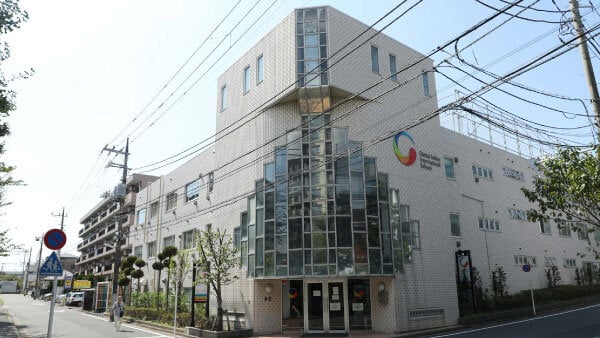 Global Indian International School was founded in the year 2000. It is an English medium Co-educational Independent school affiliated to CBSE with affiliation number 7530002 and has a General affiliation which is valid up to 31/3/2021. It is located in the Japan district of Foreign Schools and is currently being managed by the Global Indian Education Foundation, Foreign Schools. It is presently under the principal -administration of RAJESWARY SAMBATHRAJAN. There are a total of 39 rooms, 3 Labs, and 1 Library present in the school. You can find other information about the school in the tables below. NATURE OF THE SCHOOL Category of School Co-educational Medium of Instruction English Types of School Independent Labs and Rooms Details Total Rooms Total Lab Total Libraries Small Room Medium Room Large Room School Area (in Sq m.) Play Area (in Sq m.) 39 3 1 7 25 7 2314 12872
- Christian Academy in Japan (CAJ) is a K-12 school established in 1950 to provide Christ-centered education to the children of evangelical missionaries. While continuing in this purpose, CAJ also serves other families who desire this type of education for their children. We serve approximately 450 students in our day school program and more than 300 students in our School Support Services program. Our program uses English as the language of instruction and a North American curriculum. A division of CAJ, SSS has been meeting the needs of English-speaking homeschoolers in Japan since 1983 with consultancy, resources, and programs. Some SSS families homeschool all subjects while others send their children to Japanese schools and supplement with English studies at home. SSS also provides support for affiliated schools. Creation in the image of the one living and true God bestows special dignity and value on all human beings and mandates us to be God's agents of creativity, care, and compassion in the world. School Support Services website! SSS has been meeting the needs of English-speaking homeschoolers in Japan since 1983. As a division of Christian Academy in Japan, we share CAJ’s commitment to equipping students to serve Japan and the world for Christ. SSS provides Christ-centered educational support for the children of evangelical missionaries and other families who desire this type of assistance. Some SSS families homeschool all subjects while others send their children to Japanese schools and supplement with English studies at home. Several small Christian schools have affiliated with SSS to augment what they can offer their students. SSS was established to help Christian evangelical missionary families in Japan who homeschool their children or supplement Japanese schools with English studies at home. Over the years we have welcomed other families to SSS who desire this same kind of Christ-centered educational help. We have quite a few families from international marriages. The CAJ library supports the educational, spiritual, and intellectual needs and interests of students, staff, and parents, enabling and encouraging a lifetime passion for learning and reading. We provide a variety of print resources and online databases for research or leisure. The library provides non-fiction that broadens and deepens students’ knowledge and fiction that teaches human truths and builds empathy. CAJ's library seeks to inspire and cultivate well-informed and well-read individuals, equipping them to serve Japan and the world for Christ! View full school
- As the global IT boom reached Japanese shores, Indian IT professionals led the charge. It was 1999 and nearly 17,000 of them had relocated here. But because of the high cost of living and even higher tuition costs at local international schools, most of these young engineers left behind their wives and children in India. A few lucky ones enrolled their children in local Japanese and international schools, but many grappled with a language handicap or missed an entire school year when relocating back to India. The time was ripe for an Indian school. And so, on August 15, 2004, India International School in Japan opened its doors with a student body of 27. Today, that number reaches well into the hundreds enrolled in kindergarten through 12th grade. To provide an Indian curriculum that inculcates positive attitudes, values, and habits in the students’ overall development. To provide a place where students reflect understanding, compassion, cooperation, and knowledge in all their actions. To emphasize not only the acquisition of knowledge but also positive work and health habits and other personal/social qualities that form character and personality. To Nurture an environment where students learn to respect other cultures so that they become responsible global citizens. And finally, but most importantly, provide a home away from home. Located in the bustling capital city of Tokyo, India International School in Tokyo, Japan (IISJ) is a non-profit, co-educational senior secondary school affiliated to the Central Board of Secondary Education ( CBSE ) New Delhi India. Indian School in Tokyo, with a mission that seeks to educate and empower through knowledge, IISJ, currently offers instruction in kindergarten through to senior secondary school. The curriculum is based on India's CBSE guidelines. The teaching staff of this CBSE school in Tokyo, Japan, is made up of consists of certified, highly experienced teachers. Thanks to its international surroundings, IISJ is in a unique position to offer an education that combines, literally, the best of all worlds. In recognition of that fact, the student enrollment at IISJ has been growing steadily since the school opened on August 15, 2004. However, class sizes are kept small so that students receive consistent, individual attention from teachers as they proceed from kindergarten through the upper grades. Also, because IISJ is a unique English medium Indian school in Tokyo, which follows the national curriculum set by CBSE India, students relocating from (and eventually back to) India will not be disrupting their coursework. It will only be complemented by their unique opportunity to live and share in a thriving, cosmopolitan city. India International School has five sections. Montessori Kindergarten, Elementary, Middle, Secondary, and Senior Secondary Section. Kindergarten is divided into Lower Kindergarten and Upper Kindergarten. In Lower Kindergarten, two and half-year-old children are admitted. Here, the class atmosphere is very informal. Emphasis is placed on building basic vocabulary through rhymes, developing motor skills through Montessori material, and acquiring personality traits such as sharing and helping. Through practical life exercises, kindergarteners learn basic tasks of everyday life. The Indian school in Tokyo, Japan follows the CBSE curriculum. To facilitate a smooth transition for students coming from or going to the ICSE system, the curriculum has been additionally adjusted. The medium of instruction is English. Hindi is taught as a regular subject. We are offering Tamil from 1st grade onwards and French from 3rd grade onwards. Books and materials are as prescribed by the National Council of Educational Research and Training. In addition, Japanese is taught to integrate students with the local culture. Extra-curricular activities include art, piano, Indian music, dance, Soccer, and other sports. The Montessori approach to education is based upon the child's natural inner growth and spontaneous learning. Its goal is to foster the child's development so that he/she can reach his/her full potential. To assist this purpose, children work in specifically prepared environments, which enable them to develop essential skills (for example critical thinking, concentration, independence, and cooperation) while absorbing key academic concepts. Children take part in the joy of learning. In this system, education becomes a preparation for life. The child is given the best possible conditions to promote physical, social, emotional, and intellectual development. Most learning activities are individualized so that he/she engages in a learning task that appeals to him/her and builds a positive attitude toward learning. Through a series of absorbing experiences, he/she forms habits of extended attention, increasing his/ her ability to concentrate. At IISJ, we believe that there is a brilliant child locked inside each student. Our students love coming to school every day as we provide a happy and healthy environment that is caring, nurturing, and supportive of all those who work and study in our school. Our educational methodology is built on the understanding that when children enjoy what they are doing, they learn more. With this in mind, every activity is made educational as well as enjoyable. Our students continuously learn and retain not just write and memorize. They are encouraged to verbalize and voice their opinions and ideas, which in turn helps us to meet the distinctive needs of every individual student. Our objective here is to gently train and teach our students to believe in themselves as learners and as individuals! View full school
- There are many countries, with different cultures and customs, languages and values, which exist in this world. Children will live in this world where they will be required to understand each other’s values, respect them and look for ways to live together and collaborate. We would like to raise Japanese children as “Global Citizens”. To achieve this goal, we believe that our children should develop an appreciation of their Japanese identity, strong academic skills, language skills in both Japanese and English, information handling skills, and understanding and respect for other cultures. At Horizon Sendai Primary School, we provide an exceptional educational environment by implementing an English immersion program, promoting global understanding, enhancing information handling activities, and language expression activities to educate the global citizens of tomorrow. We strongly believe that our children will grow into the global leaders of tomorrow, as well as being individuals we can all be proud of. The mission of Horizon Gakuen, as a multicultural and diverse learning community, is to provide students with a high-quality international education and a lifelong passion for academic, social, and personal success in a safe, supportive, challenging, non-discriminatory, and responsive environment that promotes self-discipline, motivation, and excellence. Inspire its students to strive for excellence in all aspects of their development: academic, artistic, social, and physical by providing the best possible learning environment which combines a well-balanced curriculum with extra-curricular activities. Our facilities are surrounded by lush green, tranquil scenery and in an environment where children can play contentedly. Our school building resembles a fairy-tale-like castle that has an enchanting charm. We try to create a fun-filled atmosphere. Our bus routes cover most of the Sendai central area. Routes are arranged as new students are enrolled. Also, there is a bus after 6 pm for daycare users. School lunch will be provided through Shokuiku Food Systems Tohoku which is specialized in kindergarten school lunches! View full school
- As the global IT boom reached Japanese shores, Indian IT professionals led the charge. It was 1999 and nearly 17,000 of them had relocated here. But because of the high cost of living and even higher tuition costs at local international schools, most of these young engineers left behind their wives and children in India. A few lucky ones enrolled their children in local Japanese and international schools, but many grappled with a language handicap or missed an entire school year when relocating back to India. The time was ripe for an Indian school. And so, on August 15, 2004, India International School in Japan opened its doors with a student body of 27. Today, that number reaches well into the hundreds enrolled in kindergarten through 12th grade. To provide an Indian curriculum that inculcates positive attitudes, values, and habits in the students’ overall development. To provide a place where students reflect understanding, compassion, cooperation, and knowledge in all their actions. To emphasize not only the acquisition of knowledge but also positive work and health habits and other personal/social qualities that form character and personality. To Nurture an environment where students learn to respect other cultures so that they become responsible global citizens. And finally, but most importantly, provide a home away from home. India International School in Japan’s Yokohama campus is located in the Kirigaoka area of Midori-Ku in Yokohama City. It is housed in a 3 storied beautiful school building with playground and Gym facilities. It has four sections – Kindergarten, Elementary, Middle, and Secondary school. It has students aged 3 to 5 years and is taught by two teachers. The medium of instruction is English and students learn Phonics, Math, Social Studies, Music, and Computer Science. Equal importance is given to physical education also. School timings are from 9:30 am to 2:30 pm. The first, second, third, fourth, and fifth-grade students are taught a CBSE-based Indian curriculum which includes English, Maths, Science, Social Studies, Hindi, Computer Science, and Music. Class timings are 9:30 am to 3 pm. Bus service is available to all the students on request. The sixth, seventh and eighth-grade students are taught a CBSE-based Indian curriculum which includes English, Maths, Science, Social Studies, Hindi, Computer Science, and Music. Class timings are 9:30 am to 3 pm. Bus service is available to all the students on request. The ninth grade and tenth students are taught a CBSE-based Indian curriculum which includes English, Maths, Science, Social Studies, Hindi, Computer Science, and Music. Class timings are 9:30 am to 3 pm. The students of Class IX and X undergo the CBSE evaluation method, with the term divided into two, the first one from April to September and the second one from October to March. Please click here to know more about the evaluation process. Bus service is available to all the students on request. At India International school in Japan, students at all levels are strongly encouraged to participate in various sports activities. The School uses its playground and gym for these activities. Sports are fun and offer students the opportunity to develop skills, make lasting friendships, and learn the values of discipline and sportsmanship. Sports are also important to promote physical fitness and competitiveness among students. Computer Science is taught as a compulsory subject. The computers are equipped with network access to allow students to explore the Internet. There are a variety of specialized educational programs also installed on the computers. Students may work in the lab on subject-related projects, under the supervision of respective subject teachers. The Montessori approach to education is based upon the child's natural inner growth and spontaneous learning. Its goal is to foster the child's development so that he/she can reach his/her full potential. To assist this purpose, children work in specifically prepared environments, which enable them to develop essential skills (for example critical thinking, concentration, independence, and cooperation) while absorbing key academic concepts. Children take part in the joy of learning. In this system, education becomes a preparation for life. The child is given the best possible conditions to promote physical, social, emotional, and intellectual development. Most learning activities are individualized so that he/she engages in a learning task that appeals to him/her and builds a positive attitude toward learning. Through a series of absorbing experiences, he/she forms habits of extended attention, increasing his/ her ability to concentrate. At IISJ, we believe that there is a brilliant child locked inside each student. Our students love coming to school every day as we provide a happy and healthy environment that is caring, nurturing, and supportive of all those who work and study in our school. Our educational methodology is built on the understanding that when children enjoy what they are doing, they learn more. With this in mind, every activity is made educational as well as enjoyable. Our students continuously learn and retain not just write and memorize. They are encouraged to verbalize and voice their opinions and ideas, which in turn helps us to meet the distinctive needs of every individual student. Our objective here is to gently train and teach our students to believe in themselves as learners and as individuals! View full school
- In 1999, NWIS was established as a supplementary school for Japanese children attending an international school, and at the same time, a summer school, etc. was held. In 2003, I had NWIS Preschool in Sengawa, Tokyo, 2003 because I thought that I wanted to experience the difference in early childhood education between Japan and North America in kindergarten practice at the time of my study abroad in the US and to experience excellent North American programs for children living in Japan Opening school. I have devoted a quarter-century too early childhood education. At New World International School, we believe that children can learn when they are loved and encouraged in a safe, warm and fun environment. Teachers treat each child as an individual with his or her personality and development style. Using a variety of teaching methods Children who respectfully respect themselves and have good self-esteem will enjoy learning, be proud of themselves, and will learn to respect others. The physical, intellectual, social, and emotional development of a child is the same as the students the opportunity to play. Our program to this natural approach to learning and builds upon it. Through touching Through play, they learn how to solve problems and work cooperatively with others. Play (with purpose) will be the central element of the NWIS curriculum. Instead, Dr. Gardner proposes eight different bits of intelligence (Institute of intelligence, professor of education at Harvard University. The based suggestion that the traditional notion of intelligence, based on IQ testing, is far too limited. to account for a broader range of human potential in children and adults. The program for our 3 to 4-year-old classes is based on a specialized thematic curriculum featuring their letters, shapes, colors, and numbers. We aim to have our K3 say their alphabet, identity upper and lower case letters, and know their sounds Our Handwriting Without Tears® program assists in the development of their writing and fine motor skills. Our K3 can count, write their numbers, and understand the Our curriculum considers the different development levels and needs of each child. We realize how important it is for children to learn through play, We have developed an original approach to language acquisition that helps our students to become bitrate. Our goal is to make each day a successful and positive experience for each child. It is a class for children of young children. This class will be the year of the full-scale start of the theme learning curriculum. Using MI theory, we will learn the theme of each month through music, art, cooking, science, hand and whole-body movement, language, mathematics, and so on. By giving a rich educational environment at this time of wanting to see, want to know, touch, want to touch, full of curiosity, we will connect that interest to intellectual curiosity, inquiry mind. In addition to phonics and reading, we will introduce a US writing program to cultivate pre-writing skills. We will acquire not only figures but also experiences of mathematics of numbers and their concepts, figures, patterns, graphs, and other mathematics. Even in language, we will learn naturally by English as a word of living, at the time of absorption without resistance. Every day in the English environment, Kindergarten's older brothers, sisters are stimulated, words and play spread a lot. Every day children grow up with small success experiences and prepare for advancement. Our goal is to provide a curriculum that will give a child a strong foundation intellectually, physically, and socially. We have developed a year-long program where each monthly theme is linked to the next to allow our students to build upon The curriculum is adapted to progress the developmental needs, each of the children at the particular stage. their program also incorporates math and science, language art, gross motor skills, and learning centers. that the children are free to choose from, This gives each child the independence to decide a part of their own learning experience a day. The program is offered in a very hands-on method K 4 learn phonics, sight words, family words, and simple We also cover logic/math smart, numerals, odd and even numbers, measurements, patterns, addition, and subtraction. NWIS activities and choices stimulate a child's sense of curiosity. We strive for a well-measured balance of play, discovery, and participation to be blended into our day for maximum learning. We strive for a well-measured balance of play, discovery, and participation to be blended into our day for maximum learning. We strive for a well-measured balance of play, discovery, and participation to be blended into our day for maximum learning. We will learn and enjoy each child's developmental stage and growth process with parents and children through circle time, music, dance, art, reading of picture books, etc. We will make English familiar with many talks, reading, chants, and Mother Goose, etc. We will also introduce how to support your child at home to raise your child by literacy! View full school
- On August 1, 2017, the International School of Asia, Karuizawa (ISAK) officially became UWC ISAK Japan, joining 16 other schools in a shared mission to make education a force to unite people, nations, and cultures for peace and a sustainable world. Along with our new shared mission, we continue to empower our students to be mindful, to take action in the face of discomfort, and to use diversity as a strength. This practice enables our students to develop their own residential management rules, form their clubs and activities, and create a campus environment that respects every member of our community. We believe not only in the power of education but also in the power of young people to become catalysts for positive change. We aim to create an environment where students learn to understand and appreciate different perspectives, challenge themselves academically and emotionally, and develop their innate potential as change-makers who can identify what is most important and needed, take action in the face of discomfort, use diversity as a strength, and support others in this practice. Our school motto reflects our hopes for and dedication to all UWC ISAK Japan students as they journey through one of the most important and exciting times of their lives. At UWC ISAK Japan, Grade 10 (Pre-IB) students acquire fundamental leadership skills through a year-long program that includes Mindful Self-Discipline and Design Innovation. Through the combination of these courses, students learn how to consider different perspectives and respond thoughtfully in challenging situations, how to see problems as opportunities, and how to create and tell their stories in a way that builds consensus. In the spring, Grade 10 students use the skills they have learned to investigate their interests as they begin to develop potential CAS projects for Grade 11. We understand that choosing a college or university is an individual process, unique to each student. Our two full-time university advisors support UWC ISAK Japan’s fundamental mission to help students develop into transformational leaders by thoughtfully exploring all post-secondary options with an open mind. We make an effort to expose students to many different types of universities so they can make informed choices about what schools will be the best fit — academically, geographically, personally, and financially. The advisors use a wide range of resources to support students and parents before, during, and after the application process. From college fairs to parent information sessions, we strive to provide the tools and information needed to help our students and families make the best decisions about where to apply. The rigorous IB curriculum and UWC ISAK Japan’s innovative leadership program make our students highly sought after by universities around the world. Graduates of UWC Japan have matriculated to college and universities in thirteen countries. Schools in the United States include Brown University, University of California Berkley, Smith College, Carnegie Mellon, Tufts University, and Carleton College. In Japan, students have been accepted to Osaka University, Waseda University, Keio University, and ICU. Elsewhere, students have been accepted to the London School of Economics, University of Amsterdam, Savannah College of Arts and Design (Hong Kong), and the University of British Columbia, among others. At UWC ISAK Japan, you will share a two-person or four-person bedroom in a house for 12 to 18 students. Each house includes a spacious living room/lounge area, as well as a small kitchenette and free laundry facilities. In nearly all cases, we will assign you, roommates, from different countries and backgrounds, giving you the chance to learn about other cultures and perspectives daily. Additionally, you and your housemates are in charge of developing and implementing your systems for house management, providing you with an opportunity to develop your leadership, problem-solving, and conflict-resolution skills. In addition to the Residential Advisors (RAs) — students elected by their peers to keep the house operating smoothly and resolve minor issues — your house will be overseen by a House Mentor, a faculty member whose role is to support you in your residential setting. Our focus is on access for everyone, with an emphasis on body positivity and health, conservation, sustainability, real-time teamwork, and leadership. A wide range of activities is scheduled each year, including hiking, snowshoeing, cycling, climbing, skiing, canyoning, and overnight camps. There is also flexibility for students to propose their journeys and missions within and outside of these areas. Traveling by train is the easiest way to get to UWC ISAK Japan from Tokyo’s Narita Airport. From the airport, take the Narita Express train to Tokyo Station. Then connect to the Hokuriku Shinkansen (bullet train) line for a 70-minute ride to Karuizawa. From Karuizawa, take a taxi to campus (approx. 4,000 yen), or take the local Shinano Line train two stops to Shinano-Oiwake. Our campus is a short ten-minute taxi ride from Shinano-Oiwake! View full school
 Indian International School was established in the year 1984. It is an English medium Co-educational Independent school affiliated to CBSE with affiliation number 7530001 and has a General affiliation which is valid up to 31/3/2021. It is located in the Japan district of Foreign Schools and is currently being managed by the India International School In Japan Committee, Foreign Schools. It is presently under the principal -administration of Arul Jothi. There are a total of 37 rooms, 1 Labs, and 2 Library present in the school. You can find other information about the school in the tables below. NATURE OF THE SCHOOL Category of School Co-educational Medium of Instruction English Types of School Independent Labs and Rooms Details Total Rooms Total Lab Total Libraries Small Room Medium Room Large Room School Area (in Sq m.) Play Area (in Sq m.) 37 1 2 12 20 5 8498 4327


