
Search the Community
Showing results for tags 'educational'.
 Welcome to the Lithuanian University of Educational Sciences - the most prominent teacher training institution in Lithuania. With the start of its activity in 1935, its primary goal has been to educate a highly qualified professional in the chosen field of science. A professional teacher who can successfully operate in the fast-changing society is knowledgeable about the abilities and skills obtained and professionally active in the national educational institutions of different types and different contexts of international co-operation. Lithuanian University of Educational Sciences offers undergraduate, graduate, and postgraduate studies in humanities, social sciences, physical sciences, biomedicine, and technologies. The mission of the University: Society's education, which is based on modern education philosophy and the newest scientific knowledge. The University is striving to solidify its exceptional place in the Lithuanian and European Union higher education field as a University of Educational nature in studies, research and practice. The vision of the University: The most critical educational University, gradually solidifying this status in Central and Eastern regions of the European Union Institution that can change and adapt, is international, modern, attractive and competitive successfully trains specialists of broad-spectrum, develops fundamental and applied scientific research, applies the results in practice and provides various social, educational services. University is continually developing the specialized education model. It is continually renewing the study process and organization of scientific research the University will strive to keep the training of pedagogues and education specialists a priority. It will extend the variety of services offered to students and community groups of different areas. The origin of the Lithuanian University of Educational Sciences can be traced back to 1935, when the first higher teacher training establishment of Lithuania, the National Pedagogical Institute, was established in Klaipeda. The Institute was intended to educate teachers for primary schools and to develop educational sciences throughout Lithuania. During all the years of the institution's establishment, the Institute underwent numerous changes both in its status and geographical location. In March 1939, when the Nazis invaded and occupied the Region of Klaipeda, the Pedagogical Institute was moved to Panevezys, and in the autumn of the same year - to Vilnius. It was then renamed Vilnius Pedagogical Institute. In 1940, after the Soviet occupation of Lithuania, teacher training in the country was reformed according to the requirements raised for the Soviet schools. Due to the introduction of overall compulsory schooling in Lithuania, students' numbers gradually increased at the Institute. The teacher training scale expanded in Lithuania, and it included teaching educators of all the basic subjects for all-type schools of general education. The essential reforms of the institution started after the re-establishment of Lithuania's independence. In May of 1992, Vilnius Pedagogical Institute was renamed to Vilnius Pedagogical University by resolving the Supreme Council of the Republic of Lithuania. Afterward, in July of 1992, the Lithuanian Supreme Council ratified the University's Statute. The first Statute gave the University the rights of an autonomous institution and a new multilevel system of studies, the power to train scientists, and grant scientific degrees and titles. Lithuanian University of Educational Sciences offers degree study programs and non-degree courses. The primary language of instruction at LEU is Lithuanian. However, several Bachelor's and Master's degree study programs are taught in English and Russian languages. The University also offers doctorate studies for international students. Application information will be announced later.
 The Pontifical Faculty of Educational Sciences «Auxilium» is an ecclesiastical Faculty founded canonically at the Istituto delle Figlie di Maria Ausiliatrice (Institute of the Daughters of Mary Help of Christians or Salesian Sisters of Don Bosco) in 1970. Its origins date back to 1954 when the Figlie di Maria Ausiliatrice founded the International Higher Institute of Pedagogy and Religious Studies in Turin, which was recognized and approved by the Sacred Congregation for Religious in 1956. In 1966, by Decree of the Sacred Congregation of Seminaries and Universities, the Institute was incorporated into the Higher Institute of Pedagogy at the Salesian Pontifical University in Rome. The legal and academic ties between the two bodies were later redefined so that by 1970 the «Auxilium» had its statutes. To this day, however, the Faculty's Chancellor, the Rector Major of the Salesians of Don Bosco, also heads the Salesian Pontifical University. In 1978, the Faculty moved its headquarters to Rome. Faithful to the original inspiration and guidance of the Magisterium of the Church, it is committed to understanding the requests for training from different cultures to provide adequate responses and new perspectives. With the Holy See becoming a signatory of the Bologna Process, the Faculty is working to ensure comparability in the standards and quality of higher education, aiming to foster mutual recognition of training courses. The «Auxilium» continues to carry out its academic mission with the practicality and vision typical of the Salesian approach, a heritage which the University preserves and develops. The Pontifical Faculty of Educational Sciences «Auxilium» fosters and promotes research in educational sciences and trains researchers, teachers, and professionals at various levels in the field of education. Following a Christian perspective and aiming to help people fully achieve their potential, the Faculty believes that philosophy and theology play a fundamental role in well-balanced training in educational sciences. The Faculty's understanding of educational sciences respects the different education dimensions, approaching it from various angles - philosophical, theological, psychological, sociological, historical, legal, methodological, and communicative. The Faculty, therefore, offers general teacher training, together with specialized study in one of the fields of educational sciences. In keeping with Don Bosco's principles of Christian humanism in education, the Faculty studies the educational issues related to infancy, childhood, and adolescence, with particular attention on women's development. Auxilium is a leading Faculty for the training of education professionals. The Faculty operates primarily in the fields of training, study, and research and has the following aims: To maintain its position as a leading training institution for education professionals through constant innovation in the training provided and in the teaching and learning strategies applied To provide comprehensive training in the field of educational sciences To train both lay and religious students within the context of the new evangelism, preparing them for intercultural and interreligious dialogue To be involved in the international scientific community as a significant point of reference for reflection and research in the field of education To promote humanism, which comprehensively protects and educates individuals, using development and innovation to empower women and young people.
 Ontario Curriculum requirements will be met through active theme-based learning. Children working on the same topic may approach the curriculum through their learning style at their level. Assessment of learning style will be observational unless the parents request the formal assessment. Progress reports will be provided to parents each term. Grades 1 to 8 Children are taught in small groups by specialized teachers and or teachers registered with the college of teachers. The English program is supplemented with core French; extended French can be offered in High School only. The ratios maintained at Astolot are 6:1 in the primary grades, 10:1 in the junior grades, and 12:1 in the intermediate grades. Students returning to public school usually do so at the end of grade 6 or 8. Astolat students are evaluated through observation, tests, presentations, and conferences. The evaluation is presented to parents three times each year in a report card. Academic, speech, and language and psychological assessments, from outside sources, are considered when programming for children from grade 1 to grade 8. CCAC offers speech, OT, and Psychological services in all public and private schools in Ontario, through the Ministry of Health at no charge to parents. Assessment of learning style and needs will be observational. Once the child begins at Astolot Educational Centre, report cards, speech, hearing, and educational assessments will be reviewed before a child begins classes. In grades 1 to 8, the achievement is reported to parents, with the Ontario Curriculum as the standard. Many of our students function at a variety of grade levels, depending on the subject. Math may be at a different grade level than reading, which may be different from writing. Children working on the same topic may approach the curriculum through their learning style at their level. One child may use manipulatives for math. Another may use a calculator anther mental math, though they are in the same grade. Astolat staff will program accordingly, informing students of their areas of strength and areas in need of practice. The Ontario government is committed to enabling all students to reach their potential and to succeed. Our challenge is that every student is unique, and each must have opportunities to achieve success according to his or her interests, abilities, and goals. We have defined high expectations and standards for graduation while introducing a range of options that allow students to learn in ways that suit them best and enable them to earn their diplomas. We are proud that our students regularly place among the world's best on international standardized tests. Astolat Educational Centre strives to meet students' needs, grades 1 to 12, who have determined that their educational needs can be best served through small class sizes and by focusing on learning how to learn as an integral part of their day or that accommodations are essential. Standards of Behaviour: Respect, Civility, and Responsible Citizenship All members of the school community must: respect and comply with all applicable federal, provincial, and municipal laws demonstrate honesty and integrity respect differences in people, their ideas, and their opinions treat one another with dignity and respect at all times, and especially when there is disagreement respect and treat others fairly, regardless (difference)…respect the rights of others show proper care and regard for school property and the property of others take appropriate measures to help those in need seek assistance from a member of the school staff, if necessary, to resolve conflict peacefully respect all members of the school community, especially persons in positions of authority respect the need of others to work in an environment that is conducive to learning and teaching not swear at a teacher or another person in a position of authority… empowering students to be positive leaders in their school and community communicating regularly and meaningfully with all members of their school community. Teachers and Other School Staff Under the leadership of their principals, teachers, and other school staff maintain order in the school and are expected to hold everyone to the highest standard of respectful and responsible behavior. Teachers are responsible for reporting marks and comments to the administrator within two days of midterm and final exams each semester. Respect and responsibility are demonstrated when a student: comes to school prepared, on time, and ready to learn shows respect for himself or herself, for others, and for those in authority refrains from bringing anything to school that may compromise the safety of others follows the established rules and takes responsibility for his or her actions. All students at Astolot are expected to conduct themselves in a respectful manner and others at all times. Students who are not respectful will be asked to leave Astolat.
- Convant Educational Academyde was established in the year 2009. It is an English medium Co-educational Independent school affiliated to CBSE with affiliation number 2132282, with classes Nursery/KG/LKG, I to XII, and has a General affiliation which is valid up to 31/3/2021. It lies in the Rampur district of Uttar Pradesh and is currently being managed by the Nayyer Public Seva Samiti, Uttar Pradesh. It is presently under the principal -administration of TARA CHAND SHARMA, with a total of 11 staff members. There are a total of 20 rooms, 3 Labs, and 1 Library present in the school. The nearest railway station is Bilaspur and it is 18 KM far from the school. You can find other information about the school in the tables below. NATURE OF THE SCHOOL Category of School Co-educational Medium of Instruction English Types of School Independent LOCATION OF SCHOOL Nearest Railway Station Bilaspur Distance in KM 18 Nearest Police Station BilaspurMilakhanam Distance in KM 1 Nearest Nationalised Bank B.O.B Mathkhera Distance in KM 05 ENROLLMENT OF THE STUDENTS Class No. of Section No. of Student Nursery/KG/LKG 3 134 I-V 5 156 VI-VIII 3 48 IX-X 0 0 XI-XII 0 0 Labs and Rooms Details Total Rooms Total Lab Total Libraries Small Room Medium Room Large Room School Area (in Sq m.) Play Area (in Sq m.) 20 3 1 3 2 15 8100 6700 Labs and Rooms Details Room Number Size Length (in Ft.) Breadth (in Ft.) Class Room 11 25 20 Composite Science Lab 1 25 25 Physics Lab 0 0 0 Chemistry Lab 0 0 0 Biology Lab 0 0 0 Maths Lab 1 25 20 Computer Science Lab 1 45 30 Home Science Lab 0 0 0 Library 1 25 25 Other Rooms 2 20 20 PARTICULARS OF TEACHING STAFF Staff Number Trained Untrained NTTs 2 2 0 PRTs 2 1 1 TGTs 4 4 0 Librarian 1 1 0 PTI 1 1 0 PGTs 0 0 0 *Vice Principal/Supervisor/Head Master/ Head Mistres 1 1 0 Physical Size Area of Campus (in sq. Mtrs.) 8093.7128 (in Acres.) 2 Built up Area in (in sq. Mtrs.) 2000 Whether the School at one site or two site ONE Area of Playground (in sq. Mtrs.) 6100 SANITARY CONDITIONS Type of W.C and Urinals flush No. of Urinals/Lavatories Separately for Boys 2 No. of Urinals/Lavatories Separately for Girls 2 Potable Water yes Has Certificate about health and sanitary conditions, drinking water and fire safety of the school has been obtained from the competent authorities of the area? yes LIBRARY FACILITIES Total No of Books 1500 Periodicals 15 Dailies 02 Reference Books 1335 Magazine 50 SPORTS & GAMES Swimming Pool No Indoor Games Yes Dance Rooms No Gymnasium No Music Rooms Yes Hostel No Health and Medical Check up Yes View full school
- Ekalavya Educational Complex was founded in the year 1993. It is an English medium Girls Independent school affiliated to CBSE with affiliation number 330122 and has a General affiliation which is valid up to 31/3/2022. It is located in the Patna district of Bihar and is currently being managed by the Ekalavya Educational Trust, Bihar. It is presently under the principal -administration of DINESH KUMAR RAY. There are a total of 81 rooms, 04 Labs, and 1 Library present in the school. Labs and Rooms Details Total Rooms Total Lab Total Libraries Small Room Medium Room Large Room School Area (in Sq m.) Play Area (in Sq m.) 81 04 01 18 10 50 11657 7500 View full school
- Awan Educational Academy was established in the year 2012. It is an English medium Co-educational Independent school affiliated to CBSE with affiliation number 2132939, with classes Nursery/KG/LKG, I to XII, and has a General affiliation which is valid up to 31/3/2020. It is located in the Lucknow district of Uttar Pradesh and is currently being managed by the Awan Educational Academy, Uttar Pradesh. It is presently under the principal -administration of Mr.ARTY AWASTHI, with a total of 14 staff members. There are a total of 19 rooms present in the school. The nearest railway station is JUGGAUR and it is 2 KM far from the school. You can find other information about the school in the tables below. NATURE OF THE SCHOOL Category of School Co-educational Medium of Instruction English Types of School Independent LOCATION OF SCHOOL Nearest Railway Station JUGGAUR Distance in KM 2 Nearest Police Station JUGGAURCHINHAT Distance in KM 5 Nearest Nationalised Bank ALLAHABAD BANK Distance in KM 2 ENROLLMENT OF THE STUDENTS Class No. of Section No. of Student Nursery/KG/LKG 0 0 I 1 40 II 1 33 III 1 27 IV 1 26 V 1 21 VI 1 15 VII 1 20 VIII 1 18 IX 0 0 X 0 0 XI 0 0 XII 0 0 Labs and Rooms Details Room Number Size Length (in Ft.) Breadth (in Ft.) Class Room 10 25 20 Composite Science Lab 1 30 20 Physics Lab 0 0 0 Chemistry Lab 0 0 0 Biology Lab 0 0 0 Maths Lab 1 30 20 Computer Science Lab 1 30 20 Home Science Lab 0 0 0 Library 1 50 25 Other Rooms 5 25 20 Bio-Tech Lab 0 0 0 PARTICULARS OF TEACHING STAFF Staff Number Trained Untrained NTTs 0 0 0 PRTs 7 7 0 TGTs 5 5 0 Librarian 1 1 0 PTI 1 1 0 PGTs 0 0 0 *Vice Principal/Supervisor/Head Master/ Head Mistres 0 0 0 Physical Size Area of Campus (in sq. Mtrs.) 4690.266099036 (in Acres.) 1.15899 Built up Area in (in sq. Mtrs.) 1175 Whether the School at one site or two site NO Area of Playground (in sq. Mtrs.) 3850 SANITARY CONDITIONS Type of W.C and Urinals flush No. of Urinals/Lavatories Separately for Boys 14 No. of Urinals/Lavatories Separately for Girls 14 Potable Water yes Has Certificate about health and sanitary conditions, drinking water and fire safety of the school has been obtained from the competent authorities of the area? yes LIBRARY FACILITIES Total No of Books 2245 Periodicals 8 Dailies 4 Reference Books 575 Magazine 14 SPORTS & GAMES Swimming Pool No Indoor Games Yes Dance Rooms Yes Gymnasium No Music Rooms Yes Hostel No Health and Medical Check up Yes View full school
- Ontario Curriculum requirements will be met through active theme-based learning. Children working on the same topic may approach the curriculum through their learning style at their level. Assessment of learning style will be observational unless the parents request the formal assessment. Progress reports will be provided to parents each term. Grades 1 to 8 Children are taught in small groups by specialized teachers and or teachers registered with the college of teachers. The English program is supplemented with core French; extended French can be offered in High School only. The ratios maintained at Astolot are 6:1 in the primary grades, 10:1 in the junior grades, and 12:1 in the intermediate grades. Students returning to public school usually do so at the end of grade 6 or 8. Astolat students are evaluated through observation, tests, presentations, and conferences. The evaluation is presented to parents three times each year in a report card. Academic, speech, and language and psychological assessments, from outside sources, are considered when programming for children from grade 1 to grade 8. CCAC offers speech, OT, and Psychological services in all public and private schools in Ontario, through the Ministry of Health at no charge to parents. Assessment of learning style and needs will be observational. Once the child begins at Astolot Educational Centre, report cards, speech, hearing, and educational assessments will be reviewed before a child begins classes. In grades 1 to 8, the achievement is reported to parents, with the Ontario Curriculum as the standard. Many of our students function at a variety of grade levels, depending on the subject. Math may be at a different grade level than reading, which may be different from writing. Children working on the same topic may approach the curriculum through their learning style at their level. One child may use manipulatives for math. Another may use a calculator anther mental math, though they are in the same grade. Astolat staff will program accordingly, informing students of their areas of strength and areas in need of practice. The Ontario government is committed to enabling all students to reach their potential and to succeed. Our challenge is that every student is unique, and each must have opportunities to achieve success according to his or her interests, abilities, and goals. We have defined high expectations and standards for graduation while introducing a range of options that allow students to learn in ways that suit them best and enable them to earn their diplomas. We are proud that our students regularly place among the world's best on international standardized tests. Astolat Educational Centre strives to meet students' needs, grades 1 to 12, who have determined that their educational needs can be best served through small class sizes and by focusing on learning how to learn as an integral part of their day or that accommodations are essential. Standards of Behaviour: Respect, Civility, and Responsible Citizenship All members of the school community must: respect and comply with all applicable federal, provincial, and municipal laws demonstrate honesty and integrity respect differences in people, their ideas, and their opinions treat one another with dignity and respect at all times, and especially when there is disagreement respect and treat others fairly, regardless (difference)…respect the rights of others show proper care and regard for school property and the property of others take appropriate measures to help those in need seek assistance from a member of the school staff, if necessary, to resolve conflict peacefully respect all members of the school community, especially persons in positions of authority respect the need of others to work in an environment that is conducive to learning and teaching not swear at a teacher or another person in a position of authority… empowering students to be positive leaders in their school and community communicating regularly and meaningfully with all members of their school community. Teachers and Other School Staff Under the leadership of their principals, teachers, and other school staff maintain order in the school and are expected to hold everyone to the highest standard of respectful and responsible behavior. Teachers are responsible for reporting marks and comments to the administrator within two days of midterm and final exams each semester. Respect and responsibility are demonstrated when a student: comes to school prepared, on time, and ready to learn shows respect for himself or herself, for others, and for those in authority refrains from bringing anything to school that may compromise the safety of others follows the established rules and takes responsibility for his or her actions. All students at Astolot are expected to conduct themselves in a respectful manner and others at all times. Students who are not respectful will be asked to leave Astolat. View full school
 Convant Educational Academyde was established in the year 2009. It is an English medium Co-educational Independent school affiliated to CBSE with affiliation number 2132282, with classes Nursery/KG/LKG, I to XII, and has a General affiliation which is valid up to 31/3/2021. It lies in the Rampur district of Uttar Pradesh and is currently being managed by the Nayyer Public Seva Samiti, Uttar Pradesh. It is presently under the principal -administration of TARA CHAND SHARMA, with a total of 11 staff members. There are a total of 20 rooms, 3 Labs, and 1 Library present in the school. The nearest railway station is Bilaspur and it is 18 KM far from the school. You can find other information about the school in the tables below. NATURE OF THE SCHOOL Category of School Co-educational Medium of Instruction English Types of School Independent LOCATION OF SCHOOL Nearest Railway Station Bilaspur Distance in KM 18 Nearest Police Station BilaspurMilakhanam Distance in KM 1 Nearest Nationalised Bank B.O.B Mathkhera Distance in KM 05 ENROLLMENT OF THE STUDENTS Class No. of Section No. of Student Nursery/KG/LKG 3 134 I-V 5 156 VI-VIII 3 48 IX-X 0 0 XI-XII 0 0 Labs and Rooms Details Total Rooms Total Lab Total Libraries Small Room Medium Room Large Room School Area (in Sq m.) Play Area (in Sq m.) 20 3 1 3 2 15 8100 6700 Labs and Rooms Details Room Number Size Length (in Ft.) Breadth (in Ft.) Class Room 11 25 20 Composite Science Lab 1 25 25 Physics Lab 0 0 0 Chemistry Lab 0 0 0 Biology Lab 0 0 0 Maths Lab 1 25 20 Computer Science Lab 1 45 30 Home Science Lab 0 0 0 Library 1 25 25 Other Rooms 2 20 20 PARTICULARS OF TEACHING STAFF Staff Number Trained Untrained NTTs 2 2 0 PRTs 2 1 1 TGTs 4 4 0 Librarian 1 1 0 PTI 1 1 0 PGTs 0 0 0 *Vice Principal/Supervisor/Head Master/ Head Mistres 1 1 0 Physical Size Area of Campus (in sq. Mtrs.) 8093.7128 (in Acres.) 2 Built up Area in (in sq. Mtrs.) 2000 Whether the School at one site or two site ONE Area of Playground (in sq. Mtrs.) 6100 SANITARY CONDITIONS Type of W.C and Urinals flush No. of Urinals/Lavatories Separately for Boys 2 No. of Urinals/Lavatories Separately for Girls 2 Potable Water yes Has Certificate about health and sanitary conditions, drinking water and fire safety of the school has been obtained from the competent authorities of the area? yes LIBRARY FACILITIES Total No of Books 1500 Periodicals 15 Dailies 02 Reference Books 1335 Magazine 50 SPORTS & GAMES Swimming Pool No Indoor Games Yes Dance Rooms No Gymnasium No Music Rooms Yes Hostel No Health and Medical Check up Yes
- I.A.T.V. Educational Academy was founded in the year 2008. It is an English medium Co-educational Independent school affiliated to CBSE with affiliation number 1030467 and has a General affiliation which is valid up to 31/3/2021. It lies in the Indore district of Madhya Pradesh and is currently being managed by the Indore Anaj Tilhan Vyapari Saikshanik Nyas, Madhya Pradesh. It is presently under the principal -administration of SHUBHA RANJAN CHATTERJEE. There are a total of 48 rooms, 3 Labs, and 2 Library present in the school. You can find other information about the school in the tables below. NATURE OF THE SCHOOL Category of School Co-educational Medium of Instruction English Types of School Independent Labs and Rooms Details Total Rooms Total Lab Total Libraries Small Room Medium Room Large Room School Area (in Sq m.) Play Area (in Sq m.) 48 3 2 5 38 5 17220 8710 View full school
- Gyan Ganga Educational Academy was established in the year 1992. It is an medium Independent school affiliated to CBSE with affiliation number 3330020 and has a General affiliation which is valid up to 31/3/2021. It lies in the Raipur district of Chattisgarh and is currently being managed by the Gyan Ganga Education Society, Chattisgarh. It is presently under the principal -administration of PRATIMA RAJGOR. There are a total of 48 rooms, 7 Labs, and 1 Library present in the school. Labs and Rooms Details Total Rooms Total Lab Total Libraries Small Room Medium Room Large Room School Area (in Sq m.) Play Area (in Sq m.) 48 7 1 0 38 10 34037 12156 View full school
- Gyan Educational Institution, was founded in the year 2007. It is an English medium Co-educational Independent school affiliated to CBSE with affiliation number 230151, with classes Nursery/KG/LKG, I to XII, and has a General affiliation which is valid up to 31/3/2022. It lies in the Kamrup district of Assam and is currently being managed by the Gyan Educational Society, Assam. It is presently under the principal -administration of MR. DIYA DEURI, with a total of 16 staff members. There are a total of 28 rooms, 2 Labs, and 1 Library present in the school. The nearest railway station is Hurmutty Rly. station and it is 1 KM far from the school. You can find other information about the school in the tables below. NATURE OF THE SCHOOL Category of School Co-educational Medium of Instruction English Types of School Independent LOCATION OF SCHOOL Nearest Railway Station Hurmutty Rly. station Distance in KM 1 Nearest Police Station Hurmutty Rly. stationPS. Hurmutty Distance in KM 1.5 Nearest Nationalised Bank United Commercial Bank Distance in KM 2 ENROLLMENT OF THE STUDENTS Class No. of Section No. of Student VIII 1 40 XI 0 0 XII 0 0 Nursery/KG/LKG 3 120 I 1 40 II 1 39 III 1 35 IV 1 38 V 1 36 VI 1 42 VII 1 45 IX 0 0 X 0 0 Labs and Rooms Details Total Rooms Total Lab Total Libraries Small Room Medium Room Large Room School Area (in Sq m.) Play Area (in Sq m.) 28 2 1 5 10 10 6818 2880 Labs and Rooms Details Room Number Size Length (in Ft.) Breadth (in Ft.) Class Room 25 15 20 Composite Science Lab 1 60 20 Physics Lab 0 0 0 Chemistry Lab 0 0 0 Biology Lab 0 0 0 Maths Lab 1 15 20 Computer Science Lab 1 15 30 Home Science Lab 0 0 0 Library 1 60 20 Other Rooms 8 20 15 Bio-Tech Lab 0 0 0 PARTICULARS OF TEACHING STAFF Staff Number Trained Untrained NTTs 3 3 0 PRTs 5 4 1 TGTs 5 5 0 Librarian 1 1 0 PTI 1 1 0 PGTs 0 0 0 *Vice Principal/Supervisor/Head Master/ Head Mistres 1 1 0 Physical Size Area of Campus (in sq. Mtrs.) 6818.953034 (in Acres.) 1.6850 Built up Area in (in sq. Mtrs.) 2500.07 Whether the School at one site or two site NO Area of Playground (in sq. Mtrs.) 2880 SANITARY CONDITIONS Type of W.C and Urinals flush No. of Urinals/Lavatories Separately for Boys 10 No. of Urinals/Lavatories Separately for Girls 10 Potable Water no Has Certificate about health and sanitary conditions, drinking water and fire safety of the school has been obtained from the competent authorities of the area? yes LIBRARY FACILITIES Total No of Books 5800 Periodicals 5 Dailies 3 Reference Books 150 Magazine 5 SPORTS & GAMES Swimming Pool No Indoor Games Yes Dance Rooms Yes Gymnasium No Music Rooms Yes Hostel Yes Health and Medical Check up Yes View full school
- Gyan Educational Institution was founded in the year 1980. It is an English medium Co-educational Independent school affiliated to CBSE with affiliation number 230062 and has a General affiliation which is valid up to 31/3/2021. It is located in the Kamrup district of Assam and is currently being managed by the Gyan Educational Society, Assam. It is presently under the principal -administration of SUMITA ADHIKARY. There are a total of 40 rooms, 3 Labs, and 1 Library present in the school. You can find other information about the school in the tables below. NATURE OF THE SCHOOL Category of School Co-educational Medium of Instruction English Types of School Independent Labs and Rooms Details Total Rooms Total Lab Total Libraries Small Room Medium Room Large Room School Area (in Sq m.) Play Area (in Sq m.) 40 3 1 5 20 15 1968 1200 View full school
- Gyan Bharti Educational Complex was established in the year 2007. It is an English medium Co-educational Independent school affiliated to CBSE with affiliation number 330326, with classes Nursery/KG/LKG, I to XII, and has a General affiliation which is valid up to 31/3/2021. It lies in the Patna district of Bihar and is currently being managed by the Gyan Bharti Social &Welfare Trust, Bihar. It is presently under the principal -administration of AMRESH KUMAR LABH, with a total of 15 staff members. There are a total of 36 rooms, 5 Labs, and 1 Library present in the school. The nearest railway station is danapur and it is 20 KM far from the school. You can find other information about the school in the tables below. NATURE OF THE SCHOOL Category of School Co-educational Medium of Instruction English Types of School Independent LOCATION OF SCHOOL Nearest Railway Station danapur Distance in KM 20 Nearest Police Station danapurnaubatpur Distance in KM 05 Nearest Nationalised Bank bank of india Distance in KM 01 ENROLLMENT OF THE STUDENTS Class No. of Section No. of Student Nursery/KG/LKG 0 0 I-V 05 130 VI-VIII 3 124 IX-X 0 0 XI-XII 0 0 Labs and Rooms Details Total Rooms Total Lab Total Libraries Small Room Medium Room Large Room School Area (in Sq m.) Play Area (in Sq m.) 36 5 1 3 5 28 9308 5405 Labs and Rooms Details Room Number Size Length (in Ft.) Breadth (in Ft.) Class Room 10 25 20 Composite Science Lab 1 30 25 Physics Lab 0 0 0 Chemistry Lab 0 0 0 Biology Lab 0 0 0 Maths Lab 0 0 0 Computer Science Lab 1 25 20 Home Science Lab 0 0 0 Library 1 30 25 Other Rooms 0 0 0 PARTICULARS OF TEACHING STAFF Staff Number Trained Untrained NTTs 0 0 0 PRTs 8 8 0 TGTs 5 5 0 Librarian 1 1 0 PTI 1 1 0 PGTs 0 0 0 *Vice Principal/Supervisor/Head Master/ Head Mistres 0 0 0 Physical Size Area of Campus (in sq. Mtrs.) 8700.74126 (in Acres.) 2.15 Built up Area in (in sq. Mtrs.) 5000 Whether the School at one site or two site ONE Area of Playground (in sq. Mtrs.) 1500 SANITARY CONDITIONS Type of W.C and Urinals dry No. of Urinals/Lavatories Separately for Boys 8 No. of Urinals/Lavatories Separately for Girls 8 Potable Water yes Has Certificate about health and sanitary conditions, drinking water and fire safety of the school has been obtained from the competent authorities of the area? yes LIBRARY FACILITIES Total No of Books 1600 Periodicals 15 Dailies 3 Reference Books 414 Magazine 15 SPORTS & GAMES Swimming Pool No Indoor Games No Dance Rooms No Gymnasium No Music Rooms No Hostel No Health and Medical Check up Yes View full school
- Guruteg Bahadur Educational Academy was founded in the year 2005. It is an English medium Co-educational Independent school affiliated to CBSE with affiliation number 2131157, with classes Nursery/KG/LKG, I to XII, and has a General affiliation which is valid up to 31/3/2021. It lies in the Shahjahanpur district of Uttar Pradesh and is currently being managed by the Guruteg Bahadur Educational Society, Uttar Pradesh. It is presently under the principal -administration of ALOK KUMAR, with a total of 14 staff members. There are a total of 38 rooms, 5 Labs, and 1 Library present in the school. The nearest railway station is shajahanpur and it is 50 KM far from the school. You can find other information about the school in the tables below. NATURE OF THE SCHOOL Category of School Co-educational Medium of Instruction English Types of School Independent LOCATION OF SCHOOL Nearest Railway Station shajahanpur Distance in KM 50 Nearest Police Station shajahanpurbanda Distance in KM 01 Nearest Nationalised Bank bank of baroda Distance in KM 01 ENROLLMENT OF THE STUDENTS Class No. of Section No. of Student Nursery/KG/LKG 0 0 I-V 05 0172 VI-VIII 03 089 IX-X 0 0 XI-XII 0 0 Labs and Rooms Details Total Rooms Total Lab Total Libraries Small Room Medium Room Large Room School Area (in Sq m.) Play Area (in Sq m.) 38 5 1 6 20 12 11000 6700 PARTICULARS OF TEACHING STAFF Staff Number Trained Untrained *Vice Principal/Supervisor/Head Master/ Head Mistres 0 0 0 NTTs 0 0 0 PRTs 8 8 0 TGTs 4 4 0 Librarian 1 1 0 PTI 1 1 0 PGTs 0 0 0 Physical Size Area of Campus (in sq. Mtrs.) 8093.7128 (in Acres.) 02 Built up Area in (in sq. Mtrs.) 1155.96 Whether the School at one site or two site ONE Area of Playground (in sq. Mtrs.) 6939.00 SANITARY CONDITIONS Type of W.C and Urinals flush No. of Urinals/Lavatories Separately for Boys 18 No. of Urinals/Lavatories Separately for Girls 18 Potable Water yes Has Certificate about health and sanitary conditions, drinking water and fire safety of the school has been obtained from the competent authorities of the area? yes LIBRARY FACILITIES Total No of Books 1510 Periodicals 15 Dailies 03 Reference Books 100 Magazine 05 SPORTS & GAMES Swimming Pool No Indoor Games Yes Dance Rooms No Gymnasium No Music Rooms Yes Hostel No Health and Medical Check up Yes View full school
- Grace Cottage Cultural & Educational Development Foundation was established in the year 1999. It is an English medium Co-educational Independent school affiliated to CBSE with affiliation number 1230031, with classes Nursery/KG/LKG, I to XII, and has a General affiliation which is valid up to 31/3/2021. It is located in the Thoubal district of Manipur and is currently being managed by the Grace Cottage Cultural & Educational Development Foundation, Manipur. It is presently under the principal -administration of Kshetrimayum Chaoba Singh, with a total of 30 staff members. There are a total of 60 rooms, 1 Labs, and 1 Library present in the school. The nearest railway station is Dimapur and it is 210 KM far from the school. You can find other information about the school in the tables below. NATURE OF THE SCHOOL Category of School Co-educational Medium of Instruction English Types of School Independent LOCATION OF SCHOOL Nearest Railway Station Dimapur Distance in KM 210 Nearest Police Station DimapurKakching Distance in KM 2 Nearest Nationalised Bank UBI Distance in KM 2 ENROLLMENT OF THE STUDENTS Class No. of Section No. of Student Nursery/KG/LKG 4 135 I-V 10 489 VI-VIII 6 184 IX-X 3 100 XI-XII 0 0 Labs and Rooms Details Total Rooms Total Lab Total Libraries Small Room Medium Room Large Room School Area (in Sq m.) Play Area (in Sq m.) 60 1 1 5 5 50 14244 4714 Labs and Rooms Details Room Number Size Length (in Ft.) Breadth (in Ft.) Class Room 23 40 18 Composite Science Lab 1 40 18 Physics Lab 0 0 0 Chemistry Lab 0 0 0 Biology Lab 0 0 0 Maths Lab 0 0 0 Computer Science Lab 1 40 18 Home Science Lab 0 0 0 Library 1 40 18 Other Rooms 7 20 15 PARTICULARS OF TEACHING STAFF Staff Number Trained Untrained NTTs 4 4 0 PRTs 6 6 0 TGTs 18 18 0 Librarian 1 1 0 PTI 0 0 0 PGTs 0 0 0 *Vice Principal/Supervisor/Head Master/ Head Mistres 1 1 0 Physical Size Area of Campus (in sq. Mtrs.) 8498.39844 (in Acres.) 2.10 Built up Area in (in sq. Mtrs.) 1115 Whether the School at one site or two site TWO Area of Playground (in sq. Mtrs.) 1227 SANITARY CONDITIONS Type of W.C and Urinals dry No. of Urinals/Lavatories Separately for Boys 6 No. of Urinals/Lavatories Separately for Girls 6 Potable Water yes Has Certificate about health and sanitary conditions, drinking water and fire safety of the school has been obtained from the competent authorities of the area? yes LIBRARY FACILITIES Total No of Books 1004 Periodicals 4 Dailies 5 Reference Books 900 Magazine 85 SPORTS & GAMES Swimming Pool No Indoor Games Yes Dance Rooms Yes Gymnasium No Music Rooms Yes Hostel No Health and Medical Check up Yes View full school
- Welcome to the Lithuanian University of Educational Sciences - the most prominent teacher training institution in Lithuania. With the start of its activity in 1935, its primary goal has been to educate a highly qualified professional in the chosen field of science. A professional teacher who can successfully operate in the fast-changing society is knowledgeable about the abilities and skills obtained and professionally active in the national educational institutions of different types and different contexts of international co-operation. Lithuanian University of Educational Sciences offers undergraduate, graduate, and postgraduate studies in humanities, social sciences, physical sciences, biomedicine, and technologies. The mission of the University: Society's education, which is based on modern education philosophy and the newest scientific knowledge. The University is striving to solidify its exceptional place in the Lithuanian and European Union higher education field as a University of Educational nature in studies, research and practice. The vision of the University: The most critical educational University, gradually solidifying this status in Central and Eastern regions of the European Union Institution that can change and adapt, is international, modern, attractive and competitive successfully trains specialists of broad-spectrum, develops fundamental and applied scientific research, applies the results in practice and provides various social, educational services. University is continually developing the specialized education model. It is continually renewing the study process and organization of scientific research the University will strive to keep the training of pedagogues and education specialists a priority. It will extend the variety of services offered to students and community groups of different areas. The origin of the Lithuanian University of Educational Sciences can be traced back to 1935, when the first higher teacher training establishment of Lithuania, the National Pedagogical Institute, was established in Klaipeda. The Institute was intended to educate teachers for primary schools and to develop educational sciences throughout Lithuania. During all the years of the institution's establishment, the Institute underwent numerous changes both in its status and geographical location. In March 1939, when the Nazis invaded and occupied the Region of Klaipeda, the Pedagogical Institute was moved to Panevezys, and in the autumn of the same year - to Vilnius. It was then renamed Vilnius Pedagogical Institute. In 1940, after the Soviet occupation of Lithuania, teacher training in the country was reformed according to the requirements raised for the Soviet schools. Due to the introduction of overall compulsory schooling in Lithuania, students' numbers gradually increased at the Institute. The teacher training scale expanded in Lithuania, and it included teaching educators of all the basic subjects for all-type schools of general education. The essential reforms of the institution started after the re-establishment of Lithuania's independence. In May of 1992, Vilnius Pedagogical Institute was renamed to Vilnius Pedagogical University by resolving the Supreme Council of the Republic of Lithuania. Afterward, in July of 1992, the Lithuanian Supreme Council ratified the University's Statute. The first Statute gave the University the rights of an autonomous institution and a new multilevel system of studies, the power to train scientists, and grant scientific degrees and titles. Lithuanian University of Educational Sciences offers degree study programs and non-degree courses. The primary language of instruction at LEU is Lithuanian. However, several Bachelor's and Master's degree study programs are taught in English and Russian languages. The University also offers doctorate studies for international students. Application information will be announced later. View full university
 Rustenburg Educational College was founded in August 1992 as a Private Secondary School. In 1994 the school was officially registered by the Department of Education together with a report of excellence. This put the school in the unique position of being the only privately owned English Language High School in the North West Province. Since 1995 the school excelled in matric results with an annual percentage between 90 % and 100 % receiving accolades from the Department of Education for the past 17 years. Mrs. Nina Peens, founder and sole owner of the school, was the winner of the Businesswoman of the Year Contest: Entrepreneur Division, in 1996. In recognition of this, she was awarded a trophy by the Johannesburg Chamber of Commerce. Rustenburg Educational College, well established by its reputation for academic excellence, remains the leading Private School in the North West Province. We are proud of our achievements and are now able to offer superb hostel facilities to approved students. The School is situated in the tranquil country surroundings of the Olifantsnek Dam just nine (9) kilometers from the Waterfall Mall. Twenty-five (25) learners per classroom ensure unique individual attention and professional assistance. Lead the way to greater knowledge through professional education on a high standard. We strive to produce responsible and balanced citizens who can cope in the adult world. Educating learners in a classroom environment of only twenty-five (25) learners per class. Providing relevant, meaningful, and challenging education and staying ahead of education development. Since its establishment in 1992 the school excelled in matric results with an annual percentage between 90% and 100% to date receiving accolades from the Department of Education for the past 25 years. The school is well established by its reputation for academic excellence and remains the leading Private School in the North West Province. We are proud of our academic achievements and also provide superb boarding facilities to approved learners. Commerce Science Humanities Each program has a unique set of subjects to meet the needs of the students and advise them on the best options. Entry examinations are conducted for which grade 8 and 9 learners must obtain a minimum of 50% to be accepted. The academic policy of REC is that all learners must achieve at least a 60% pass rate throughout the year to keep their space in the school. No learner will receive free marks they did not earn. REC is the only school in the North West province that has a soccer academy and boarding school for players. Our approach to soccer is a holistic one and we stretch the importance of a balanced life. Therefore we see to the academic development of the students, while we develop the student on the soccer field. We also have a consulting dietitian who designs diet plans for our soccer students to which the hostel adheres. As part of the humanities division of the curriculum, hospitality studies form an important part. REC is registered with the South African Chefs association which means that our students receive the best skills in culinary refinement. For learners to continue in the culinary field, we now offer grades 13 and 14 the equivalent to N3 and N4. This will be affiliated to Cornerstone University, Cape Town and learners will receive full accredited degrees and diplomas. REC has one of the most beautiful soccer pitches in South Africa. We were formally aligned to the Mamelodi Sundowns, but as of 2018, our players are exclusive to our academy. However, we do allow sponsorships for soccer learners. We advise that this sponsorship accommodates REC’s holistic approach to soccer. We are of the view that our soccer students need to receive a formal education as professional soccer careers have an expiry date, based on age. We do not want our alumni to have any fallback education.
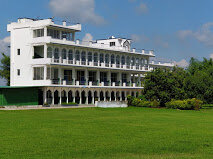 Awan Educational Academy was established in the year 2012. It is an English medium Co-educational Independent school affiliated to CBSE with affiliation number 2132939, with classes Nursery/KG/LKG, I to XII, and has a General affiliation which is valid up to 31/3/2020. It is located in the Lucknow district of Uttar Pradesh and is currently being managed by the Awan Educational Academy, Uttar Pradesh. It is presently under the principal -administration of Mr.ARTY AWASTHI, with a total of 14 staff members. There are a total of 19 rooms present in the school. The nearest railway station is JUGGAUR and it is 2 KM far from the school. You can find other information about the school in the tables below. NATURE OF THE SCHOOL Category of School Co-educational Medium of Instruction English Types of School Independent LOCATION OF SCHOOL Nearest Railway Station JUGGAUR Distance in KM 2 Nearest Police Station JUGGAURCHINHAT Distance in KM 5 Nearest Nationalised Bank ALLAHABAD BANK Distance in KM 2 ENROLLMENT OF THE STUDENTS Class No. of Section No. of Student Nursery/KG/LKG 0 0 I 1 40 II 1 33 III 1 27 IV 1 26 V 1 21 VI 1 15 VII 1 20 VIII 1 18 IX 0 0 X 0 0 XI 0 0 XII 0 0 Labs and Rooms Details Room Number Size Length (in Ft.) Breadth (in Ft.) Class Room 10 25 20 Composite Science Lab 1 30 20 Physics Lab 0 0 0 Chemistry Lab 0 0 0 Biology Lab 0 0 0 Maths Lab 1 30 20 Computer Science Lab 1 30 20 Home Science Lab 0 0 0 Library 1 50 25 Other Rooms 5 25 20 Bio-Tech Lab 0 0 0 PARTICULARS OF TEACHING STAFF Staff Number Trained Untrained NTTs 0 0 0 PRTs 7 7 0 TGTs 5 5 0 Librarian 1 1 0 PTI 1 1 0 PGTs 0 0 0 *Vice Principal/Supervisor/Head Master/ Head Mistres 0 0 0 Physical Size Area of Campus (in sq. Mtrs.) 4690.266099036 (in Acres.) 1.15899 Built up Area in (in sq. Mtrs.) 1175 Whether the School at one site or two site NO Area of Playground (in sq. Mtrs.) 3850 SANITARY CONDITIONS Type of W.C and Urinals flush No. of Urinals/Lavatories Separately for Boys 14 No. of Urinals/Lavatories Separately for Girls 14 Potable Water yes Has Certificate about health and sanitary conditions, drinking water and fire safety of the school has been obtained from the competent authorities of the area? yes LIBRARY FACILITIES Total No of Books 2245 Periodicals 8 Dailies 4 Reference Books 575 Magazine 14 SPORTS & GAMES Swimming Pool No Indoor Games Yes Dance Rooms Yes Gymnasium No Music Rooms Yes Hostel No Health and Medical Check up Yes
- The Pontifical Faculty of Educational Sciences «Auxilium» is an ecclesiastical Faculty founded canonically at the Istituto delle Figlie di Maria Ausiliatrice (Institute of the Daughters of Mary Help of Christians or Salesian Sisters of Don Bosco) in 1970. Its origins date back to 1954 when the Figlie di Maria Ausiliatrice founded the International Higher Institute of Pedagogy and Religious Studies in Turin, which was recognized and approved by the Sacred Congregation for Religious in 1956. In 1966, by Decree of the Sacred Congregation of Seminaries and Universities, the Institute was incorporated into the Higher Institute of Pedagogy at the Salesian Pontifical University in Rome. The legal and academic ties between the two bodies were later redefined so that by 1970 the «Auxilium» had its statutes. To this day, however, the Faculty's Chancellor, the Rector Major of the Salesians of Don Bosco, also heads the Salesian Pontifical University. In 1978, the Faculty moved its headquarters to Rome. Faithful to the original inspiration and guidance of the Magisterium of the Church, it is committed to understanding the requests for training from different cultures to provide adequate responses and new perspectives. With the Holy See becoming a signatory of the Bologna Process, the Faculty is working to ensure comparability in the standards and quality of higher education, aiming to foster mutual recognition of training courses. The «Auxilium» continues to carry out its academic mission with the practicality and vision typical of the Salesian approach, a heritage which the University preserves and develops. The Pontifical Faculty of Educational Sciences «Auxilium» fosters and promotes research in educational sciences and trains researchers, teachers, and professionals at various levels in the field of education. Following a Christian perspective and aiming to help people fully achieve their potential, the Faculty believes that philosophy and theology play a fundamental role in well-balanced training in educational sciences. The Faculty's understanding of educational sciences respects the different education dimensions, approaching it from various angles - philosophical, theological, psychological, sociological, historical, legal, methodological, and communicative. The Faculty, therefore, offers general teacher training, together with specialized study in one of the fields of educational sciences. In keeping with Don Bosco's principles of Christian humanism in education, the Faculty studies the educational issues related to infancy, childhood, and adolescence, with particular attention on women's development. Auxilium is a leading Faculty for the training of education professionals. The Faculty operates primarily in the fields of training, study, and research and has the following aims: To maintain its position as a leading training institution for education professionals through constant innovation in the training provided and in the teaching and learning strategies applied To provide comprehensive training in the field of educational sciences To train both lay and religious students within the context of the new evangelism, preparing them for intercultural and interreligious dialogue To be involved in the international scientific community as a significant point of reference for reflection and research in the field of education To promote humanism, which comprehensively protects and educates individuals, using development and innovation to empower women and young people. View full university
- The Western Greece University of Applied Sciences (T.E.I. of Western Greece) was established on the 6th of June, 2013, as a result of merging the former T.E.I. of Patras established in 1983 former T.E.I. of Mesolonghi established in 1983, too. The Western Greece University of Applied Sciences (T.E.I. of Western Greece) is a State Higher Education Institute autonomous and self-governed by its Academic & Administration Bodies. The Technological Educational Institutes (T.E.I.s), along with the Universities, are subject to the Greek frame - Law of Higher Education. In particular, the T.E.It constitute a sector parallel, equivalent, and complementary to the Universities. The Western Greece University of Applied Sciences (T.E.I. of Western Greece) is oriented to Applied Sciences and Technology. At the same time, the Universities are mostly committed to Academic Studies and Theoretical or Basic Research. In the context of its autonomy, the Western Greece University of Applied Sciences (T.E.I. of Western Greece) has set out specific targets to satisfy its Role and Mission. The Western Greece University of Applied Sciences (T.E.I. of Western Greece) has as a Role to collaborate with other Higher Educational Institutes in Greece, the rest of Europe, and in other countries, too, as well as with its social partners, in order to contribute to regional and national development, along with human resources development. Its strategic target is to provide services such as High-Quality Education, Life Long Learning opportunities, and take initiatives in R.T.D. and Innovation projects to meet its internal and external customers' requirements and expectations. The following objectives of the strategic plan are specified: To offer High-Quality Education and Training for competitive graduates. To establish a sustainable platform for collaboration and research to develop and transfer knowledge, technology, and know-how through joint ventures and other customized initiatives. To integrate and update the academic themes as drivers of innovation and development, emphasizing the Region of Western Greece. To identify knowledge trends and future national needs and act upon them to serve the 1st target. To continuously reinvent the education portfolio of its departments to ensure that it is innovative, radical, suits to student needs, and harmonizes to regional development and strategic national priorities, too. To strengthen and manage on quality principles, the Western Greece University of Applied Sciences services to become an internationally recognized, interdisciplinary, streamlined research-intensive and collaborative Higher Education Institution, with a focus on innovation. To contribute to the development of Green Energy and Sustainable Development and the use of new and I.T. technologies. To develop a radical, sustainable, and appropriate strategy for revenue growth. To empower the commitment to the Greek social, cultural, and economic development. To secure several strategic alliances with national and international partners, especially under the European Union's values and principles. To introduce strategic planning to all processes towards an effective Total Quality Management System. To run a policy such that the European component may surely provide an added value to the Western Greece University of Applied Sciences students, graduates, staff, departments & faculties. View full university
- In its user-friendly and welcoming environment, the user can be informed about the history of our Institution, get valuable information about our Academic Departments, about the studies provided, our students and student care, the teaching, and management staff, building, and laboratory infrastructures as well as for our scientific, research, cultural and social activities. The Technological Educational Institute of Epirus, through its over 20 years of experience, has succeeded in articulating a meaningful scientific discourse, with a high priority in providing a high level of education to our young people. We hope our website will act as a portal for creative communication and exchanging views and ideas. The Technological Educational Institute (T.E.I.) of Epirus was founded in 1994 in the northwestern part of Greece. It is a Public Institution, completely self-governed, and belongs to the technological sector of Greek Tertiary Education. It functions under the supervision of the Minister of Education and Religious Affairs. It has its main Campus and administrative center in Arta and Departments in Ioannina, Preveza, and Igoumenitsa. The Institute hosts today more than 10.000 students. It employs 87 members of academic staff, 22 members of technical staff, four laboratory teaching staff (musicians), and 94 members of administrative staff. Courses are taught in Greek. Occasionally, exchange students (i.e., Erasmus) may be allowed to carry out assignments in English (or another language) or attend tutorials (in small groups or individual sessions) led by members of the academic staff. The duration of studies is eight semesters (including Work Placement). There are no tuition fees charged to students (Greek, international, or exchange students). The Institute has co-organizing three (3) MSc Programmes with Greek Universities (the University of Ioannina and University of Thessaly). Currently, it has formal exchange agreements with a large number of Universities through the well-established Erasmus program of the European Commission. T.E.I. of Epirus welcomes international students who wish to expand their academic horizons by spending a semester or a year studying at its Departments. Our Institution has succeeded in becoming a dynamic regional Technological Institute that offers high-quality education despite its geographic location. Its curriculum covers the modern scientific fields, which offer professional development. It has the perfect infrastructure, modern laboratory equipment, organized libraries, and excellent academic and research staff that has succeeded nationally and internationally, while the administrative support is high. The necessary training period at the Technological Educational Institute (T.E.I.) of Epirus is the teaching semester. Each academic year, which begins on September 1st and ends on July 5th, consists of two separate semesters: the winter semester, which begins the first Monday after the September exams and the week of enrollments and, the spring semester, which begins after the exams of the 2nd period of the winter semester and the week of enrollments. Students of the Technological Educational Institute (T.E.I.) of Epirus can move to other countries of the European Union for their work placement through a consortium in which the Technological Educational Institute (T.E.I.) of Epirus is a partner. The ERA-Places Action allocates grants to students who wish to work abroad. The number of money changes according to the cost of living in each country. View full university
 TEI of Eastern Macedonia and Thrace (TEI AMG) was founded in 1976 under the name TEI of Kavala. The form it has today is the result of many institutional reforms and changes. It first functioned as Center of Higher Technical Education (KATE), one year later as a Center for Higher Technical Vocational Education (KATEE), and in 1983 as a Technological Educational Institute (TEI). In 2001, as a Higher Technological Educational Institution (ASEI) and since 2007 as a Higher Educational Institution (AEI). The educational process at TEI AMG is carried out by the members of the OP (permanent), which are divided into four classes: a) Professor, b) Associate Professor, c) Assistant Professor, and d) Professor of Applications. The members of the OP are assisted in their work by Scientific and Laboratorial Associates (extraordinary), by Laboratory Technicians, and by Administrators. It consists of the President, the Deans of Schools, representatives of the professors, the number of which is equal to the number of faculties elected by the General Assembly of the School, a representative of undergraduate students, a representative of graduate students, and a representative of the candidates of doctoral students. The Deputy Presidents and the Secretary of the Foundation are also present at the Assembly meetings without voting. The Convention establishes an educational and research policy, approves the first, second, and third cycle regulations, the curriculum content, expresses an opinion to the Foundation's Board of Regulators, etc. View full university
- Welcome to the Technological Educational Institute of Crete. Our Institute, one of the 36 Higher Education Institutes of Greece, offers quality undergraduate and postgraduate studies in Informatics, Engineering, Health, Agriculture and Food, Economics and Management, Environment. The TEI of Crete is continually being ranked at the top of its peers' list, while it has received wide recognition for its direct contribution to the development of both Crete and Greece. The TEI of Crete studies are exceptionally high standards, as proved by the External Evaluations carried out by the Hellenic Quality Assurance and Accreditation Agency. The teaching and research qualifications and the consistency of the staff, the modern Study Programmes, the connection to the trade and social bodies, and the way we supervise and support our graduates guarantee a complete education providing our graduates with the appropriate guidelines so that they follow the correct profession or continue with further studies, dependent on their aptitudes. Our several collaborations with numerous Greek and more than 120 European Higher Education Institutes contribute drastically to the provided studies' internationalization. Our students are encouraged to travel to other countries to complete part of their studies. Those who study at our Institute also contact international students and are often being taught by European professors. The Department has received awards for its international relations in Europe and, of course, in Greece. At the TEI of Crete, the Administration and the staff work tirelessly, always focusing on our institutional goals about quality education, excellence, real education, and our ca. 15.000 active students' broader interest. We continue to transfer our students' main principles, transparency in making and implementing our decisions, equality, and respect. We encourage the freeway of thinking and the expression of new ideas, self-motivation, and cooperation: we seek to create complete Scientists – Citizens. Our economic efficiency works as a guarantee for the State to keep financing us. Apart from that, the TEI of Crete, through the numerous educational, research, and development projects that it carries out, ensures receiving extra funds to support the studies and our students, equivalent to many years of state funding. The candidates and their parents shall see a full description of our undergraduate and postgraduate studies, together with the possibilities to support our young students during their studies and everyday life at the Institute. Our current students can provide all the necessary information concerning the classes, the studies, the contact with the professors, the Student Care Office, the exchange programs with universities abroad, the chances of working at the Institute and at trade and industry bodies, essential links for the life and the entertainment in the cities, where the departments are located, etc. The new scientists shall explore the chances of being hired by the TEI of Crete for teaching or participating in research or development projects. Our possible research colleagues have instant access to our research accomplishments, our scientists' experience, to current programs, to our immediate goals. The private and public sector bodies may contact specialized scientists for scientific and technical support and seek suitable graduates for work. The candidates supplying us with the necessary services and goods shall find anything they seek in transparency and equality. Citizens from the general public can be informed of our scientific and social work and our cultural activities. The TEI of Crete was established in 1983, aiming at offering technological education to students in Greece. Initially, the following Schools were established: Technological Applications, located in Heraklion with a branch in Chania Management and Economics, located in Heraklion Health and Welfare Services, located in Heraklion and Agricultural Technology, located in Heraklion, Which offered twelve (12) Study Programmes, supported till 2013 by the Department of Sciences of the School of Technological Applications and the Centre of Foreign Languages and Physical Education. Since June 2013, according to the Presidential Decree No 104 (Official Government Gazette 137, 5-7-2013, volume 1) under the new Law 4009/2011 (Official Government Gazette 195, 6-9-2011, volume 1), the TEI of Crete has the following Schools: School of Management and Economics, located in Heraklion School of Health and Welfare Services, located in Heraklion School of Applied Sciences, located in Chania School of Agricultural and Food Technology, located in Sitia School of Technological Applications, located in Heraklion View full university
- The Technological Educational Institute of Central Macedonia at Serres (T.E.I. of Central Macedonia) is a new, dynamic, and rapidly developing Institute consisting of two Faculties, eight Departments, and more than 14000 students. The T.E.I. of Central Macedonia meets modern requirements for high-quality educational standards and the encouragement of applied and technological research. It promotes the employment of scientifically distinguished Professors, the cooperation with educational and research Institutes of our country and those abroad, the connection between education and production and the job market, the further education of its graduates, and the creation of post-graduate studies departments in conjunction with Universities. The T.E.I. of Central Macedonia meets modern requirements for the provision of high-quality educational standards, the encouragement of applied and technological research, and the contribution to the creation of responsible citizens able to contribute as agents who will apply high-quality levels to the economic, social, and cultural development of the country. It, thus, promotes the employment of scientifically distinguished Professors, the cooperation with educational and research institutions of our country and with those abroad, the connection between education and production and the job market, the further education of its graduates, and the creation of post-graduate studies departments in conjunction with Universities. As President of the Institution and on behalf of the entire educational and administrative personnel but mostly on behalf of our students, I welcome you to the present website. I invite you to visit its web pages to gain information about the administration and the organization of the Institution, its mission, the staffing and course plans of the faculties, and all of the rest relevant services and activities offered. Finally, because the presentation through web pages cannot fully replace the real picture, I openly and always invite you to visit the Institution and the Prefecture of Serres, which is one of the biggest, most beautiful and most lively Prefectures of our country. The T.E.I. of Serres was established in 1979 and was recognized as the Technological Educational Institute belonging to the Greek Tertiary Education system in 1983. In June 2013, it was renamed to Technological Educational Institute of Central Macedonia. It is a state Institute, which is self-governed, subject to public law, internally regulated, and financed by public funds. Education is offered to students free of charge. In September 1993, the T.E.I. was moved to its new premises, located 300 meters away from the town center, stretching over an area of 82000m2. The total number of registered students amounts to 14000, whereas the teaching staff comes up to 400. According to Law 1404/83 on the structure and functioning of Technological Educational Institutions, each T.E.I. is divided into Faculties, covering a range of related technological fields. The coordination necessary for the teaching activities and the overall functioning of the T.E.I. is ensured. The Network Operating Center (N.O.C.) of T.E.I. Serres is responsible for the proper operation, maintenance, and development of equipment, connections, and services of the Data Network of the Institute. The Network Operating Center has created, maintains, and keeps developing a high-speed data network that extends exclusively within the campus of the Institute. The data network interconnects every department of the T.E.I. of Central Macedonia with Greek and international networks and the Internet. The data network is used to deliver a group of web services to all academic community members, supporting and promoting the Institute's educational, research, and administrative procedures. View full university
 Al-Hafeez Educational Academy was founded in the year 2010. It is an English medium Co-educational Independent school affiliated to CBSE with affiliation number 2132213, with classes Nursery/KG/LKG, I to XII, and has a General affiliation which is valid up to 31/3/2021. It is located in the Budaun district of Uttar Pradesh and is currently being managed by the Hafeez Educational Society, Uttar Pradesh. It is presently under the principal -administration of Mohd Shakeel Subhani, with a total of 17 staff members. There are a total of 32 rooms, 2 Labs, and 1 Library present in the school. The nearest railway station is Ujhani and it is 30 KM far from the school. You can find other information about the school in the tables below. NATURE OF THE SCHOOL Category of School Co-educational Medium of Instruction English Types of School Independent LOCATION OF SCHOOL Nearest Railway Station Ujhani Distance in KM 30 Nearest Police Station UjhaniSahaswan Distance in KM 5 Nearest Nationalised Bank bank of Baroda Distance in KM 5 ENROLLMENT OF THE STUDENTS Class No. of Section No. of Student Nursery/KG/LKG 3 89 I 1 30 II 1 28 III 1 16 IV 1 24 V 1 26 VI 1 27 VII 1 11 VIII 1 4 IX 0 0 X 0 0 XI 0 0 XII 0 0 Labs and Rooms Details Total Rooms Total Lab Total Libraries Small Room Medium Room Large Room School Area (in Sq m.) Play Area (in Sq m.) 32 2 1 4 10 18 14160 8000 Labs and Rooms Details Room Number Size Length (in Ft.) Breadth (in Ft.) Bio-Tech Lab 0 0 0 Class Room 12 20 25 Composite Science Lab 1 20 30 Physics Lab 1 20 30 Chemistry Lab 1 20 30 Biology Lab 1 20 30 Maths Lab 0 0 0 Computer Science Lab 1 20 20 Home Science Lab 0 0 0 Library 1 20 30 Other Rooms 1 12 14 PARTICULARS OF TEACHING STAFF Staff Number Trained Untrained NTTs 3 3 0 PRTs 6 6 0 TGTs 6 6 0 Librarian 1 1 0 PTI 1 1 0 PGTs 0 0 0 *Vice Principal/Supervisor/Head Master/ Head Mistres 0 0 0 Physical Size Area of Campus (in sq. Mtrs.) 14163.9974 (in Acres.) 3.5 Built up Area in (in sq. Mtrs.) 1350 Whether the School at one site or two site NO Area of Playground (in sq. Mtrs.) 10000 SANITARY CONDITIONS Type of W.C and Urinals flush No. of Urinals/Lavatories Separately for Boys 6 No. of Urinals/Lavatories Separately for Girls 6 Potable Water yes Has Certificate about health and sanitary conditions, drinking water and fire safety of the school has been obtained from the competent authorities of the area? yes LIBRARY FACILITIES Total No of Books 3040 Periodicals 10 Dailies 5 Reference Books 476 Magazine 5 SPORTS & GAMES Swimming Pool No Indoor Games Yes Dance Rooms No Gymnasium No Music Rooms No Hostel No Health and Medical Check up Yes


